Crack or cocaine HCl: does the wash remove the cuts?
Cooking cocaine into crack does not clean it. The wash sorts a powder by how well each ingredient dissolves in water, and the cuts that matter dissolve about as badly as the cocaine does, so they come across into the rock with it. People skip testing at that point because they believe the rock is the purer form, and that belief is wrong.
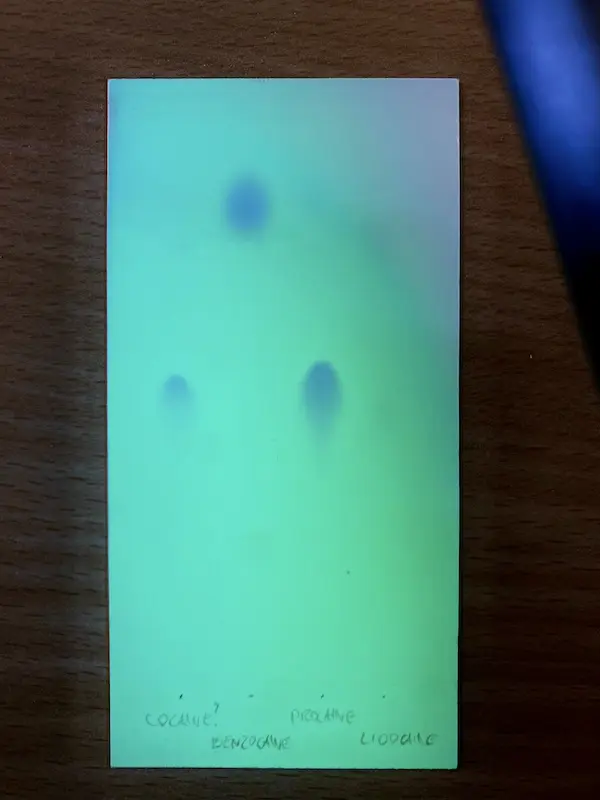
Cocaine beside benzocaine, procaine and lidocaine on one card. Each stops at its own height, which is how a card tells them apart.
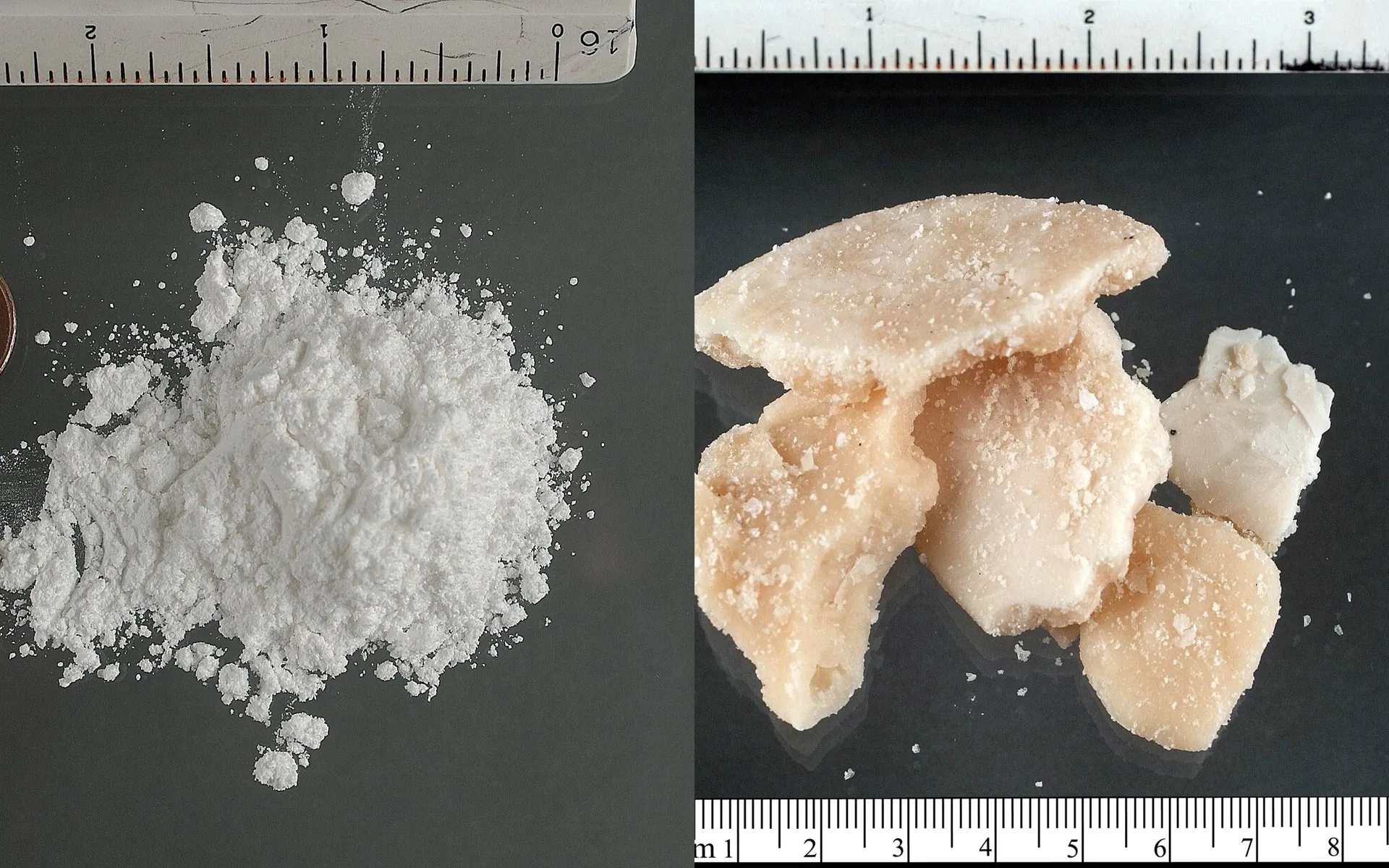
Cocaine hydrochloride is the powder. It is a salt, so it dissolves readily in water, which is why it can be snorted or injected and why it cannot be smoked: it breaks down before it vaporises.
Cocaine base, crack or freebase, is the same molecule with the hydrochloride removed. Baking soda and heat strip it off, and the base barely dissolves in water, so it separates out and sets hard. It melts at a low temperature and vaporises without burning, which is what makes it smokable.
Same drug, two differences: melting point, which decides whether it can be smoked, and water solubility, which drives the separation.
Why the cuts travel with it
The wash filters for water solubility, and it keeps whatever fails to dissolve. The common cuts fall into three groups:
Salts that convert. Levamisole, lidocaine, procaine and benzocaine are sold as hydrochloride salts too. The same baking soda turns them into their own free bases, which are as insoluble as cocaine base, so they drop out alongside it.
Neutral compounds. Phenacetin is not a salt, so the baking soda has nothing to act on. It barely dissolves in water to begin with and stays in the solid the whole way through. It was withdrawn as a painkiller in the 1970s over kidney damage and cancer risk, and it is the cut people ask about most.
Sugars. Lactose, mannitol and inositol are very water-soluble and largely wash away. Caffeine sits between the groups and partly washes away.
The table lists each ingredient, its form in the powder, and what the wash does with it.
What a baking soda wash removes from cut cocaine, and what it carries over
Ingredient
In the powder
After the wash
Cocaine
Hydrochloride salt
Free base, stays
Levamisole
Hydrochloride salt
Free base, stays
Lidocaine, procaine, benzocaine
Salt or weak base
Free base, stays
Phenacetin
Neutral, not a salt
Unchanged, stays
Lactose, mannitol, inositol
Sugars, very water-soluble
Largely washes away
Caffeine
Moderately water-soluble
Partly washes away
The wash takes out the cheap bulking sugars and keeps the pharmacologically active cuts. Most people would want it the other way round.
What smokers call magic
People who smoke crack noticed this long before anyone wrote it down. On r/cracksmokers the cuts that survive the wash are called magic, and the threads asking what magic is keep landing on the same two answers: phenacetin and levamisole.
Magic is a street name, so it cannot be looked up and it means different things in different cities. The observation behind it is sound. Something comes through the wash, people can feel it, and they named it because nobody was handing them lab results. A testing card turns the word into a list of what is in the rock.
The weight loss that fools people
A gram of cocaine hydrochloride holds about 0.89 grams of cocaine base, because the chloride is roughly 11 percent of the salt’s weight. Convert a perfectly clean gram and you get back about 0.89 grams.
So a loss of around a tenth is what the chemistry predicts with nothing removed. People read that drop as proof that cuts came out. It proves only that the chloride left. A much larger loss means sugars were present, or product went down the sink, the same trap covered in spotting a filler.
Why levamisole is the one to care about
Levamisole is a veterinary antiparasitic that turns up in European cocaine constantly. In a minority of people it suppresses the production of white blood cells, leaving them unable to fight ordinary infections. It has no taste and no smell at these amounts, and it carries into a rock as readily as it sits in a powder.
If the powder had levamisole in it, the rock does too. The wash is no reason to skip a test.
Testing the two forms
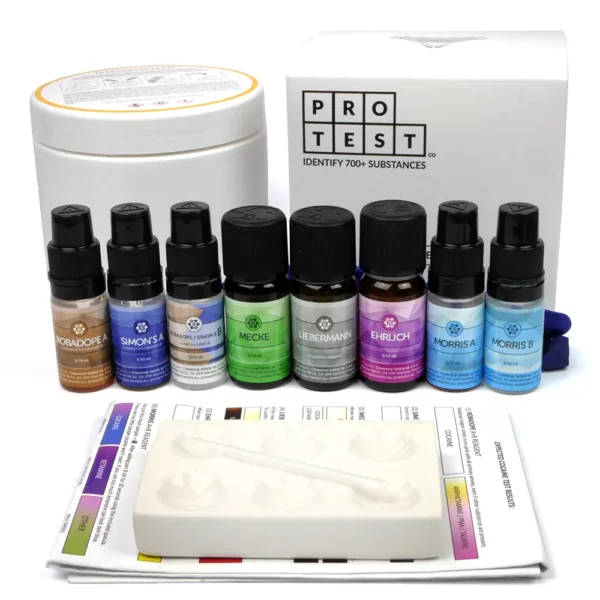
Reagents are built and photographed on powder, and a rock is not powder. SCOTT is the cocaine-specific reagent, and on crack it does not always give the reaction people expect. The likely reason is solubility: the first stage of the test needs the sample to go into an aqueous reagent, and the free base barely dissolves in water. That explanation is reasonable and not yet settled.
A weak or absent SCOTT result on a rock does not prove the rock is not cocaine. Treat a single reagent result on crack as provisional and confirm it on a testing card, which separates the sample in a solvent and does not depend on that first dissolving step.
Two things change when the sample is a rock:
Take less. A dense fragment carries more material than the same-looking amount of powder and oversaturates the result. Scrape a smaller amount.
Give it time. For a testing card the sample has to dissolve first, and a rock does that more slowly than a powder. Crush it finer and wait longer. Do not add more.
Crack is thinly represented in the European lab data. Of 19,119 published results, four are labelled as crack or freebase, and only two of those carry a number: one at 60 percent and one at 88 percent cocaine.
Four samples cannot describe a market. The 60 percent result does show that a rock is not automatically clean. Something made up the other 40 percent.
Common questions
Is crack purer than powder?
No. It is a different form of the same drug, and the wash removes water-soluble fillers while keeping levamisole, the caines and phenacetin. A rock can be cleaner than the powder it came from, or barely different.
Does a reagent work on a rock?
Less dependably than on powder. SCOTT in particular does not always react on crack, most likely because the base does not dissolve in the reagent. Take a small scraping, and treat a weak result as inconclusive, then confirm on a card.
I lost weight washing it. Were those the cuts?
About a tenth of the weight is the chloride leaving, and that happens with clean material too. Losing much more than that means fillers were there, or product was lost in the process.
Does washing remove levamisole?
No. Levamisole converts to its own free base under the same conditions and comes across with the cocaine.
What is magic?
What people smoking crack call the cuts that survive the wash, usually phenacetin and levamisole. It is a street word with no fixed meaning, so the only way to know what is in your own rock is to separate it on a card.
Can a testing card read a rock?
Yes, once it is dissolved. Crush it finer and allow more time. Adding more sample is the usual cause of an unreadable card.
No test result can tell you a substance is safe. No substance is 100% safe.This article is published for harm reduction purposes. It does not encourage the use of psychoactive substances and does not replace medical advice.