


1P-LSD, 1cP-LSD, 1V-LSD, 1D-LSD and LSZ: what is the difference?
Chemically there is very little difference between the novel lysergamides. Four of the five listed in the title are LSD prodrugs, inert until your body cuts one group off the indole nitrogen, at which point you have LSD-25. What differs between them is the group hung on that nitrogen, and each new group bought its makers a year or two before Germany scheduled it too. LSZ is the exception and gets its own section below.
The chain of bans
| Compound | Group on the nitrogen | Arrived after |
|---|---|---|
| 1P-LSD | propionyl | reached vendors in 2015 |
| 1cP-LSD | cyclopropanoyl | the anticipated German 1P-LSD ban |
| 1V-LSD | valeryl | the scheduling of 1cP-LSD, mid-2021 |
| 1D-LSD | 1,2-dimethylcyclobutane-carbonyl | the scheduling of 1V-LSD |
| 1S-LSD | trimethylsilyl-propionyl | the 1D-LSD ban, June 2024 |
1cP-LSD was made by Lizard Labs around 2019, in anticipation of the German ban rather than after it. 1S-LSD is the clearest case: it carries a silicon atom, and Germany's NpSG defines its prohibited groups in carbon.
Sources: dates, chemistry and dose figures on this page come from our substance library, which aggregates dose.wiki, PsychonautWiki, TripSit and Erowid, and each compound page there lists its own sources.
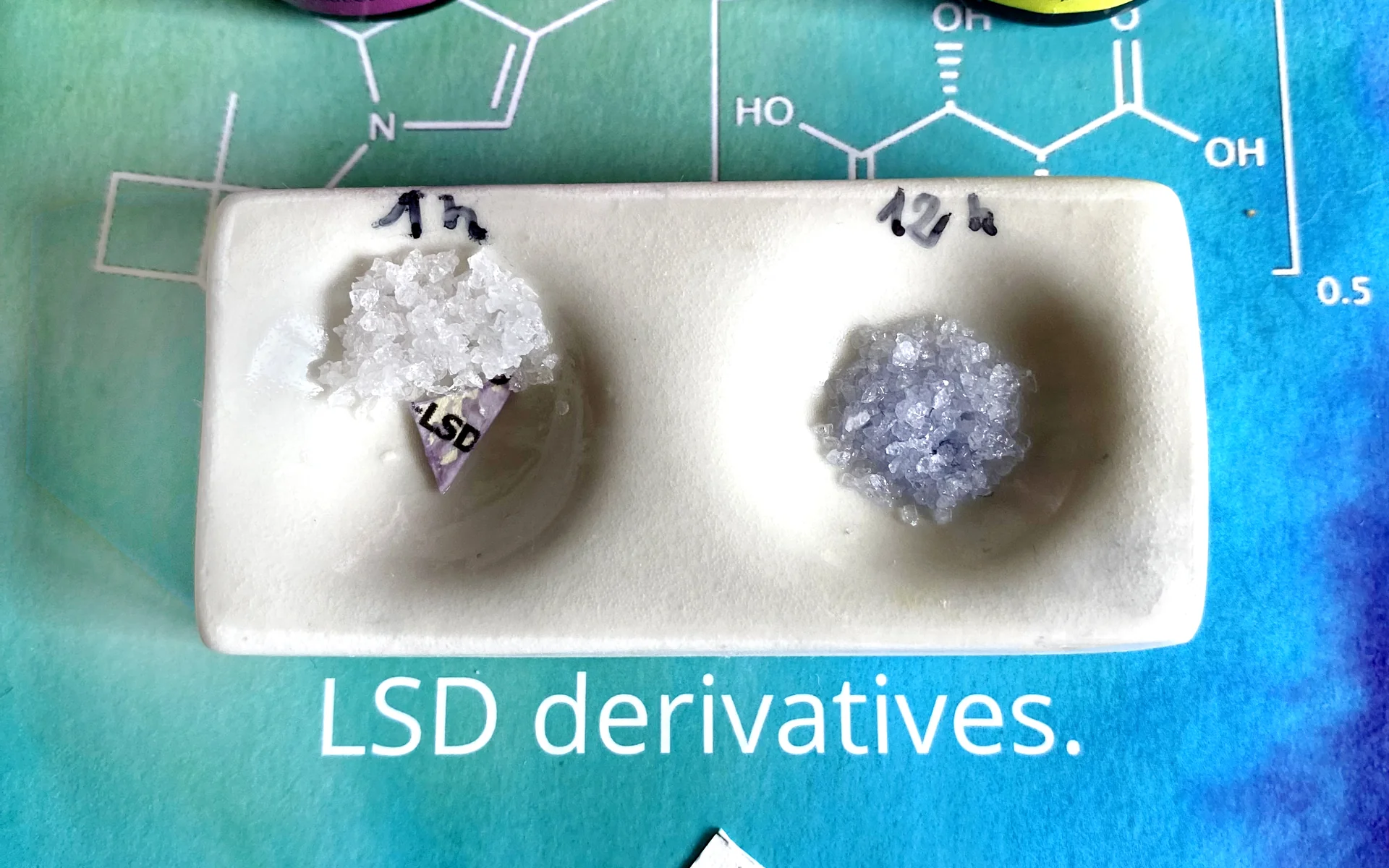
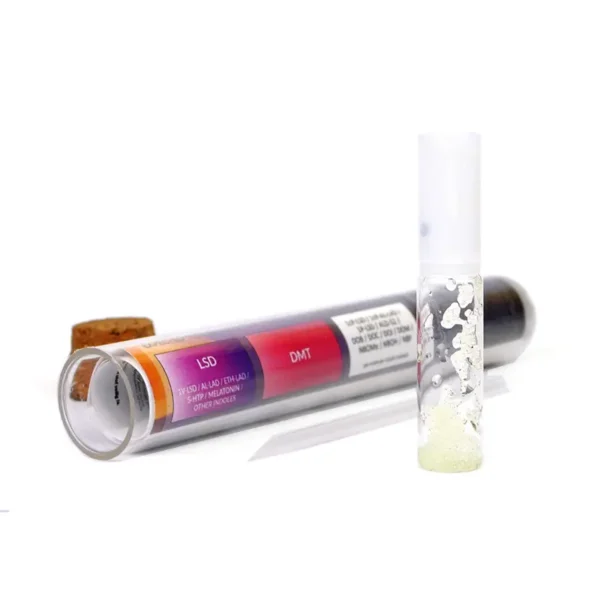
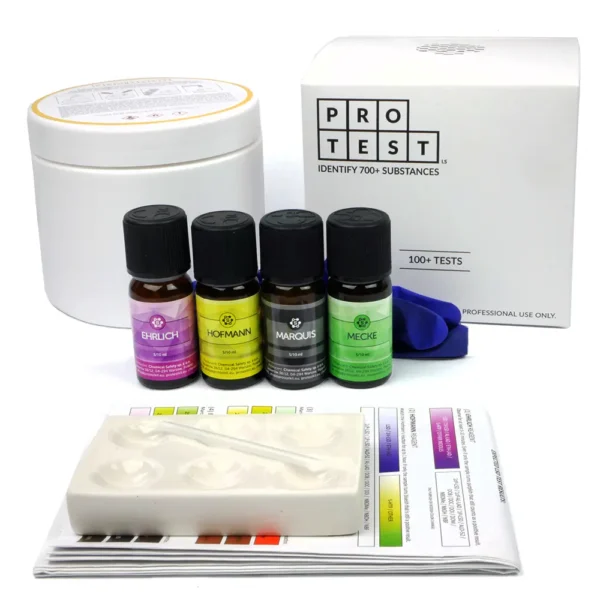
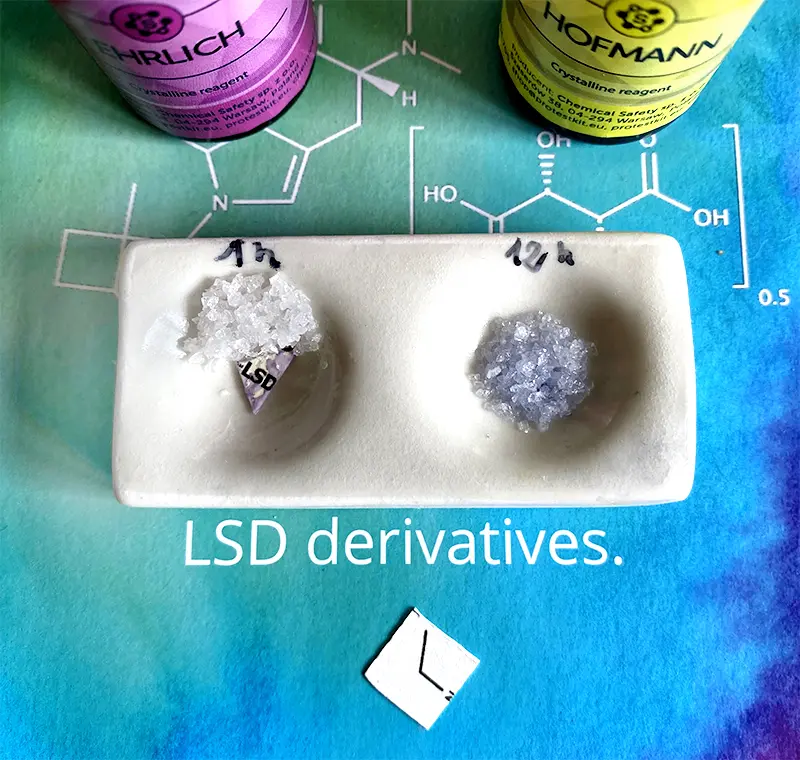
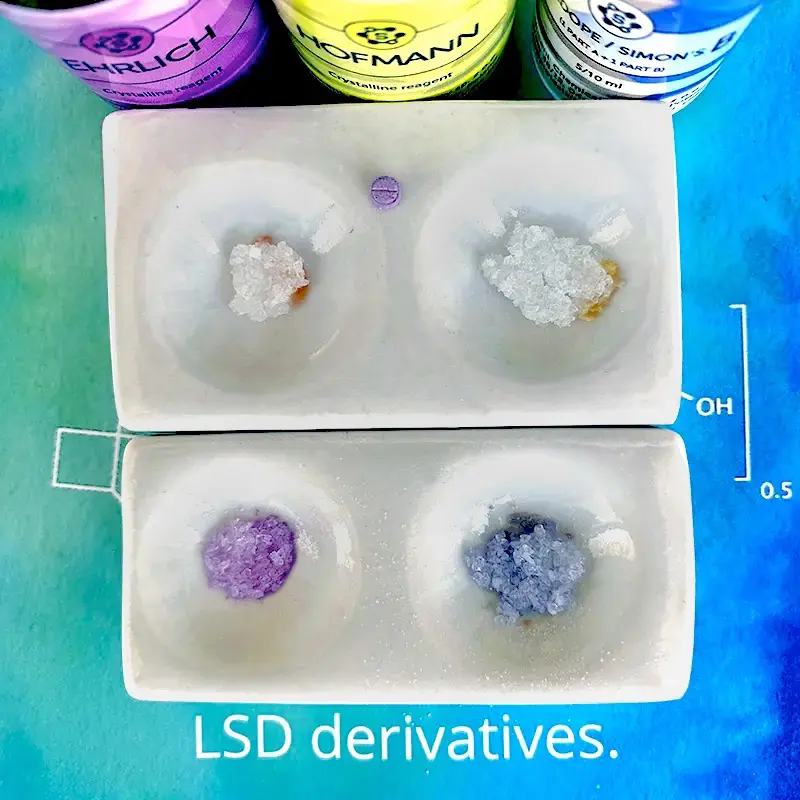
Nothing on a blotter really tells you, visually, which of these you are holding (although an honest print is always welcome). A reagent kit will tell you it is a lysergamide rather than an NBOMe, which is the part that matters; naming the specific compound is a lab job. The nitrogen group can affect the results of reagent testing: the prodrugs need activating first, by decay or ideally a base, while LSD-25 and LSZ do not.
Quantity, side by side
The table below gives threshold, common and strong doses for LSD-25 and each prodrug.
| Compound | Threshold | Common | Strong |
|---|---|---|---|
| 1P-LSD | 15-25 µg | 50-125 µg | 125-200 µg |
| 1cP-LSD | 10-20 µg | 50-100 µg | 100-200 µg |
| 1V-LSD | 15 µg | 75-150 µg | 150-300 µg |
| 1D-LSD | 15 µg | 50-150 µg | 150-300 µg |
| 1S-LSD | 15 µg | 50-170 µg | 170-300 µg |
| LSZ | 10 µg | 100-300 µg | 300-400 µg |
Two things worth pulling out. 1D-LSD is roughly 15 to 25% weaker by weight than LSD-25. And 1S-LSD comes in around 70% of equimolar LSD-25 with a slower onset, 45 minutes to 3 hours, so redosing at the 90 minute mark is a mistake you cannot undo.
Full dose and duration data · What is 1P-LSD · What is 1cP-LSD · What is 1V-LSD
LSZ is not a prodrug
A prodrug is a compound that does nothing on its own and only becomes the active drug once the body has changed it. With these four, the body strips the group off the nitrogen and what is left is LSD-25. LSZ is not built that way.
LSZ came out of David Nichols' lab at Purdue in the early 2000s and reached blotter around mid-2013. It is chemically related to LSD and active at similar doses, but it is not converted into LSD, it does the work itself. It has three stereoisomers, one of which, (S,S), is substantially more potent than the other three, and which one is on a given blotter depends on the synthesis. Treat it as its own substance rather than an LSD substitute with a strange name.
On a reagent LSZ behaves like LSD-25, not like the prodrugs: its indole nitrogen is free, so Ehrlich goes purple in minutes and Hofmann turns blue, with no activation step. What neither can tell you is which lysergamide you are holding. What they do rule out is the NBOMe and DOx series, which is the part that kills people on blotter, and if you need LSZ confirmed rather than LSD, that is a lab question.
Prodrugs react slowly, or not at all
The acyl group blocks the reaction that Ehrlich and Hofmann depend on, so a prodrug blotter can sit looking negative for an hour while LSD-25 goes purple in minutes. The fix is to activate the sample first: one drop of an alkaline reagent, five minutes, then Ehrlich and Hofmann, then fifteen minutes of waiting. Of the alkaline reagents we have tested, Zimmermann B works best.
The full activation method · What is 1D-LSD · What is 1B-LSD · What is LSZ
Three results that catch people out
1P-LSD does not turn Ehrlich purple, and neither does 1B-LSD, while LSD-25 does. That was confirmed by side-by-side lab standards at DrugsData after we queried a sample whose Ehrlich photo looked wrong, and what came out of it was that the blotter had been deliberately spiked with tryptamine so that 1P-LSD would read as LSD-25. 1S-LSD does not react at all: both Ehrlich and Hofmann work through p-DMAB and 1S-LSD triggers neither, so a blank result is equally consistent with 1S-LSD and with blank paper. And no reagent separates the analogues from each other, which is how blotters sold as 1D-LSD turned out to contain 1T-LSD.
The 1P-LSD tryptamine case · Hofmann colour range with LSD
So what is a reagent for here?
Ruling out the things that hurt. Blotter paper holds about 100 to 200 µg and almost nothing else fits on it at a psychoactive dose, except the NBOMe series, DOx compounds and NBOH, which do, and which have killed people at doses a lysergamide would not. Ehrlich and Hofmann answer that question well. For which analogue you are holding, there is a lab and nothing else.
What the Ehrlich reagent shows, and what it does not
1P-LSD, 1cP-LSD, 1V-LSD, 1D-LSD and LSZ: what is the difference: common questions
Do the prodrugs feel different from LSD?
Reports describe them as near-identical, which is what you would expect from compounds that become LSD-25 in the body. Onset differs: 1S-LSD is slower, 1D-LSD slightly faster.
Why did my 1cP-LSD blotter react instantly with Ehrlich?
An immediate reaction suggests LSD-25 is already present, either from partial hydrolysis in storage or because the blotter is not what it was sold as.
Can I use Ehrlich on its own?
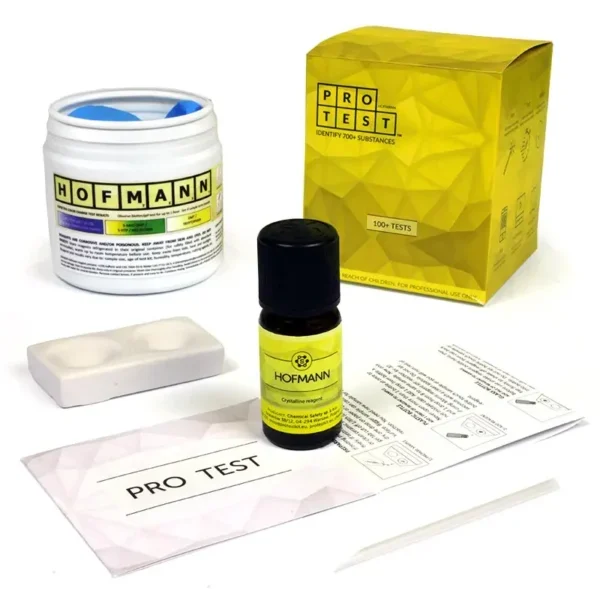
We would not. Ehrlich reacts with indoles generally, so melatonin and tryptamine give the same purple. Hofmann separates them: non-lysergamide indoles go yellow-green, lysergamides go deep blue.
Does storage matter?
For 1S-LSD especially. Silicon-carbon bonds hydrolyse easily and moisture-exposed tabs can degrade within weeks. Cool, dark, dry, sealed.
Where do these figures come from?
The substance library, linked above, which aggregates dose.wiki, PsychonautWiki, TripSit and Erowid. The reagent behaviour is ours, from our own testing and from the DrugsData work linked in the section above.
Which one is legal where I live?
We cannot answer that and the answer keeps changing. The pattern in the table is German; other countries schedule differently, and some use analogue provisions that catch all of them at once.
No test result can tell you a substance is safe. No substance is 100% safe.This article is published for harm reduction purposes. It does not encourage the use of psychoactive substances and does not replace medical advice.