Methamphetamine can come in two mirror-image forms: d-methamphetamine and l-methamphetamine. The first is the psychoactive stimulant, the other is sold over the counter in American pharmacies as a nasal decongestant.
Both weigh the same, both react the same to reagent tests, and no home testing kit can tell them apart. A test kit answers the question whether you have meth at all, and what else is in the bag, but does not distinguish the isomers.
Methamphetamine has one carbon atom with four different things attached to it, which makes two versions possible: same parts, mirrored, like your two hands. Chemists call them (S) and (R), or “d” and “l”.
d-methamphetamine is (S)-methamphetamine, also written dextromethamphetamine.
l-methamphetamine is (R)-methamphetamine, also written levomethamphetamine or levmetamfetamine.
A 50:50 mix of the two is called racemic. Same formula, same molecular weight, and the same colour with every reagent you own.
Which one a clandestine lab makes is decided by the recipe, not by choice. Cooking from ephedrine or pseudoephedrine, the cold-medicine route, gives d-methamphetamine straight away. Cooking from BMK, also called P2P, gives the 50:50 racemate, and the producer either separates the d-form out with tartaric acid or sells the mix. Nobody makes l-methamphetamine on purpose. It shows up when a BMK batch is sold with the separation skipped or half done, and with the BMK route growing in Europe, that is happening more often.
Three things push it. The BMK route is growing: the Netherlands dismantled 27 BMK laboratories in 2024, and tartaric acid seizures jumped from 2.6 tonnes in 2022 to 10.9 tonnes in 2023, so more racemate is being made and more of it reaches the market before, or instead of, separation. Separation is the expensive step. It costs a chemical, a crystallisation cycle and half the batch, and a producer selling into a market that cannot test for it has no reason to finish the job. A half-finished separation gives the uneven blends the German study found in 10 of 528 samples and the United States saw in 37% of exhibits in 2010. And where tartaric acid is seized by the tonne, some cooks run short of it.
Which one is active
“Inactive” is the wrong word for l-methamphetamine. It is active in the body and quiet in the head.
The figures below are how little of each isomer it takes to make nerve endings release a transmitter, so a smaller number means a stronger effect. They cover noradrenaline, dopamine and serotonin, measured in rat brain tissue.
How much of each isomer it takes to release three transmitters, in rat brain tissue
Transmitter
d-meth
l-meth
Noradrenaline
12.3 nM
28.5 nM
Dopamine
24.5 nM
416 nM
Serotonin
736 nM
4 640 nM
Read down the columns. On noradrenaline the two isomers are close, about two and a half times apart. On dopamine they are seventeen times apart.
Noradrenaline is the heart-rate and blood-pressure half. Dopamine is the half people take the drug for. So l-methamphetamine keeps most of the cardiovascular load and loses almost all of the effect, which is why it can sit on an American pharmacy shelf as a nasal inhaler. It is not sold over the counter in Europe.
A racemic gram is not “half as strong”. It is half as strong where you want it and nearly as strong where you do not.
A dose of racemic material big enough to reach a familiar effect has carried roughly twice the noradrenaline load to get there. Faster heart, higher blood pressure, tighter vessels, less sleep, for the same wanted effect.
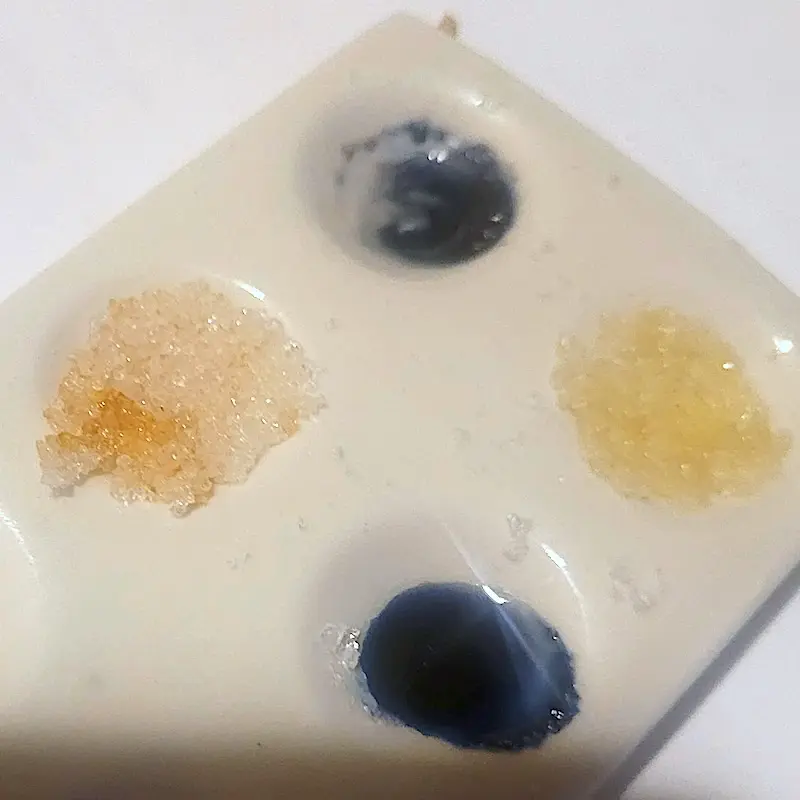
Methamphetamine with Simon’s and Marquis. The mirror-image molecule gives these same two colours.
Why nobody sells the racemate
Which isomer comes out of a lab is decided by what went into it.
From ephedrine or pseudoephedrine, the starting material is already one-handed, and you get d-methamphetamine directly.
From BMK, also called P2P, the starting material is flat and you get a 50:50 racemate.
Europe runs both routes side by side. In 2024, according to the European Drug Report 2026, ten EU countries dismantled 252 methamphetamine laboratories. Czechia accounted for 184 of them and also dismantled 19 pseudoephedrine extraction sites, which is the ephedrine route at industrial scale. The Netherlands accounted for 23.
The BMK route has a problem the ephedrine route does not: half of what it makes is l-methamphetamine. The fix is a chemical called tartaric acid, which separates the two forms so the d-half can be kept.
EUDA tracks seizures of it and describes it in exactly those terms, as the chemical used to retrieve the most potent form of methamphetamine from BMK mixtures. The 2024 figure was 7.5 tonnes, reported by the Netherlands, Spain and Germany.
Producers buy tonnes of an extra chemical, add a whole extra step and throw away half the batch. Nobody does that for a product that sells just as well without it.
What is actually on the market
A 2022 study in Drug Testing and Analysis ran chiral analysis on 528 methamphetamine samples seized in southern Germany in 2019 and 2020.
502 were (S), the active one.
7 were (R), the decongestant.
8 were racemic.
10 were an uneven mix of the two.
The same study ran 143 amphetamine and 94 MDMA samples through the same analysis, and every single one was racemic. Nobody purifies those. Methamphetamine is the one somebody bothers with.
Between 2014 and 2024 the quantity of methamphetamine seized in the EU rose by 1 019%, the largest increase of any drug in the series.
In our own alerts database, 132 published lab results had methamphetamine in them, and of the 73 carrying a purity figure, half came in above 87%. Five more were handed in as meth and contained none. Those are other people’s samples. They show what the market usually looks like, and a test shows whether the crystal in front of you matches it.
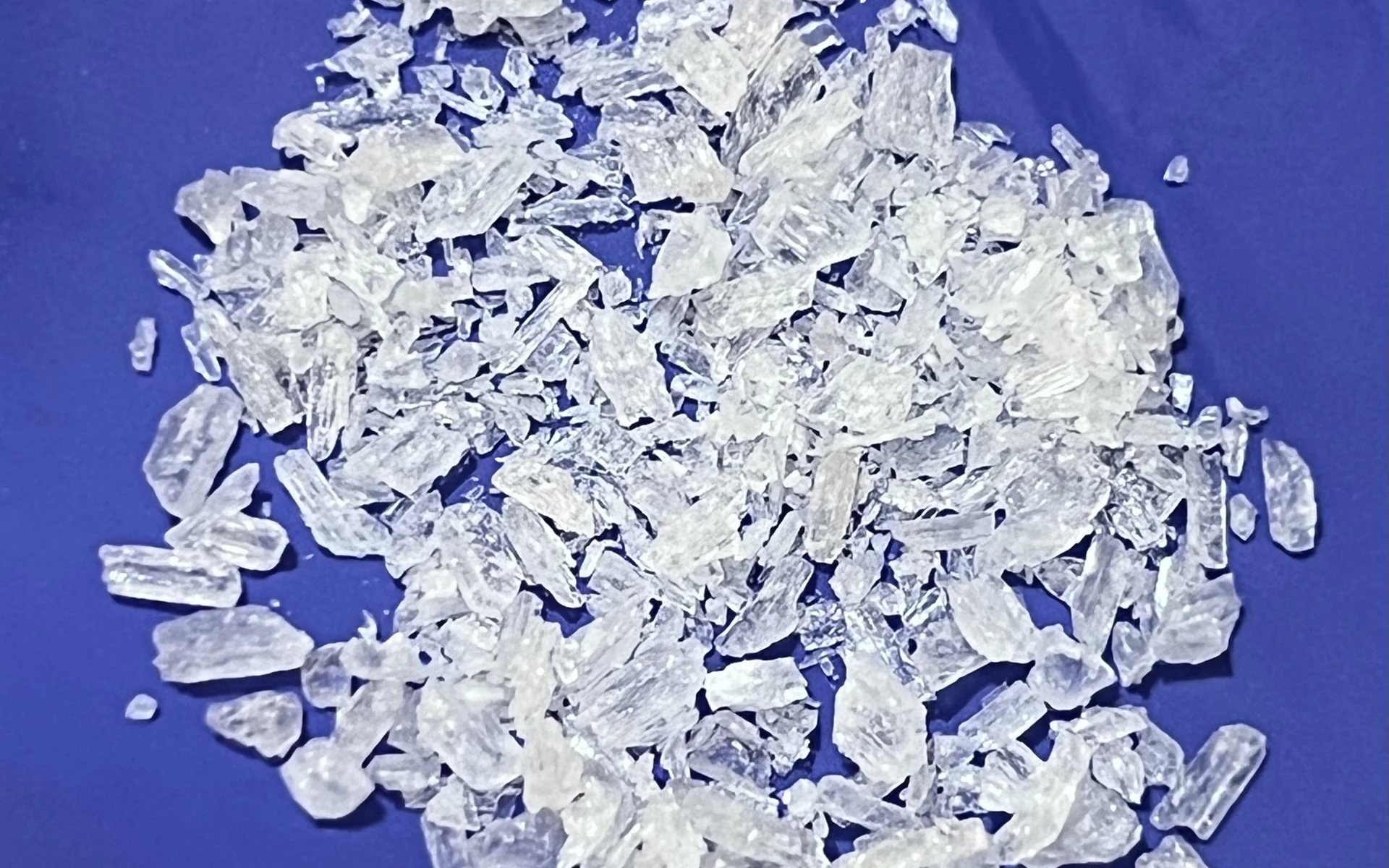
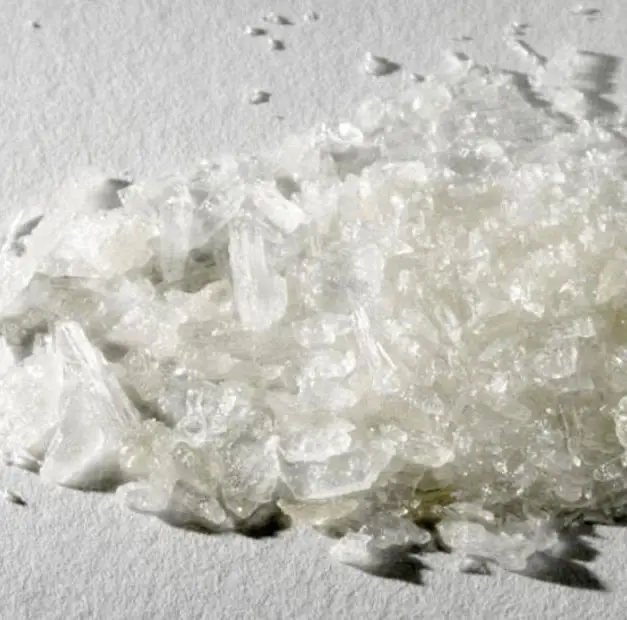
Crystal size and clarity say nothing about which isomer you are holding.
Mexico restricted imports of ephedrine and pseudoephedrine from 2005, which took away the route that hands you d-methamphetamine for free. Producers switched to P2P, and for a few years they had the racemate problem without the answer to it.
A 2013 study in Drug and Alcohol Dependence tracked it through DEA exhibit records from 2000 to 2011. Mixed-isomer material, an uneven blend of the two, went from about 4% of United States methamphetamine exhibits before the controls to about 37% in 2010, while d-methamphetamine exhibits fell sharply. Pure l-methamphetamine and clean 50:50 racemate rose only a little: the market filled up with blends, not with the mirror image.
Then it went back. DEA’s CY 2024 report still names P2P as the primary precursor, and still records 95.2% average purity across 486 profiled samples, with potency continuing to match purity. Potency matching purity is how you know operators are isolating the d-isomer. The racemic years were a gap in capability, not a change in what the market wants.
l-methamphetamine is genuinely common in one other place, and it has nothing to do with what is sold. In the United States it is the active ingredient of a nasal inhaler and a breakdown product of the Parkinson’s drug selegiline. In a controlled study of that inhaler, 54.7% of urine specimens carried detectable l-methamphetamine and 6.4% reached the federal confirmation cutoff. Telling the isomers apart changes an outcome there, and nowhere else. It is a laboratory question, not a drug-checking one.
We found no comparable enantiomer survey for Australia, New Zealand, Japan, Myanmar or Iran. Our own database cannot fill the gap either: it is overwhelmingly European, and across every language edition not one of the 5,445 methamphetamine entries records an isomer at all.
No home test sees the difference
Mirror-image molecules behave identically towards anything that is not itself one-handed, and every reagent in your kit is symmetrical. Simon’s goes deep blue for both. Marquis goes orange for both. On a card the two run to the same height and land as one spot.
No colour test anywhere will do it. That is the chemistry, not a gap in the kit.
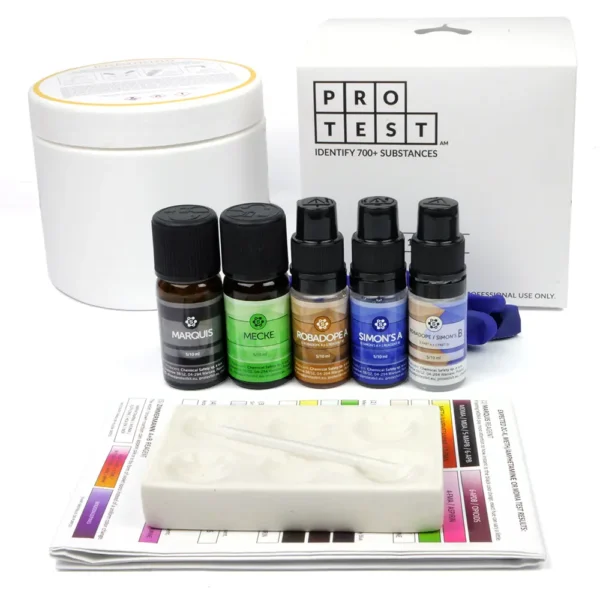
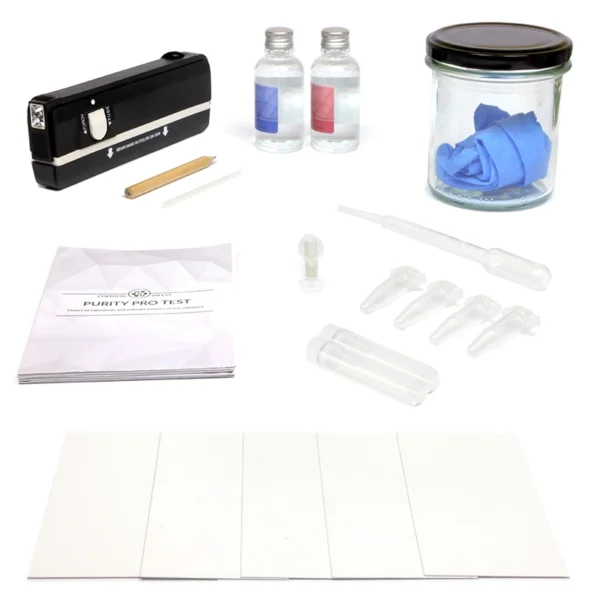
In about a minute the same kit settles:
Meth or speed. Simon’s turns deep blue with methamphetamine and does nothing with amphetamine. The two are sold as each other constantly and look identical.
Anything mixed in. Robadope for amphetamine, Froehde and Zimmermann for the cathinone families that turn up in stimulants.
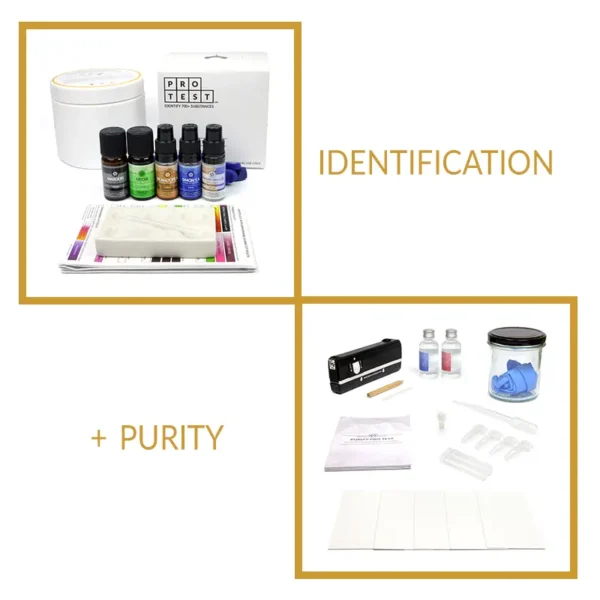
How much. A testing card separates the sample and puts a rough percentage on each part.
Routine laboratory methods are achiral too. GC-MS, HPLC and NMR as normally run give you identity and purity, not the ratio of the two isomers. Separating those needs a chiral column or a derivatisation step, and somebody has to ask for it.
Almost nobody asks. Not one entry in our database records a d or l figure, an (S) or (R), or the word racemic.
So if the isomer ratio is genuinely your question, say so when you send the sample and check chiral analysis is available before you pay. A standard report gives you a purity percentage and a list of what else is in there, which is the useful part for almost everybody.
No. It raises heart rate and blood pressure about as readily as the d-form and narrows blood vessels, which is what a decongestant is for. What it barely does is release dopamine.
Can a reagent tell me which isomer I have?
No, and neither can a testing card. Both isomers give deep blue Simon’s and orange Marquis, and both run to the same place on a card.
Has racemic meth ever been common anywhere?
Yes, in the United States between about 2008 and 2011, after Mexico restricted the ephedrine route. Mixed-isomer material reached roughly 37% of seized exhibits in 2010, then the share collapsed again once producers learned to separate the two.
Is European meth racemic?
Mostly not. In the largest published chiral study, 502 of 528 seized samples were the active isomer, 8 were racemic and 10 were an uneven mix. The tartaric acid seizures are the other half of that story.
If it tested pure but felt weak, was it the l-isomer?
It is possible and it is not the first explanation to reach for. Tolerance, route and what else is in the sample all move the effect more often than the isomer ratio does. Do not redose on a theory.
Which kit if I only buy one?
The methamphetamine and cuts kit. Simon’s for meth against speed, plus the reagents that catch what gets mixed in. Add a testing card when you want the percentage.
No test result can tell you a substance is safe. No substance is 100% safe.This article is published for harm reduction purposes. It does not encourage the use of psychoactive substances and does not replace medical advice.