


Reagent test or urine test, which one do you need?
"Drug test kit" means two completely different products and people order the wrong one every week.
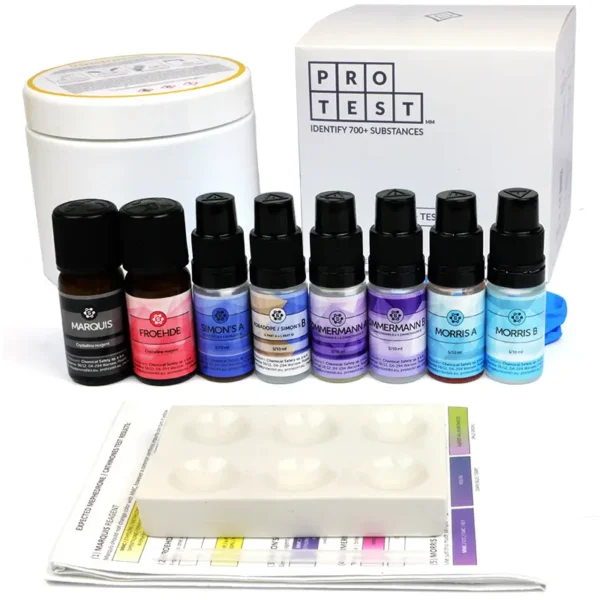
A reagent test tells you what a substance is, before anyone takes it, by adding a drop of reagent to a scraping of powder or pill and reading a colour change. A urine test tells you whether a drug's metabolites are in somebody's body, after they took it, by dipping a cassette and reading a line. Neither does the other's job, not approximately and not badly, because a reagent cannot look at urine and a cassette cannot look at powder.
Which question are you asking?
The table below pairs the question you are actually asking with the test that answers it.
| Your question | The test |
|---|---|
| Is this powder what it was sold as? | Reagent test |
| What else is in it, and how much? | TLC purity test |
| How strong is one dose? | Quantity test |
| Does this contain fentanyl or nitazenes? | Test strips |
| Will this show up on a workplace test? | Urine test |
| Did somebody use recently? | Urine test |
The first four are about a substance. The last two are about a person.
What a reagent test does
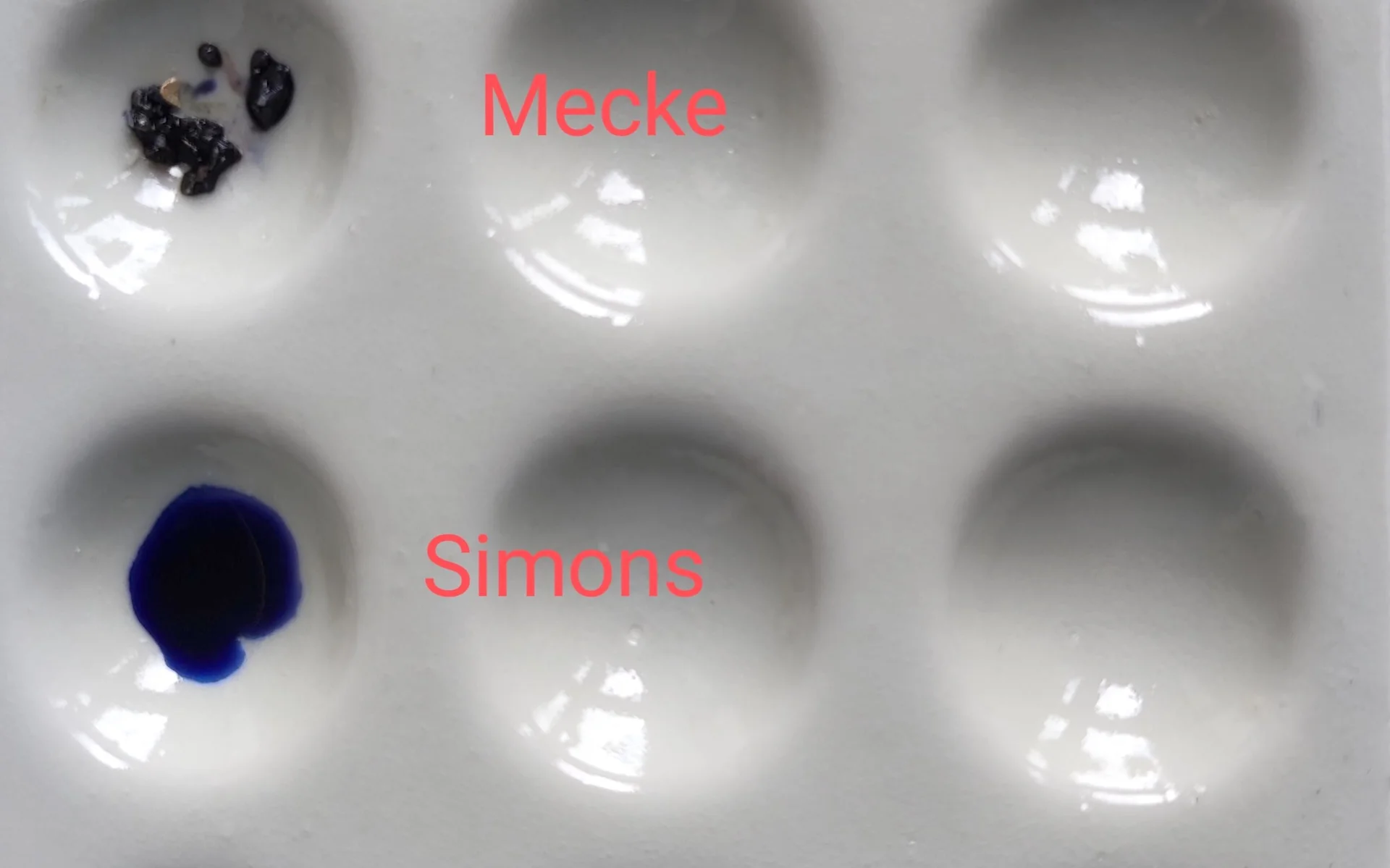
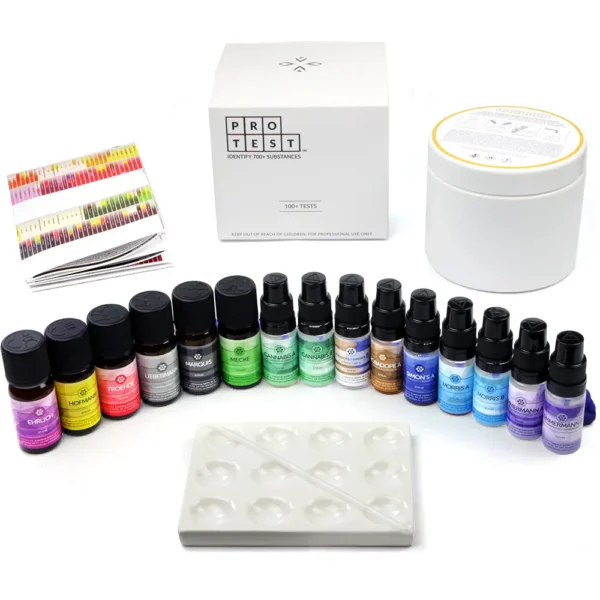
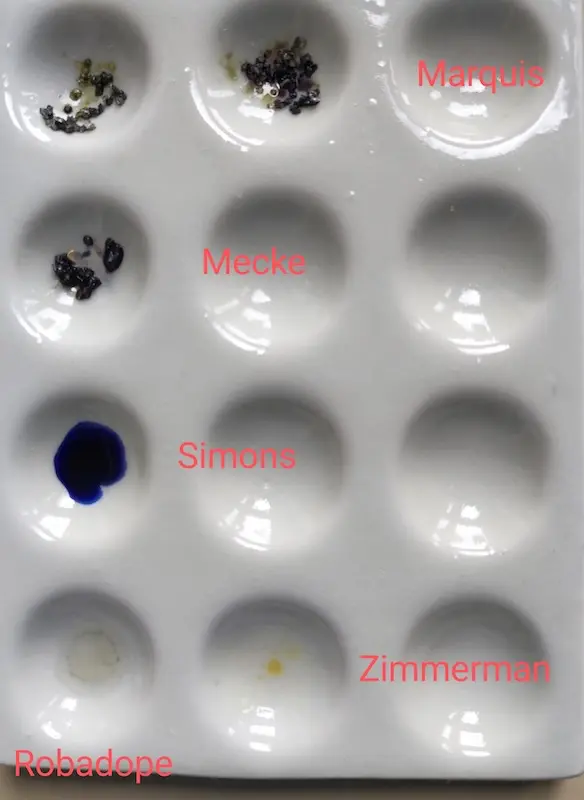
A reagent changes colour on contact with particular compounds: Marquis goes purple to black with MDMA, Ehrlich goes purple with indoles such as LSD and DMT, and Mecke, Simon's, Liebermann, Robadope, Zimmermann, Morris, Froehde and Mandelin each cover a different set. Three facts settle the choice. A reagent answers identity, and strength comes from a quantity test or better, a TLC purity test, so the two questions have two tools. The kits carry five reagents rather than one because five cover far more: around 90% of adulterants react with one reagent in three, and 95% with one in five. And no test makes a substance safe, it tells you what you are holding.
What a urine test does
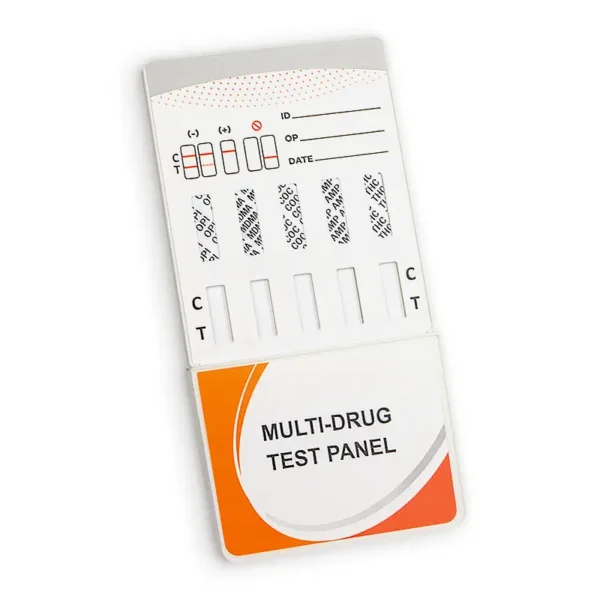
A urine cassette is an immunoassay: antibodies bound to the strip bind a drug's metabolites, and a line reports whether the concentration crossed a fixed threshold. It reports a threshold rather than an amount, and metabolites rather than the drug.
The table below gives the cut-off level for each substance, the concentration below which the test reads negative.
| Substance | Cut-off |
|---|---|
| THC | 50 ng/ml |
| Mephedrone | 100 ng/ml |
| Benzodiazepines | 200 ng/ml |
| Cocaine | 300 ng/ml |
| Ketamine | 300 ng/ml |
| Opioids | 300 ng/ml |
| Amphetamine | 500 ng/ml |
| MDMA | 500 ng/ml |
Detection generally runs from around 6 hours after use to several days, depending on the substance, the dose, body weight, metabolic rate and health. No preparation is needed and the sample does not have to be a morning one.
Does mephedrone show up on a drug test?
Mephedrone and the other cathinones do NOT appear on most standard urine panels, because a typical 5 or 6 panel workplace test looks for amphetamines, cocaine, opiates, THC and benzodiazepines, and mephedrone is chemically a cathinone that the amphetamine antibody does not reliably bind. Our 8-in-1 includes a dedicated mephedrone strip at 100 ng/ml, the most sensitive cut-off on the panel, precisely because the general panels miss it. So on most tests no, and on a panel that specifically includes it yes, which is a fact about what the test is looking for rather than about how long a substance stays in you.
Which cathinones labs are finding
The one thing neither test covers
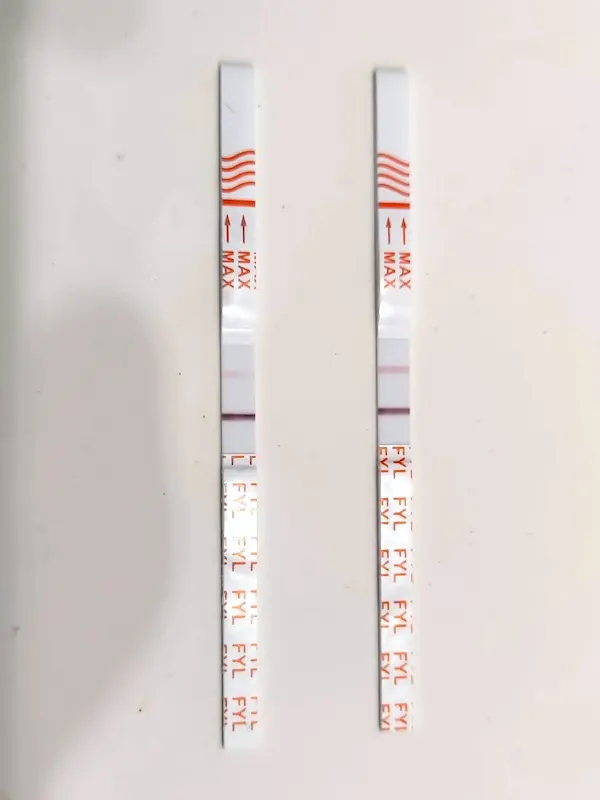
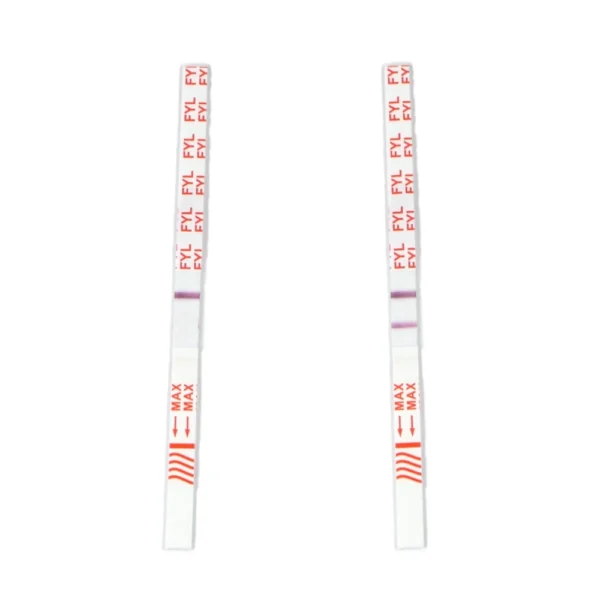
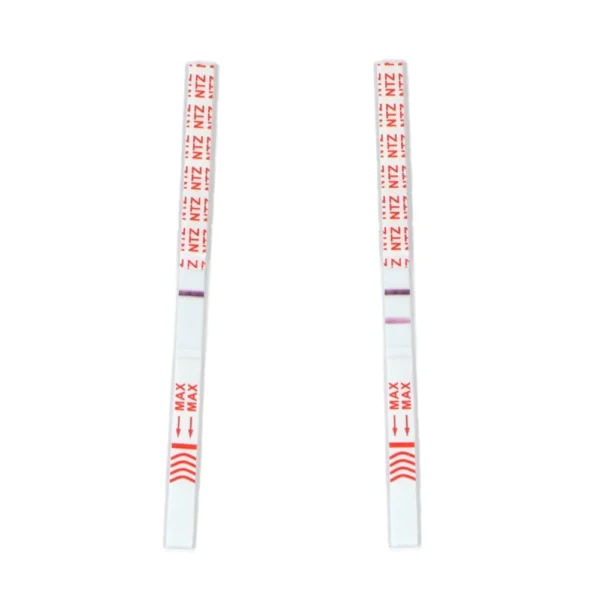
Fentanyl and nitazenes. No reagent identifies fentanyl at the concentrations it appears in, because those concentrations are tiny, which is exactly why it kills, and a cassette's opioid strip is looking backwards at somebody who already took it. Strips detect both before use and at trace levels, with nitazene strips reading benzimidazole opioids down to 0.001 to 2 mg/ml. If a sample comes from an opioid-adjacent supply, or is a pressed tablet of unknown origin, this is the test that changes outcomes rather than decisions.
Reagent test vs urine test: which one you need: common questions
Can I use a reagent on urine?
No. Reagents are made for solid samples, powders, crystals, pills, blotters and plant material, and for the parent compound rather than its metabolites. If you have the substance itself in front of you, that is exactly what a reagent kit is for.
Can a urine test tell me what is in my pill?
No. It reports metabolites in a body, cannot look at a substance directly, and does not identify adulterants. To learn what is in the pill, test the pill: a reagent kit for what it is, a testing card for how much.
How long do drugs stay detectable in urine?
Broadly from about 6 hours after use to several days, varying with substance, dose, frequency, body weight, metabolism and health, so we would not quote a single number for any of them.
Which is more accurate?
Wrong comparison, because they answer different questions. A reagent is presumptive about identity and a cassette is a threshold result about presence in a body. Both are screening tools and both are outperformed by laboratory analysis.
I want to check a pill before a festival.
A reagent test kit. For a pressed pill that means Marquis, Mecke, Simon's, Robadope and Zimmermann, plus fentanyl strips.
I have a workplace test on Monday.
A urine cassette, and read the cut-off table above so you know what the panel is actually looking for.
I have a pressed pill and want to look it up first.
Sensible order. Check the press against 9,374 lab results before you test it.
No test result can tell you a substance is safe. No substance is 100% safe.This article is published for harm reduction purposes. It does not encourage the use of psychoactive substances and does not replace medical advice.