


Which cocaine purity test kit is the best?
The best cocaine purity test is two tests. One tells you what is in the powder. The other tells you how much cocaine it holds. Reagents answer the first in two minutes. A quantity test or a testing card answers the second in one to twenty-five.
Run them in that order and almost any kit gives you a useful answer. Run the second one alone and you get a number for whatever reacted.
In this article
What is in cocaine right now
European cocaine is often strong. Of 1,980 lab-tested samples with a purity figure, half came in above 82%.
But 57% of 2,363 cocaine samples also held something else, most often procaine, caffeine, levamisole, phenacetin or lidocaine. And of 2,058 samples handed in as cocaine, 123 held no cocaine at all, mostly caffeine, amphetamine, ketamine, MDMA or a cathinone.
None of that shows in the powder. A quantity test run on something that is not cocaine still gives you a number.
Step 1: is it cocaine?
Identification comes first, because every purity number depends on it.
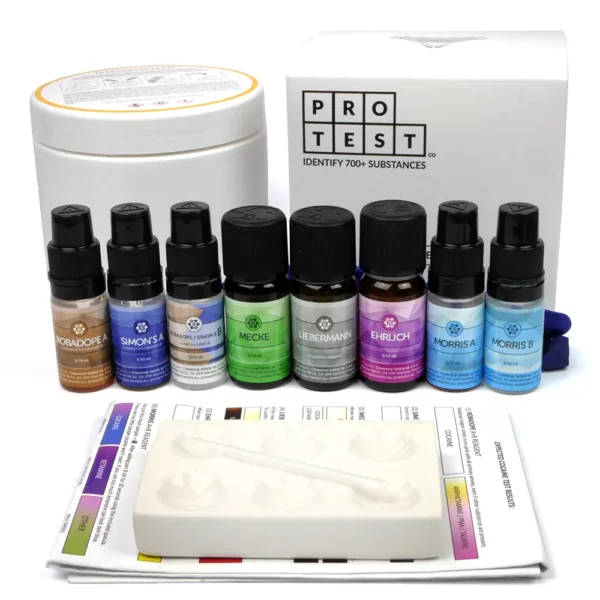
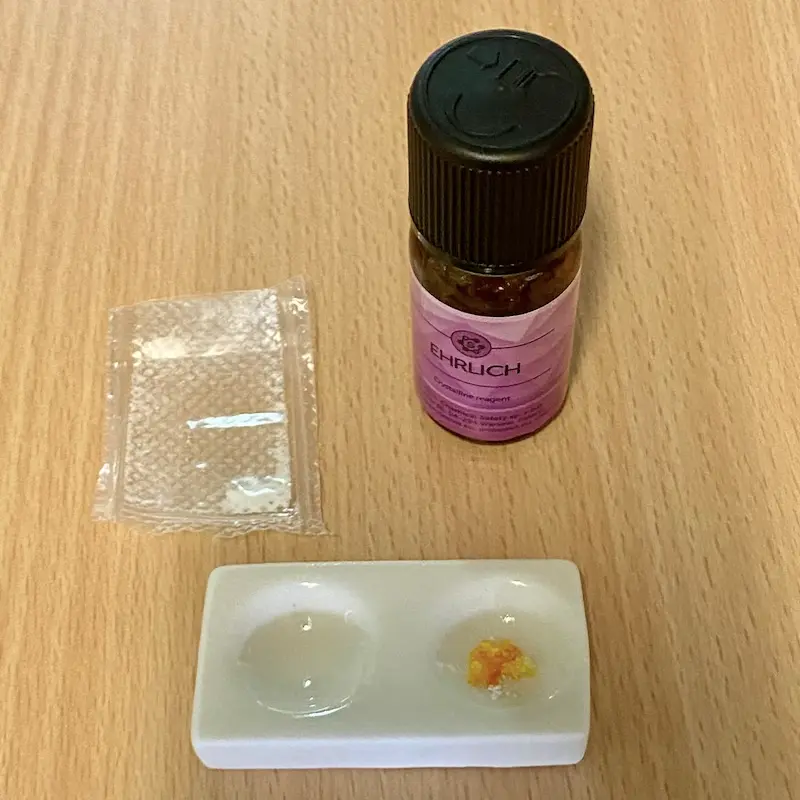
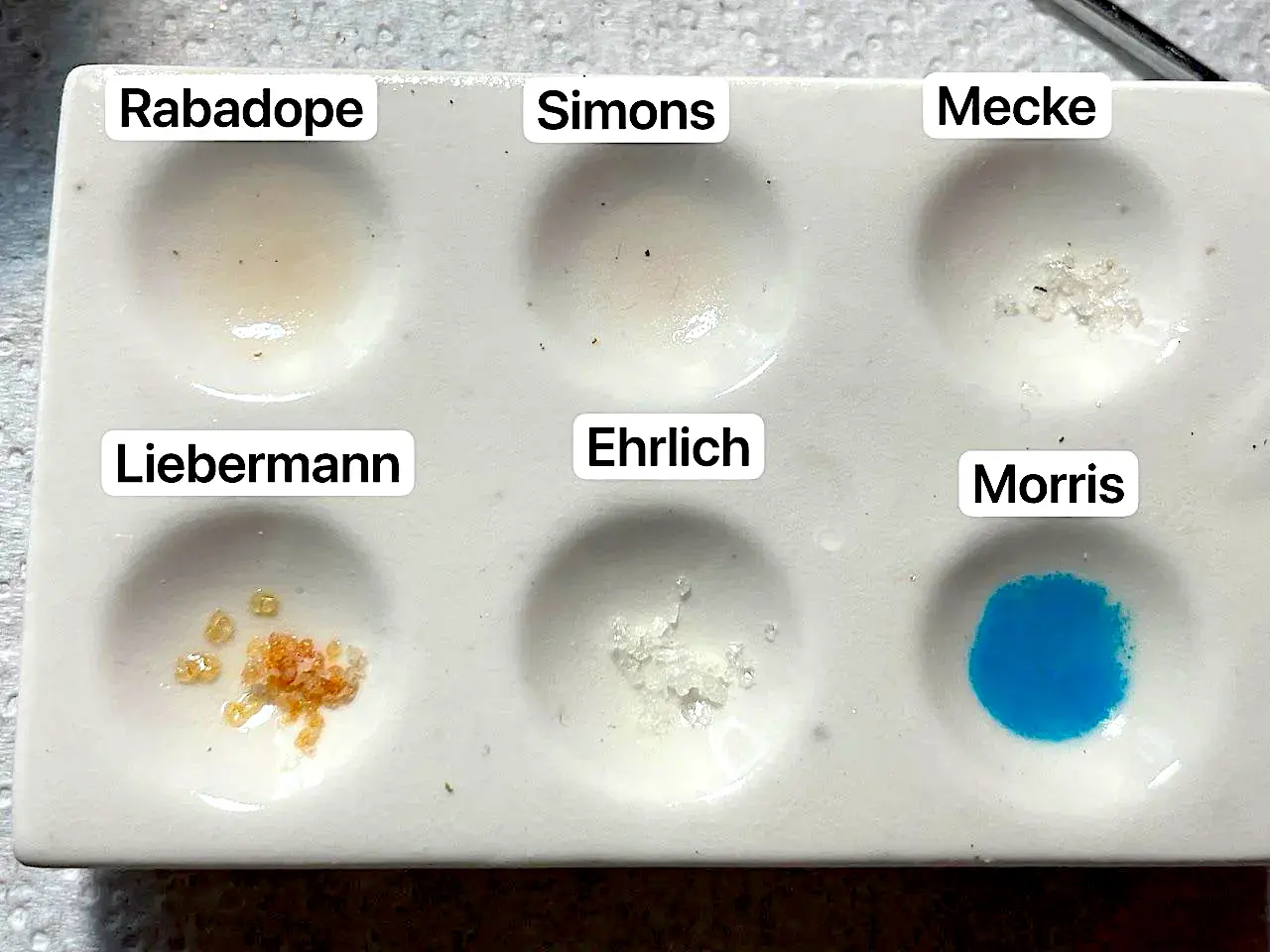
A single-use cocaine test answers one question with the Morris reagent: is there cocaine? The multi-use cocaine and cuts kit answers the rest. Six reagents, each ruling out a different family:
- Robadope: amphetamine
- Simon’s: methamphetamine and cathinones
- Mecke: lidocaine
- Ehrlich: benzocaine and procaine
- Liebermann: levamisole, phenacetin, ephedrine
- Morris: confirms cocaine
Buy the multi-use kit. It catches the cuts a quantity test cannot.
Common mistakes
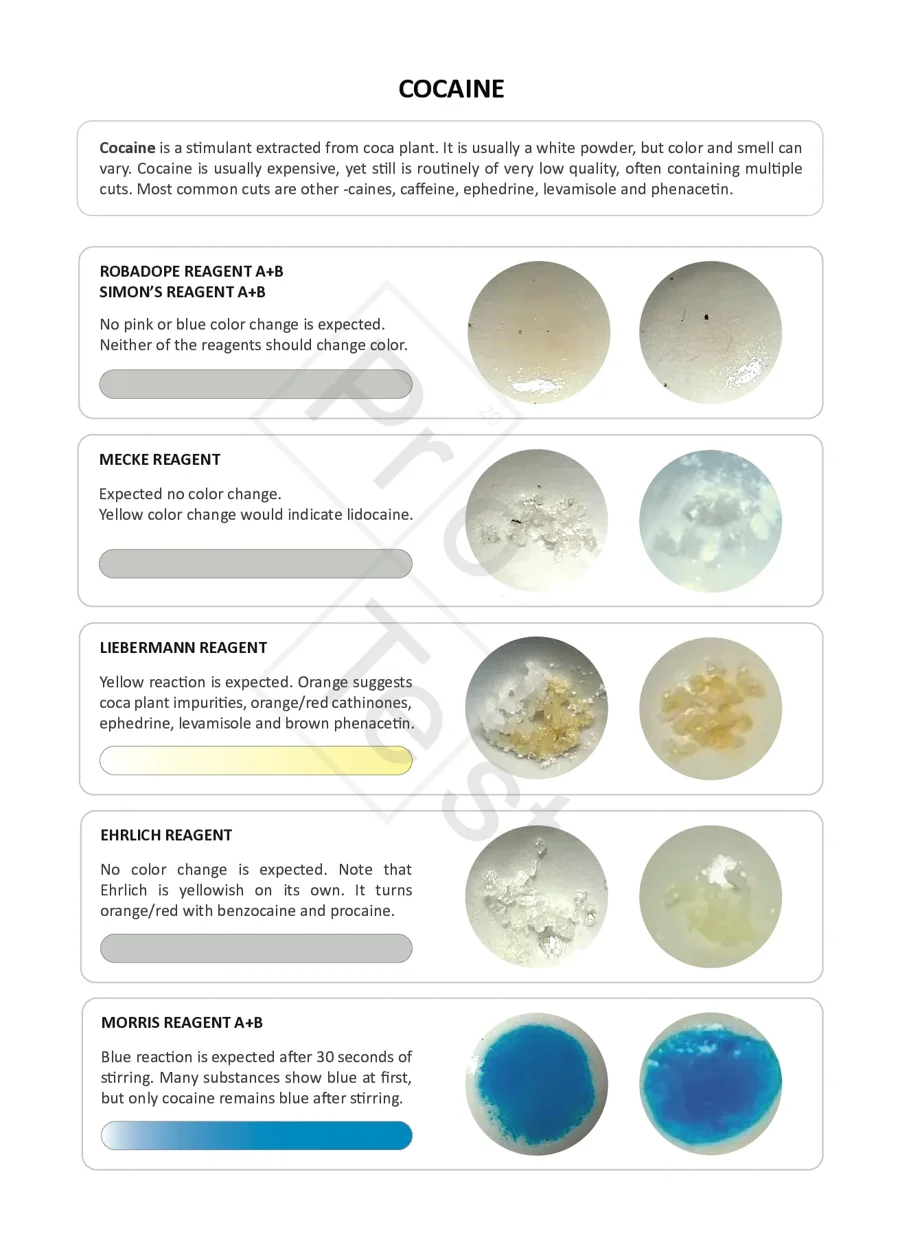
The commonest is following an outdated chart. Older guides, still copied around the internet, say Marquis should stay clear with cocaine and that orange means amphetamine.
Real cocaine often carries secondary coca alkaloids from the leaf and from processing. Labs listed them in at least 169 of the samples above. They turn Marquis pink or peach and Liebermann orange, and they are not a cut.
Old guides also still sell Scott as a cocaine test. Scott turns just as blue with lidocaine, benzocaine and procaine, which is why we replaced it with Morris.
Use the booklet that came with your kit, and stir Morris for its full 30 seconds.
Coca alkaloids and Marquis · Why we dropped Scott · Does the bleach test work?
Powder, crack or paste
- Salt, the usual powder: what every reagent and scale is built for, and it gives the clearest colours.
- Crack and freebase: cobalt-based reagents turn a fainter blue, so use a little more sample. Gram for gram, base holds about 12% more cocaine, so pure crack reads at the top of any scale.
- Coca paste: full of other alkaloids and processing leftovers. Expect a colour quantity test to overstate. A testing card shows them as separate spots.
Step 2: how much cocaine?
Once you know it is cocaine and which cuts are out, a quantity test puts a rough number on it. Two ways: colour reagents, which are the cheapest, and TLC, which measures the cocaine and shows every cut beside it.
Every colour quantity test works the same way. A fixed amount of sample goes into a fixed amount of reagent, and the deeper the colour, the more of whatever reacts. The reagent cannot tell cocaine from a cut that reacts the same way, so the cut adds to the reading. Every one of them has such cuts. The question is whether the maker tells you which.
Ampoules
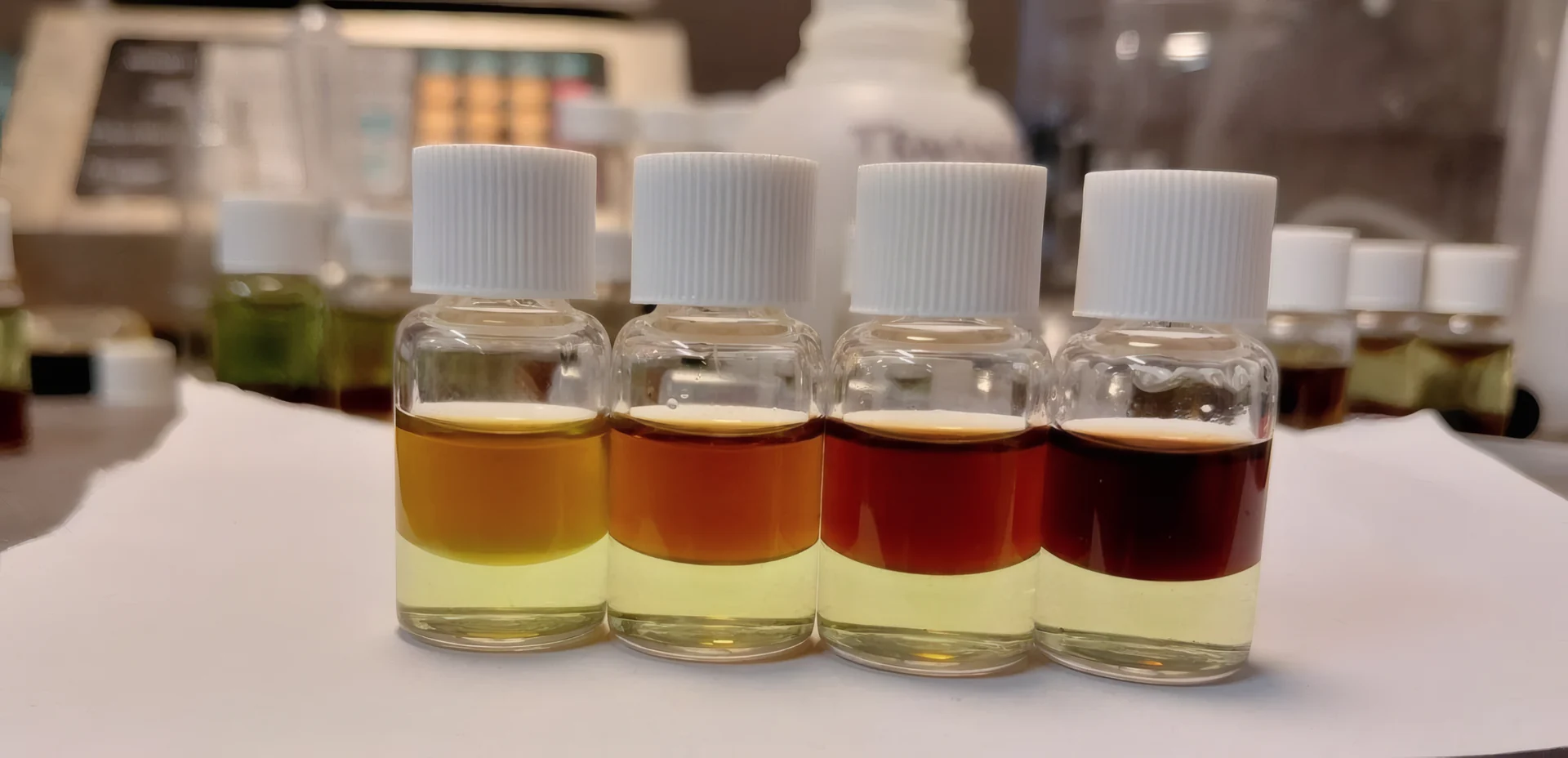
Snap the top, drop the sample in, compare the colour with a card. Two kinds are sold: one-liquid ampoules, which colour the whole liquid and use named bands from “very low” to “very high”, and two-liquid ampoules, which separate into layers and sometimes print a percentage scale.
Both share the same four problems:
- You measure the sample with a tiny scoop or by eye, and too much pushes any result to the top.
- The colours sit close together and shift with the light and the background.
- Users report false positives, and the packaging does not list them.
- One ampoule says nothing about which cuts are in the powder.
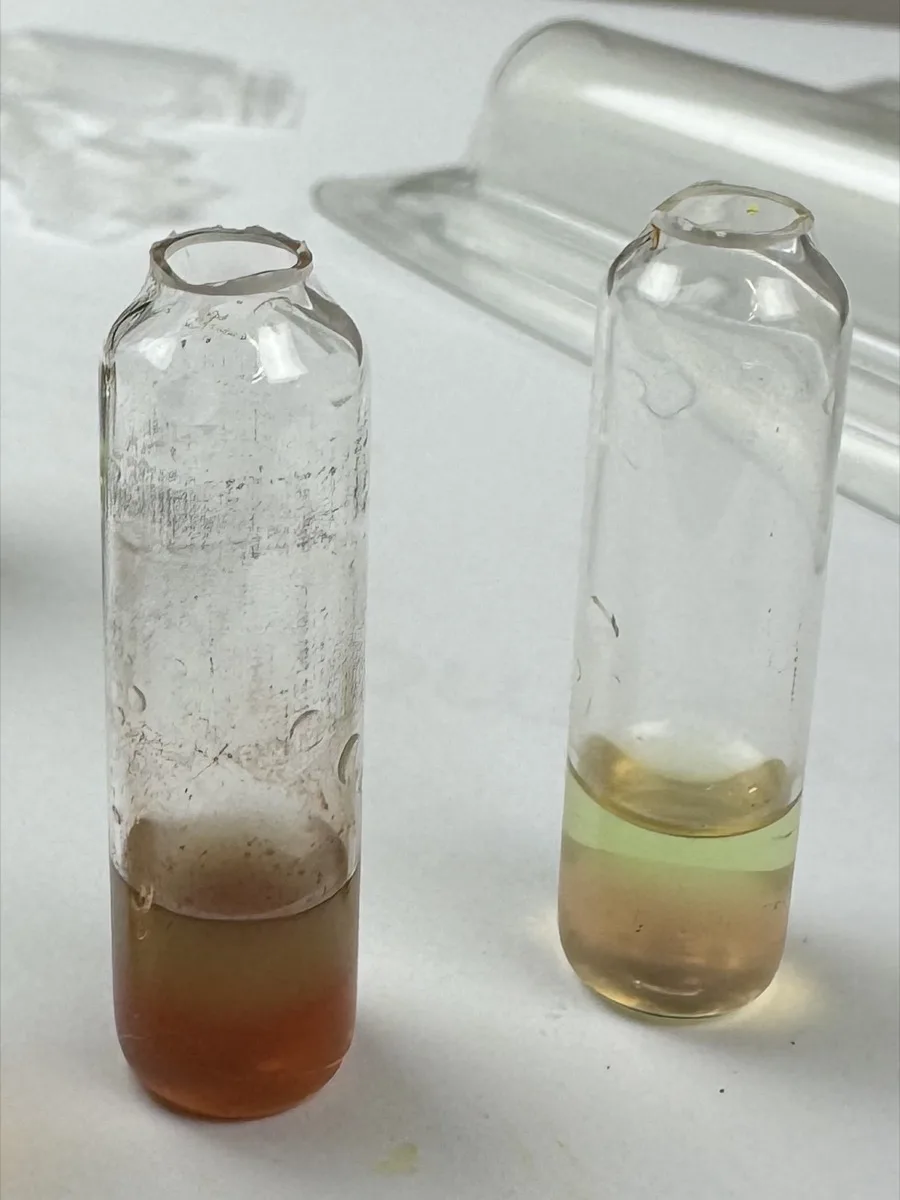
One careful home tester on Reddit has posted ampoule results for five years while also sending batches to labs. They got the same near-black from a quarter of the scoop as from half.
In 2025 one of their ampoules split into dark, clear and dark layers within seconds. A commenter called it fine because of the colour. The tester disagreed: one substance should colour the liquid evenly, so a split means something else is reacting. They threw that batch away.
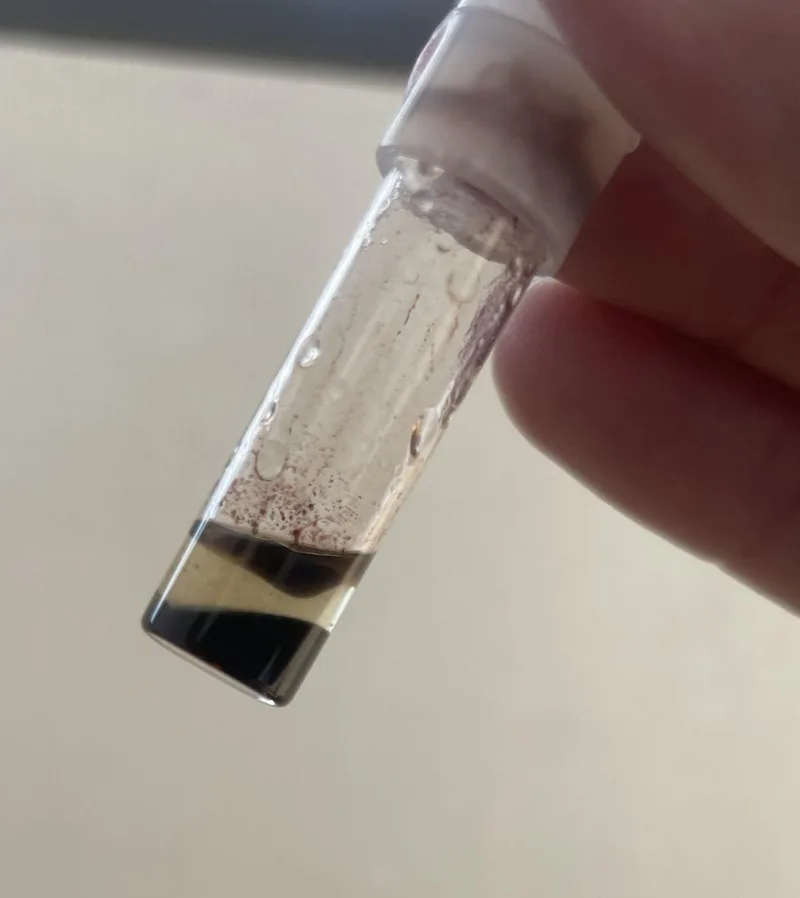
Screw-cap vials
Vial tests use the same chemistry with more control over the amounts. How they get there differs a lot.
Some vial kits from other brands want exactly 20 mg weighed on a milligram scale you buy separately, three vials, and a chart in 10% steps, which is finer than the roughly ten-point error the same makers claim. Their FAQ says lidocaine and related -caines “may still affect the result”. That is as far as it goes.
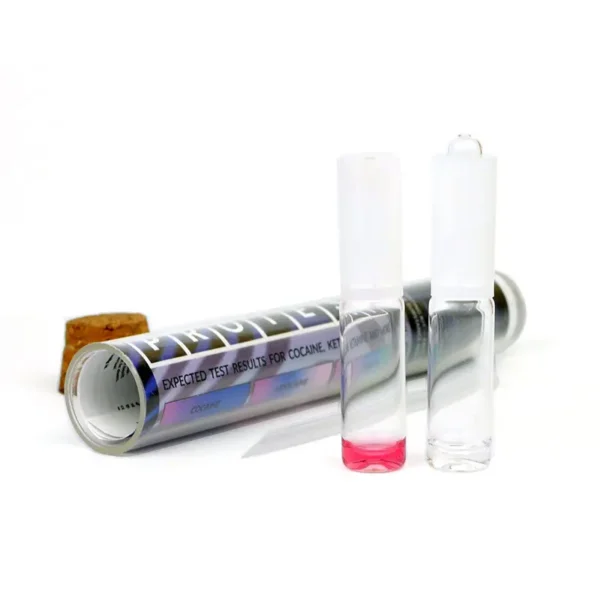
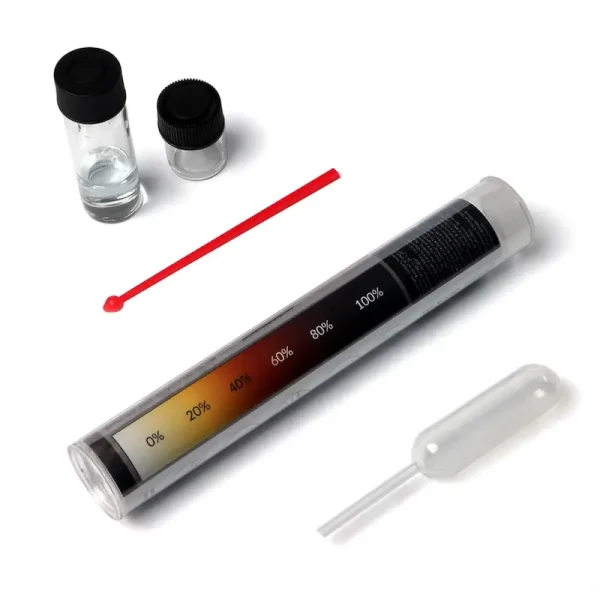
Our PRO Test for Cocaine Quantity takes three steps and about a minute:
- Measure. Two level microspoons of sample, about 20 mg. No scale needed.
- Mix. Eight drops from the first vial into the second, then shake.
- Read. After 60 seconds, compare the top layer with the 0 to 100% scale printed on the tube, or let the app read the photo.
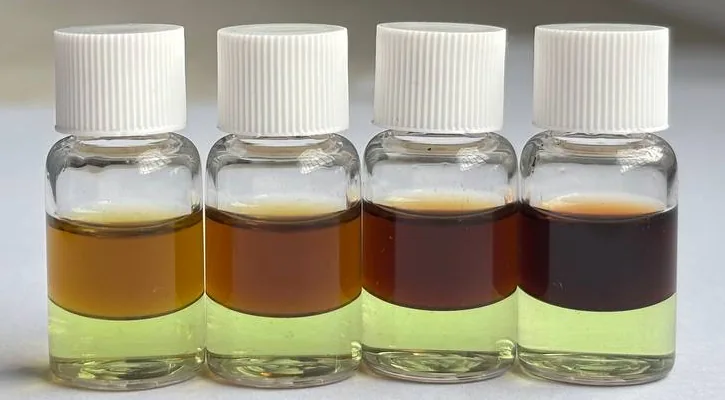
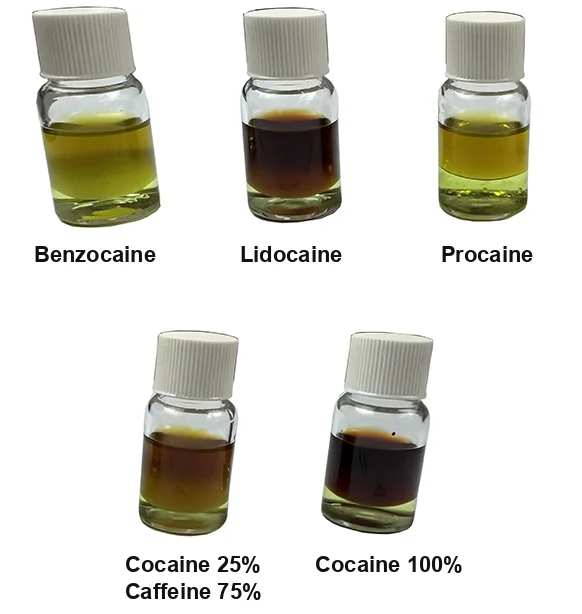
We also publish what it reacts to, because every colour test reacts to something. Lidocaine turns our quantity test as dark as pure cocaine. Benzocaine and procaine stay pale.
Lidocaine is also one of the easiest cuts to rule out. Mecke in the identification kit turns yellow with it and stays clear with cocaine, and you run that kit first anyway. So the one blind spot is covered before it can matter.
TLC: every cut, and how much cocaine
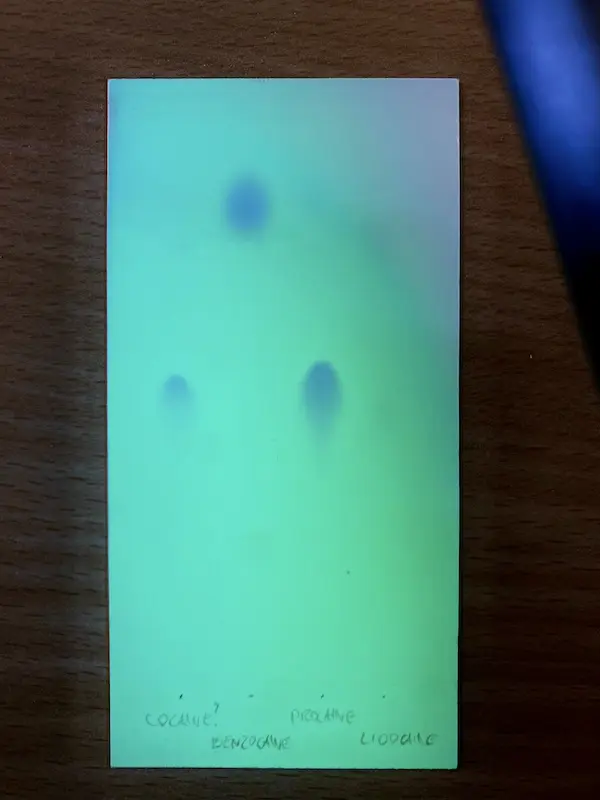
A TLC test separates the sample on a testing card before anything is measured. Cocaine, caffeine, levamisole or a -caine each run to their own height as a separate spot, including cuts no reagent colours. Three steps, about twenty-five minutes:
- Prepare the sample. Weigh it, dissolve it in the testing liquid, apply it to the marked dot on the card.
- Run the test. Stand the card in the jar and wait while the sample separates into spots.
- Read the result. Reveal the spots with the UV-C light, then measure the cocaine spot against the printed scale, or let the app do it.
That lands within about ten percentage points. It has one known false positive, and we list it too: procaine, which runs level with cocaine. Ehrlich in the identification kit turns orange with it, and a short step in the booklet filters it out.
Identification reagents plus a testing card are the best home lab you can have: what is in the powder, and roughly how much of each.
What a TLC test measures · The procaine filter
Read it with the app
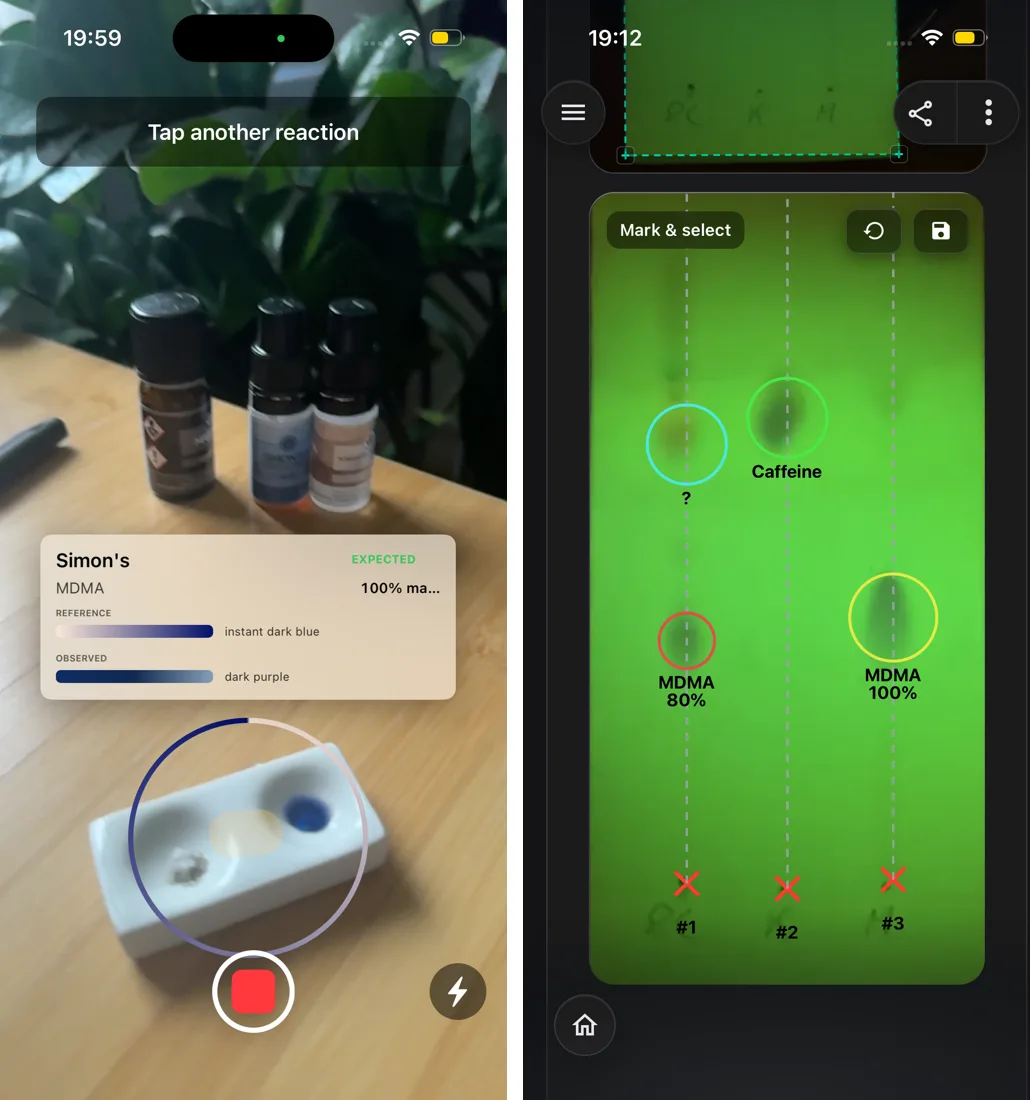
Colour is the weak point of every home test. Camera, room light and angle all shift what you see. The DrugsPRO app corrects for that. Tap a reaction and it matches the colour against about 825 reference results across 15 reagents. Tap the white paper first on a quantity vial and it fixes white balance before comparing with cocaine standards from 25% to 100%. Drag the four corners of a testing card and it straightens the image, measures each spot and turns the lengths into percentages.
It runs on your phone and uploads nothing.
Open DrugsPRO · Reagent reference results
Which cocaine purity test kit to buy
The table lists each quantity test, the false positives its maker declares, and whether it shows which cuts are in the powder.
| Test | Declared | Cuts |
|---|---|---|
| One-liquid ampoule | none listed | no |
| Two-liquid ampoule | none listed | no |
| 20 mg vial kit | -caines “may” affect it | no |
| PRO quantity test | lidocaine, flagged by Mecke | with the kit |
| TLC purity kit | procaine, flagged by Ehrlich | all of them |
- Is it cocaine? The single-use cocaine test.
- And what is it cut with? The cocaine and cuts kit.
- How much cocaine? Add the PRO quantity test to that kit.
- Everything, and how much of each? The cocaine purity and identification kit, reagents plus TLC.
- A number to the percentage point? A lab analysis.
Which cocaine purity test kit is the best: common questions
Are cocaine purity ampoules accurate?
They give a rough band once identification is done. Keep to the stated sample, read in daylight inside the stated time, and run the cocaine kit first.
Does lidocaine show up on a purity test?
On colour quantity tests, yes, and we say so for ours. It is also one of the easiest cuts to catch: Mecke turns yellow with lidocaine and stays clear with cocaine, and you run it before any quantity test anyway.
Do I need a milligram scale?
Not for the PRO quantity test, which uses two level microspoons. The TLC kit works from 40 mg, so a scale helps there.
What if the ampoule splits into layers?
Treat it as a failed test, not a strong result. One substance should colour the liquid evenly. Run the identification kit on the same batch.
One kit only?
The cocaine and cuts kit. Every purity number depends on identification. Add the quantity test or TLC when you want the number.
No test result can tell you a substance is safe. No substance is 100% safe.This article is published for harm reduction purposes. It does not encourage the use of psychoactive substances and does not replace medical advice.