


Which synthetic cannabinoids are on the market?
Mostly not the ones people have heard of. European drug checking services have published 100 samples containing a synthetic cannabinoid between April 2025 and August 2026, and MDMB-4en-PINACA is in 40 of them. JWH-018, JWH-210 and AM-2201, the compounds that still carry most of the search traffic, appear in none.
Laboratory findings for synthetic cannabinoids
The table below counts what the labs found, by compound.
| Compound | Samples |
|---|---|
| MDMB-4en-PINACA | 40 |
| 5F-ADB | 21 |
| MDMB-INACA | 17 |
| ADB-BUTINACA and ADB-BINACA | 12 |
| Other synthetic cannabinoids | 33 |
| JWH series and AM-2201 | 0 |
Samples containing more than one compound appear in more than one row, which is why the column exceeds 100. Most of it is in England, with 31 samples, then Austria on 23, Switzerland on 20 and Slovenia on 11.
That zero needs one qualification. Almost everything we hold is from 2025 and 2026, and the JWH compounds had their peak more than a decade earlier, so it means they are not turning up now, not that they never did.
Browse the alerts database · MDMB-4en-PINACA in the library
Why the quantity argument is really a mixing argument
These compounds are full agonists at the CB1 receptor where THC is only a partial one, and that difference in receptor behaviour, rather than quantity alone, is what separates the family from cannabis. The practical problem is that they are dissolved in solvent and sprayed onto plant material, so they do not distribute evenly. One end of a bag can be inert and the other end a hospital visit, which is also why "I smoked some yesterday and I was fine" tells you nothing about the rest of it.
That is why a reagent result on sprayed material is worth less than usual: you are testing the pinch you took, not the bag. Taking several pinches from different parts of the material tells you more than one careful test does, and if you want a figure for how much is on it, that is a quantity test.
The part that has changed: vapes and CBD flower
Fifteen of the 100 samples were detected alongside nicotine, which does not happen in a bag of herb and does happen in vape liquid. Another 32 came back with CBD, THC or CBN, meaning cannabis or CBD product carrying a synthetic on top of it, and one of those was reported as CBDA 4.0%, free CBD 8.1%, total CBD 11.5%, CBN 0.1%, plus MDMB-4en-PINACA and ADB-BUTINACA. Read that composition again: it is legal CBD flower, correctly labelled for its cannabinoid content, sprayed with a synthetic so that it does something. You buy it in a shop, you get an accurate CBD certificate, and you get a full CB1 agonist nobody mentioned.
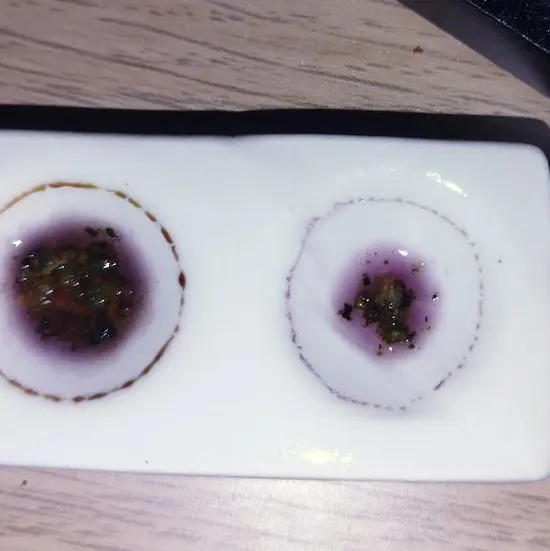
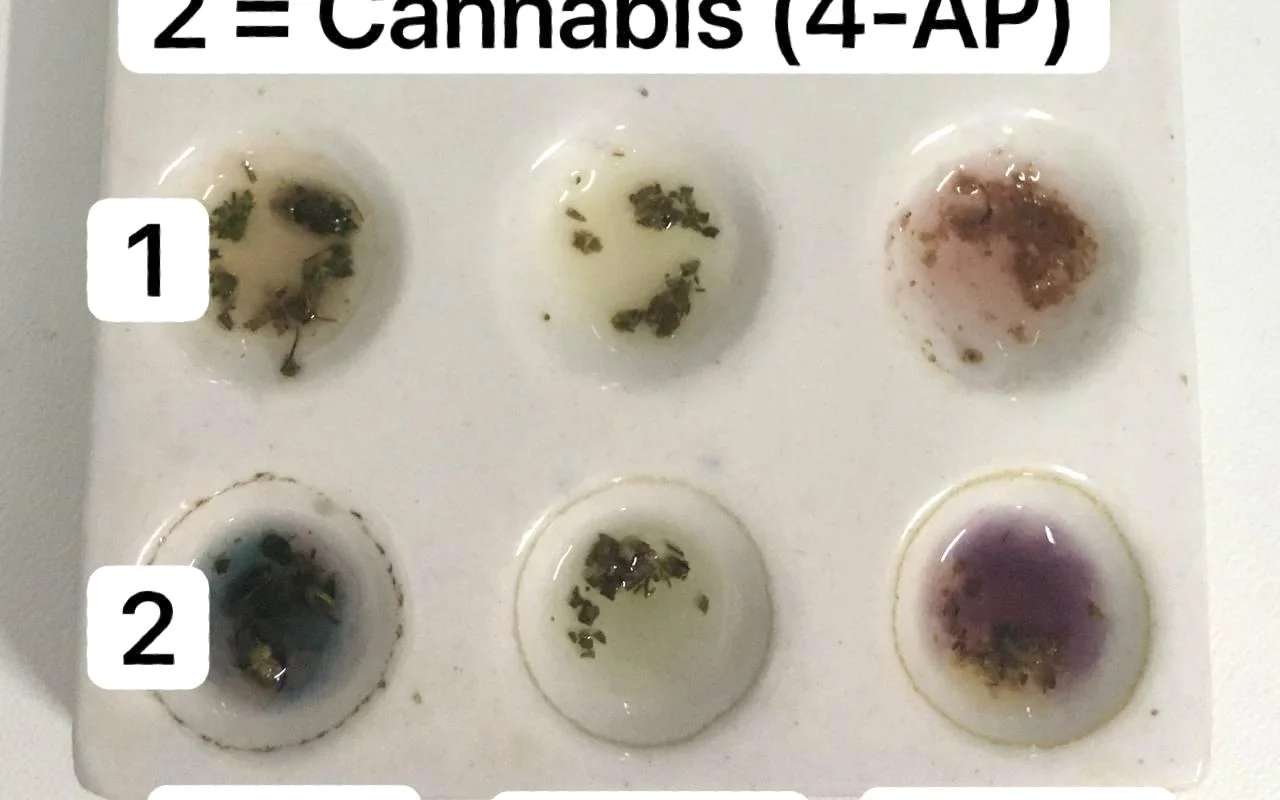
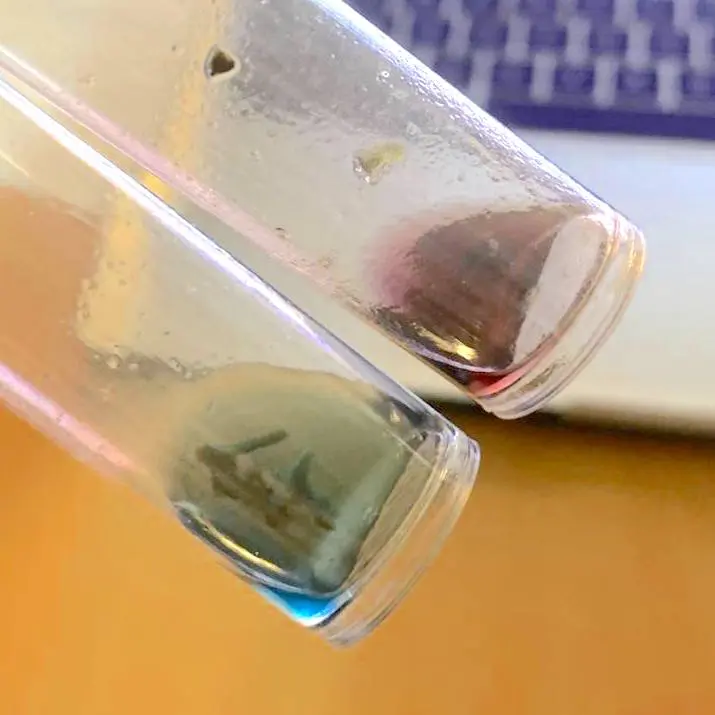
The 4-AP reagent is the one that matters here: it reacts with the cannabinoids in cannabis and stays blank on the synthetics, so plant material that gives no colour is itself the result. Testing CBD flower before you smoke it is the cheapest check on this page.
What the 4-AP reagent shows
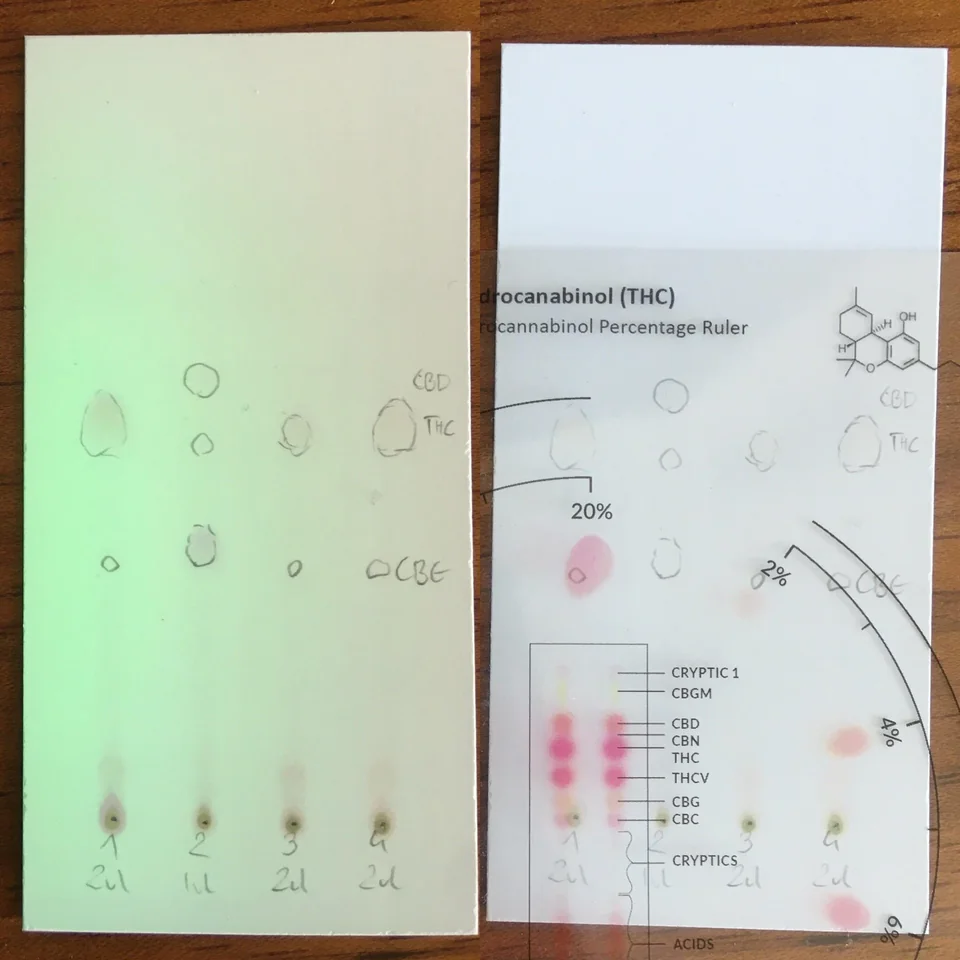
The cannabis reagent identifies THC and CBD, so it works by exclusion: a correct cannabinoid reaction indicates THC or CBD is present, and the absence of that reaction on material sold to you as cannabis is the warning. It will not name which synthetic cannabinoid you have, and no reagent will, because there are hundreds of them and the reference reactions do not exist for most.
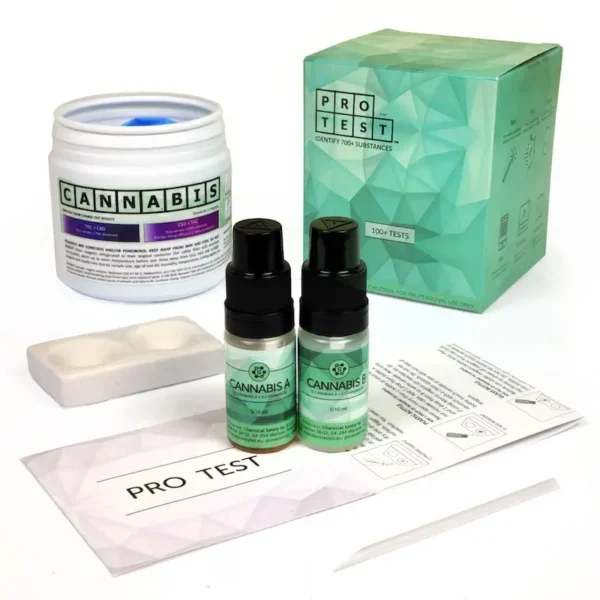
How to detect synthetic cannabinoids
What we would test, and when
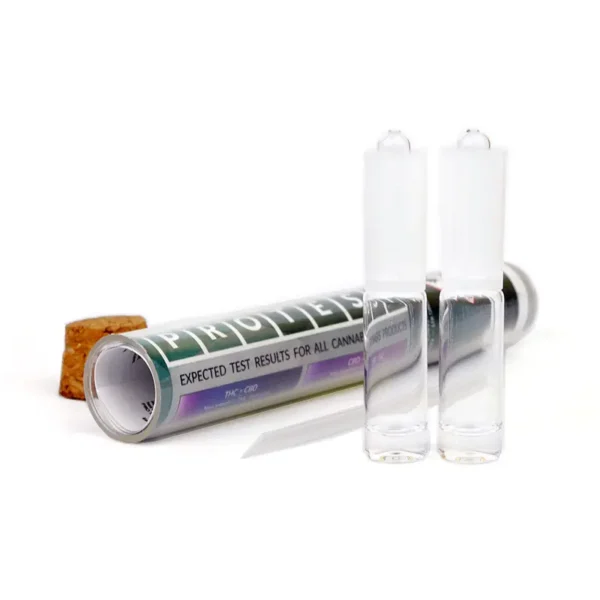
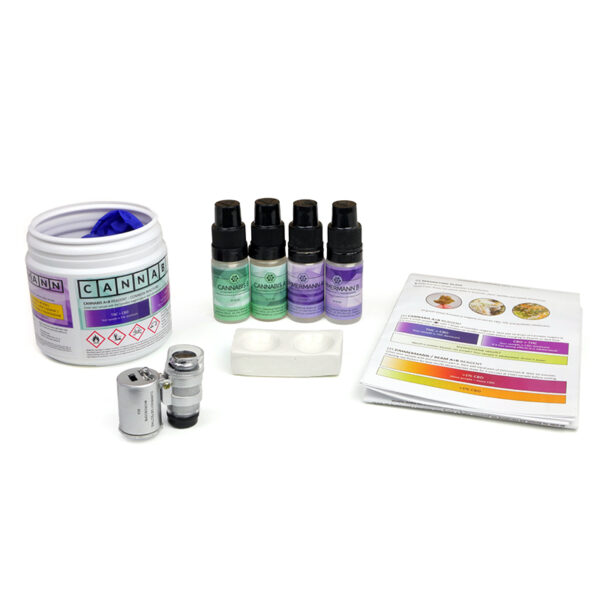
Cannabis from a source you do not know, every time, because one bottle covers about 100 tests. CBD flower or hash bought as a legal product, for the reason in the composition above. Vape liquid, on a dried drop. And anything that hit far harder than you expected: keep what is left and send it to a lab, because that result ends up in a database and helps everybody else.
Which synthetic cannabinoids are on the market: common questions
Can I see or smell a synthetic cannabinoid on weed?
No. It is sprayed from solution and dries invisible. Herb containing MDMB-4en-PINACA has repeatedly been submitted by people who believed it was ordinary cannabis.
Are synthetic cannabinoids stronger than THC?
They act differently, which matters more. THC is a partial CB1 agonist and most of these are full agonists, and full agonism at CB1 is what the case literature associates with seizures and cardiac events.
Does the reagent tell me which one is present?
No. It indicates whether THC or CBD is present. Absence of the expected reaction is the warning; identification needs a laboratory.
What about HHC and THCP?
A different question. Those are cannabinoids and they do react. The compounds on this page are not cannabinoids in the botanical sense, they are synthetics that happen to hit the same receptor.
Where do the pharmacology figures come from?
The substance library, which aggregates dose.wiki, PsychonautWiki, TripSit and Erowid and lists its sources on each compound page. The sample counts are ours and you can recount them in the alerts database.
No test result can tell you a substance is safe. No substance is 100% safe.This article is published for harm reduction purposes. It does not encourage the use of psychoactive substances and does not replace medical advice.