


How to use the Ehrlich reagent
Developed by German chemist Paul Ehrlich in the late 19th century, the Ehrlich reagent test is a widely used colorimetric test in forensic toxicology for the presumptive identification of various substances, including illicit drugs like LSD (lysergic acid diethylamide). Its primary function is to detect the presence of indoles, a class of organic compounds found in many hallucinogenic substances. Over the years, the Ehrlich test has played a critical role in drug analysis, aiding law enforcement agencies and healthcare professionals in identifying and classifying potentially dangerous substances, contributing significantly to the field of drug testing and detection.
Ehrlich reagent color reactions
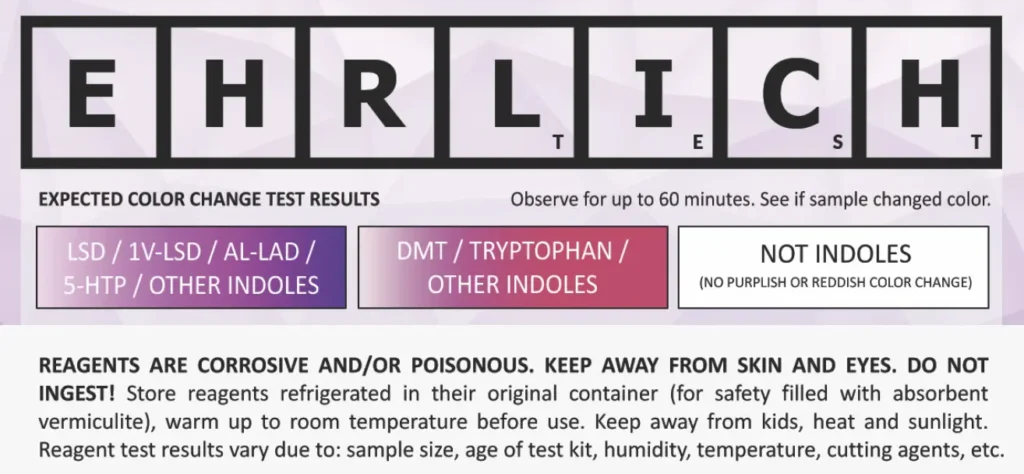
Expected color changes for the Ehrlich reagent, from the PRO Test reagent chart.
| Substance | Expected reaction |
|---|---|
| 2C-B | No color change |
| DMT | Pink → magenta |
| LSD | Pink → purple |
| Ketamine | No color change |
| Amphetamine | No color change |
| Methamphetamine | No color change |
| Mephedrone | No color change |
| MDA | No data |
| MDMA | No color change |
| Cocaine | No color change |
| Oxycodone | No color change |
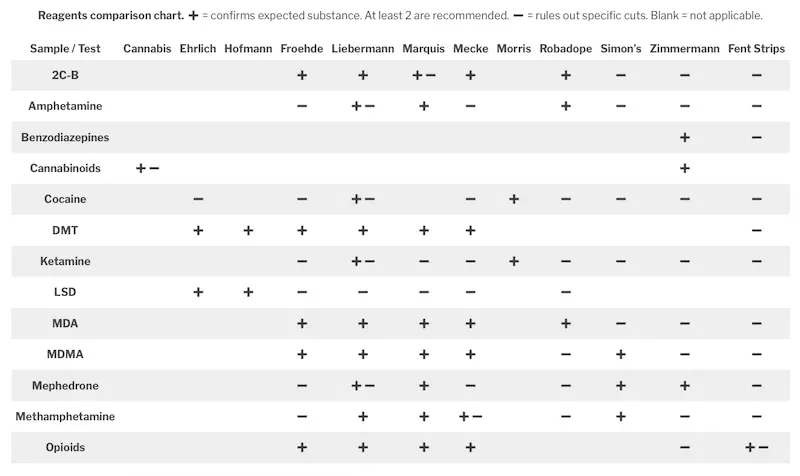
Reagents indicate presence, not purity or quantity. A reaction that differs from the expected color is a reason to test further, not proof of a particular substance.
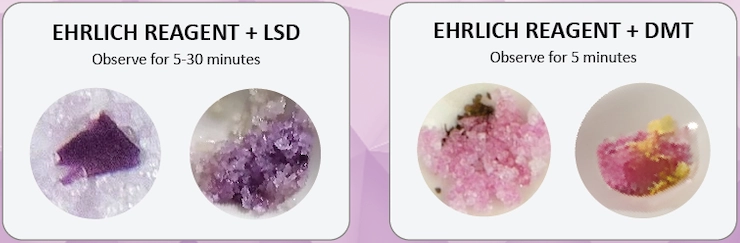
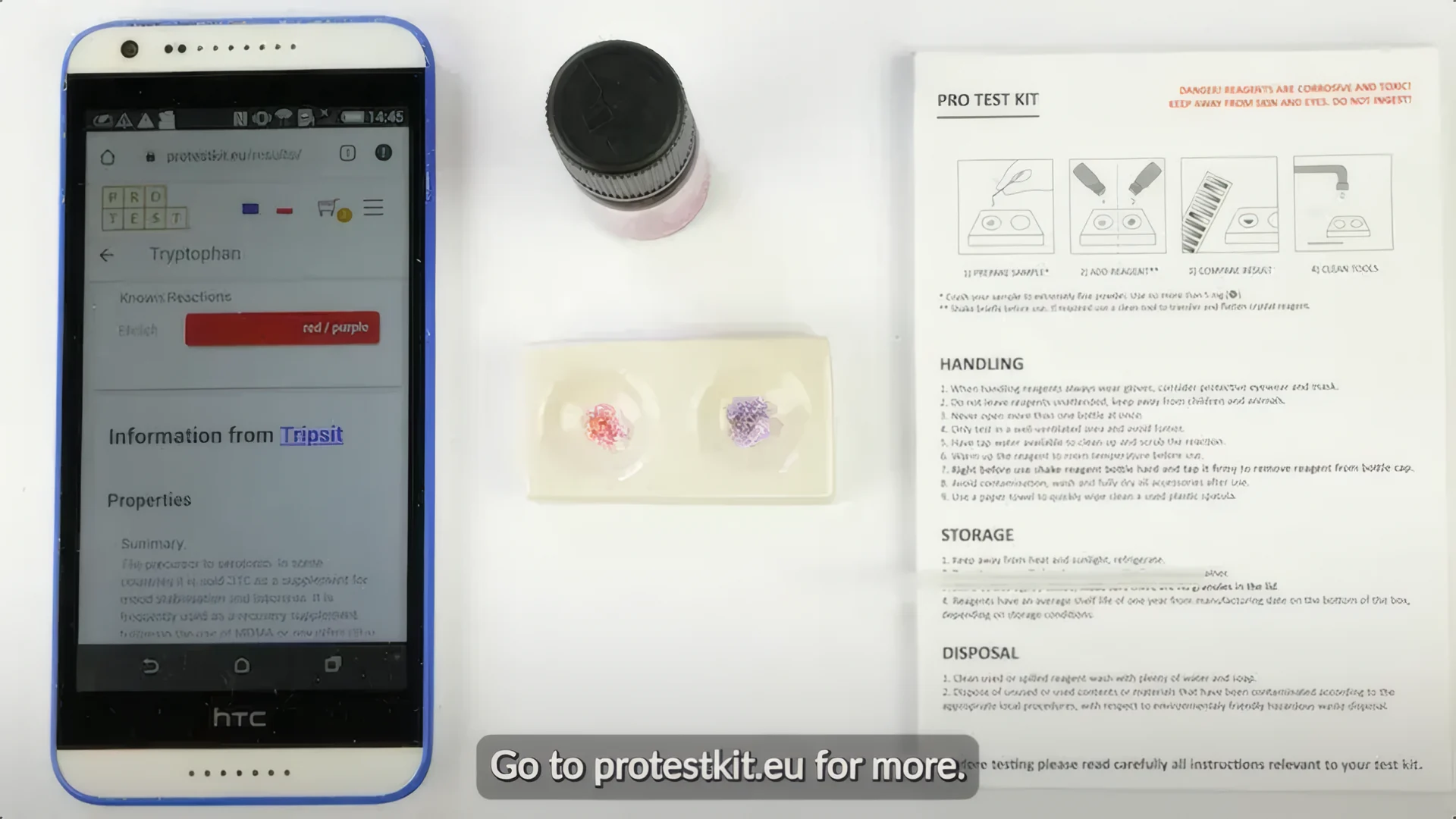
Ehrlich reagent is the most common drug testing kit for psychedelic compounds. Used with Hofmann reagent Ehrlich test is best for LSD, DMT and more.
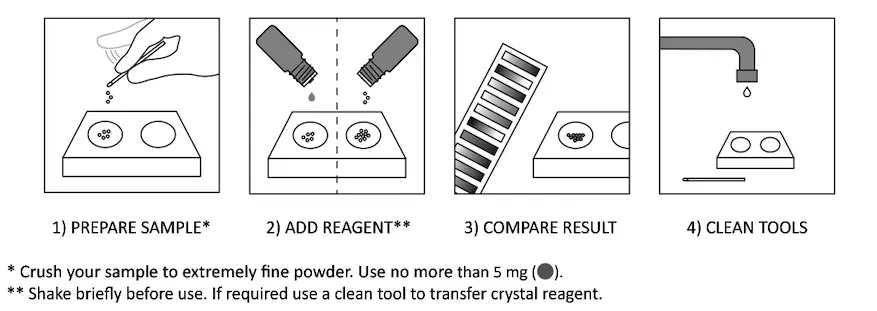
How to test?
Questions?

Still searching for the best test kit?
Click here to see our full offer, or here for single-use kits, or here for all multi-use kits including TLC purity testing kits.
A positive or negative Ehrlich testing kit result does not indicate if a substance is safe. No substance is 100% safe.
No test result can tell you a substance is safe. No substance is 100% safe.This article is published for harm reduction purposes. It does not encourage the use of psychoactive substances and does not replace medical advice.