


What is iso-LSD and does it affect LSD purity?
Iso-LSD is similar to LSD in structure and name, but lacks the same psychopharmacological profile. It is the same molecule with one joint put together the other way round, which is enough to remove any psychedelic effects. Iso-LSD is detected in almost every LSD sample due to incorrect synthesis, handling or storage.
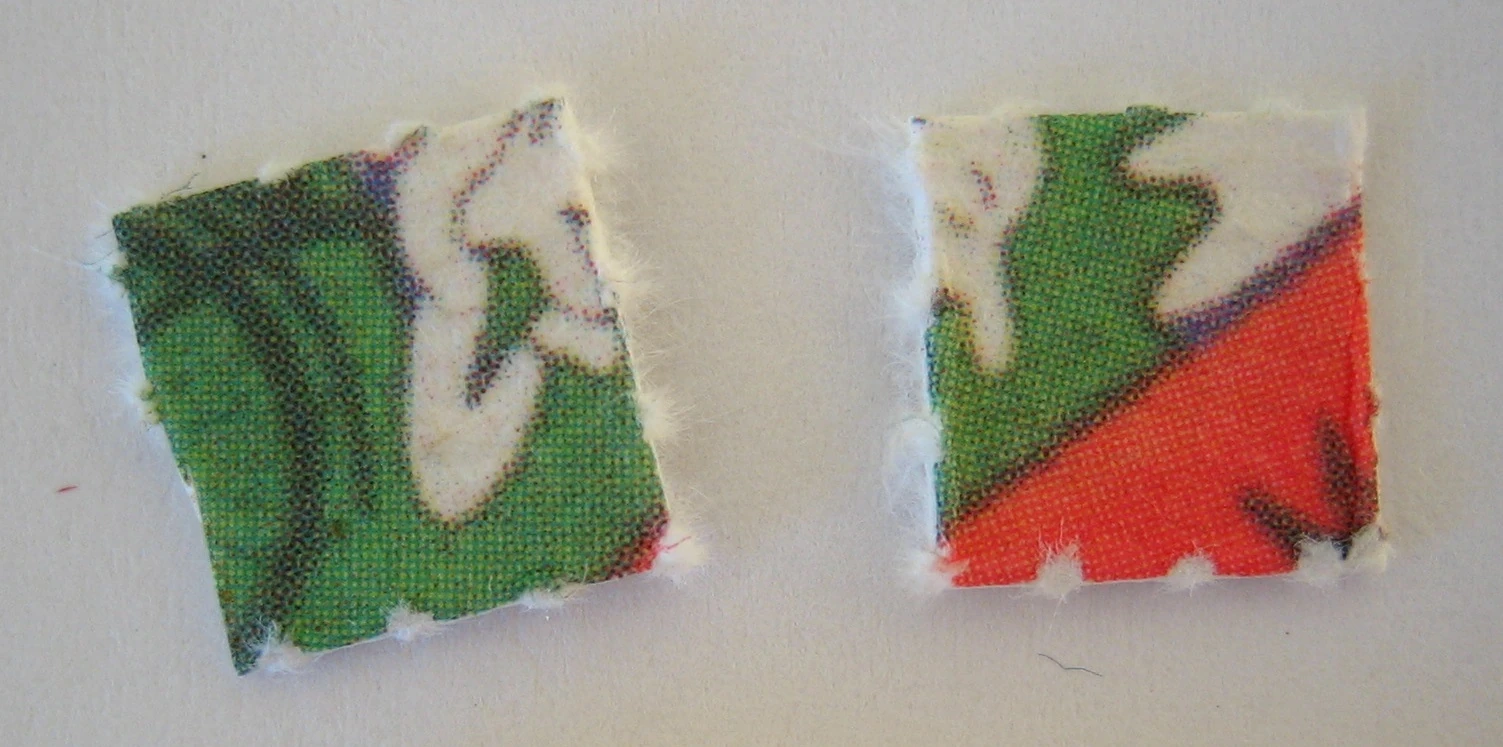
This inactive isomer of “acid” affects potency more than anything else does. Cut tabs, as in for example LSD and NBOMe in one product, are rare, be it due to insufficient carrier (gel, blotter, etc) size, or financial reasons. For a tab, purity is mostly a question of how much of the paper is LSD, and how much of it is iso-LSD.
In short
- Iso-LSD is LSD with one bond flipped. It has no psychedelic effect at any dose tested.
- Nearly every tab carries some, from about 10% to 70% of the material, set by how carefully the batch was made.
- Alkaline contact turns LSD into iso-LSD. Heat, light and damp destroy LSD outright.
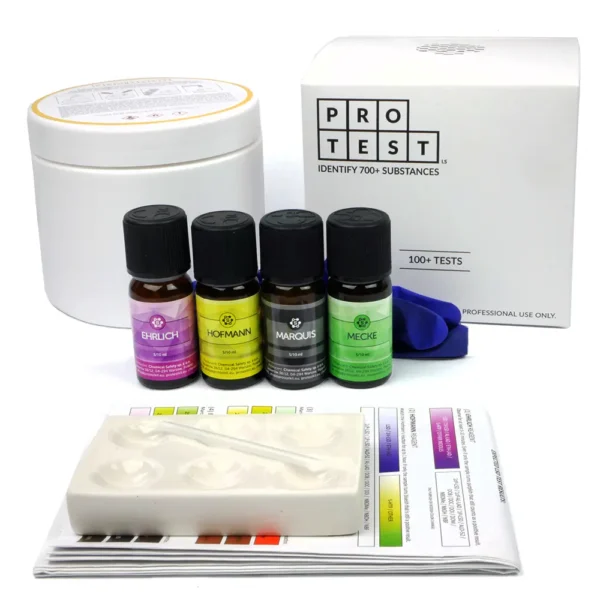
- Reagents cannot tell the two apart, so a colour test says what the tab is and nothing about strength.
- A testing card separates them at home into two spots, for analysis. Only a laboratory puts micrograms on each.
What purity means for a tab
When a tab disappoints there are only five reasons for it. There is nothing on the paper. There is something else on it, like NBOMe or DOC. It was underdosed from the start. It has broken down. Or a lot of what got dropped on it was iso-LSD.
The table below takes those five and gives what a reagent shows for each.
| Reason | Colorimetric response |
|---|---|
| Nothing on the paper | No colour |
| Another chemical, NBOMe or DOC | Wrong colour, or none |
| Underdosed from the start | Normal or pale colour |
| Broken down by heat or light | Normal or pale colour |
| Iso-LSD | Normal or pale colour |
Only the first two give a clear answer. The other three can all look like good acid, and the colour intensity of a reagent cannot reliably tell an underdosed tab from a degraded one or from one high in iso-LSD. Of the three, iso-LSD is the only one already settled before the tab reaches you.
The same molecule, built two ways
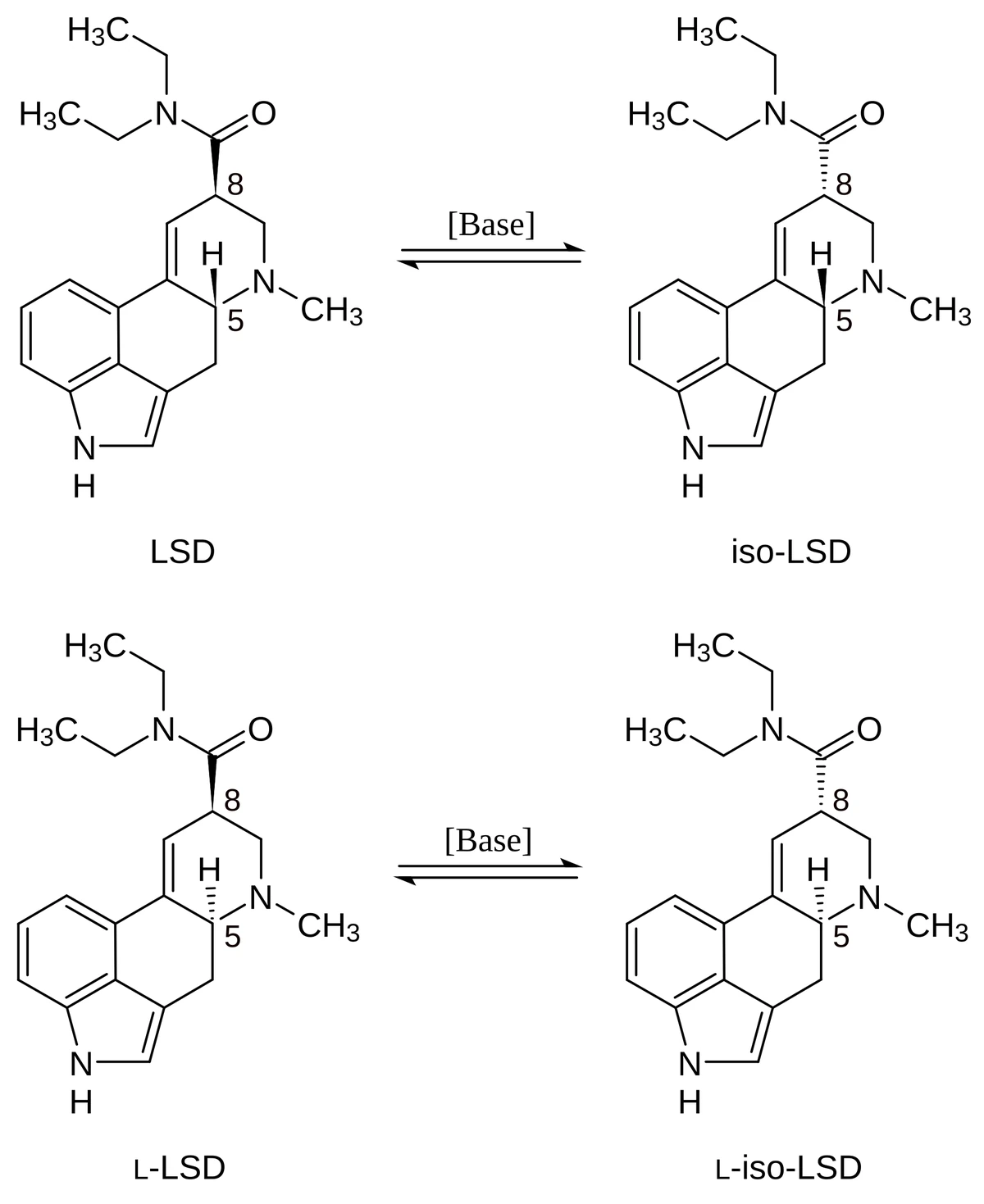
LSD has one joint in the middle of it that can be put together two ways round. One way produces the renowned psychedelic effects, popularised by its inventor Albert Hofmann, while the other is iso-LSD, and lacks any “tripping” potential.
Everything else about the two is identical. Same atoms, same weight, same response to anything you can do at home. Chemists count four possible versions, and two of them never show up in anything sold, so a tab holds LSD, iso-LSD, or a mix.
Salt forms, and why they matter less than the isomer
LSD is sold as a salt, almost always the tartrate, which is the form Hofmann first made and the one that keeps best. Freebase LSD exists too, mostly in liquid, and it is the less stable of the two. Once a tab is in your mouth the salt comes apart and the body sees the same molecule either way, so the form has no bearing on the effect.
Where the salt does show up is in the weight. Tartaric acid makes up roughly a fifth of LSD tartrate, so 100 micrograms of tartrate holds about 80 micrograms of LSD base. A laboratory reporting micrograms per blotter has to say which of the two it is counting.
How much of a tab is dead weight
Nearly every tab ever analysed has held both LSD and iso-LSD. The split runs from about 10% iso-LSD to about 70%, and where a batch lands depends on who made it. Forensic labs use the ratio to tell one source from another.[1]
A number written on a tab counts everything on the paper, LSD and iso-LSD together. It says nothing about how much of it works.
Where it comes from, and what you can do about it
Most of the iso-LSD on a tab was already there when you bought it. It forms while the acid is being made, and how much ends up on the paper comes down to how carefully whoever made it finished the job. The change runs both ways, so a careful producer turns it back into LSD. A careless one leaves it in, because it still weighs something.
Alkaline things turn LSD into iso-LSD. Soap left on your fingers, bleach, baking soda, a surface someone wiped with cleaner. That is the one everyday slip that quietly makes the dead version. Everything else just wrecks the tab.
Heat, light and damp do something else. They break the acid apart into other compounds, rather than turning it into iso-LSD. A tab that spent a hot festival weekend in a pocket is weak because some of the LSD has gone.
So handle blotter with clean dry hands, or with tweezers. Keep it cold and dry, away from light and away from anything soapy. And treat the iso-LSD share as fixed.
Turning iso-LSD back into LSD is possible, and it is what a careful producer does. The same alkaline conditions that flip LSD into iso-LSD flip it back, so the crude product is held in a base until the two settle into an equilibrium mixture. That mixture still holds iso-LSD. The LSD is then separated out by chromatography and crystallised as the tartrate, and the leftover iso-LSD can go round again.[1]
None of that works on a tab. The base that converts the isomer also hydrolyses and oxidises the acid, so without controlled conditions, dry solvents and darkness, more LSD is lost than gained. The amount on a blotter is around a tenth of a milligram, far too little to recover from paper, run through a column and crystallise. And without a laboratory you cannot measure whether the ratio moved at all. The conversion is a synthesis step, and it belongs where the synthesis happens.
What iso-LSD does
Nothing anyone has managed to measure. Albert Hofmann and colleagues gave people up to 500 micrograms of it, about five tabs’ worth of material, and saw no psychedelic effect at all.[2]
So the ratio is simple arithmetic. A tab carrying 150 micrograms, 60% of it iso-LSD, gives you about 60 micrograms of the real thing. The paper weighs the same, a reagent looks the same, and the dose is a little over a third of what the number promised.
What people say iso-LSD does
The old story was strychnine, and it was never true. Shulgin looked for it in street samples for years and never found it, and a tab is far too small to carry a meaningful dose of anything else.[3]
The modern version of the same story blames iso-LSD for body load and a hard come-up. The usual argument puts the mechanism on the crude product as a whole: only part of it is LSD before purification, and the rest, inactive in the brain, is said to still act on the body. Swiss drug checking states plainly that there is no scientific evidence for it.[4]
The claim has a recognisable shape on forums. Someone has a rough night with heavy body load and thin visuals, someone else answers that the batch must have been high in iso-LSD, and the thread settles there. It is a tidy explanation for a bad night, and nobody has ever gone back and measured how much iso-LSD was actually in the tab.
Iso-LSD is the one thing in that mixture anyone has tested on people, and it came back with no effects. The body-load stories describe rough, unpurified product in general. Nobody has run the test that would pin anything on iso-LSD by itself, so treat it as untested. What a rough night usually comes from is covered in What causes a bad acid trip?
Reagents cannot detect iso-LSD
No colour test tells the two apart. Ehrlich and Hofmann react with a part of the molecule that both versions share, so the colour comes out the same whether the paper is mostly LSD or mostly iso-LSD. Nothing in a well or on a card changes that.
That matters most for the Hofmann colour scale. It reads everything on the paper at once, so two tabs can land on the same shade of violet and hold very different amounts of the version that works.
A reagent answers the question that puts people in hospital: whether the paper holds acid at all, or an NBOMe or DOC substitute. That takes about a minute. How much is iso-LSD is a strength question. What the substance is, is a safety question, and it comes first.
Does LSD purity test detect iso-LSD?
Every “LSD purity test kit” and “LSD potency test” sold today is a colour reagent, and a colour reagent reads the part of the molecule that LSD and iso-LSD share. A tab that is mostly dead weight scores as strong acid. The number a shade of violet is matched to on a card covers everything on the paper and says nothing about how much of it works.
Some shops sell these tests as purity kits, often at a high price, and say nothing about iso-LSD. The seller knows the chemistry, pockets the margin, and the buyer leaves with a false sense of certainty about a dose the test never measured. A colour test tells you what the tab is, and that is a safety answer worth having. Anyone charging you for a strength reading from one is selling misinformation. The only honest potency figure for blotter comes from a laboratory, which separates the two and reports LSD in micrograms per blotter.
The method that does separate them
Separating the two on a chromatography plate is old and well documented. Two published methods cover it.
The table below lists the plate, the solvent and what each method shows, with the retention values as published.
| Source | Plate and solvent | Result |
|---|---|---|
| FDA, 1967 | Silica gel G, chloroform and methanol 1+4 | Both spots blue under UV, separated |
| FDA, 1967 | Silica gel G with alumina, acetone | LSD runs 0.6 to 0.7 cm, iso-LSD 0.3 to 0.4 |
| Clark, 1989 | Silica gel G, chloroform and methanol 9+1 | LSD at Rf 0.53, iso-LSD near 0.28 |
| Clark, 1989 | Silica gel G, acetone | LSD at Rf 0.58, iso-LSD near 0.17 |
Both compounds glow blue under long-wave UV. You read the plate by where the spots sit. Breakdown products show up as further spots of their own, which is how a plate tells a tired tab from a badly made one.
The Clark paper adds a trick. Heat the sample briefly in alcoholic potassium hydroxide before running it, and the base flips some of the LSD so that both spots appear at once. Comparing that pair against LSD and iso-LSD standards is how analysts separate real LSD from close analogues such as LAMPA.[6]
The same separation runs at home on a testing card. Spot the sample, run the liquid, and LSD and iso-LSD sit at different heights, with breakdown products as further spots below them. That is analysis: it shows you the second spot and roughly how heavy it is against the first, and it is the only home method that shows iso-LSD at all. It does not recover LSD from the paper, and it gives no micrograms. Our position on testing LSD quantity has not changed: a testing card shows what is on the tab and what has broken down, and a number needs a laboratory.
What a laboratory gives you
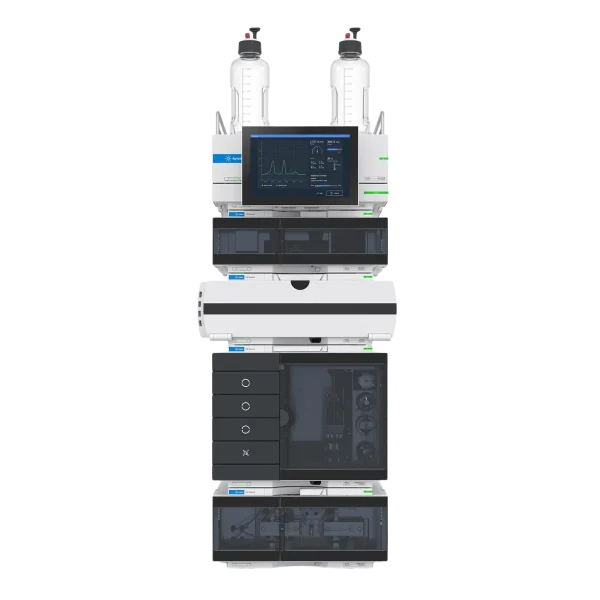
A laboratory separates the two and puts a number on each. Ours reports LSD in micrograms per blotter, which is the figure the iso-LSD share quietly moves.
That distinction is the whole point of a purity figure for a tab. Total material on the paper and active LSD on the paper are two different numbers, and the gap between them is the iso-LSD.
Blotter is accepted. Liquid is not, so if you are holding a dropper bottle the answer stops at identity.
References
- Cody JT. Hallucinogens. In: Bogusz MJ, ed. Forensic Science. Handbook of Analytical Separations, vol. 6. Elsevier, 2007, pp. 175 to 201. Source of the 10% to 70% iso-LSD range, the use of the ratio to attribute a batch, and the 98% base conversion. shop.elsevier.com, excerpt at erowid.org ↩
- Hofmann A. Lysergic acid diethylamide and related compounds. Relationship between spatial arrangement and mental effects. In: Chemical Concepts of Psychosis, 1958, p. 85. Self-experiments with the four stereoisomers; iso-LSD inactive up to 500 micrograms. erowid.org ↩
- Shulgin AT, quoted in Granquist L. Strychnine in LSD? Erowid, 1994. erowid.org ↩
- Saferparty Zürich. LSD evaluation 2020. States that there is no scientific evidence that iso-LSD influences the effect of LSD. saferparty.ch ↩
- Martin RJ, Alexander TG. Analysis of preparations containing LSD. Journal of the AOAC, vol. 50, no. 6, 1967. archives.lib.purdue.edu ↩
- Clark CC. The differentiation of lysergic acid diethylamide (LSD) from N-methyl-N-propyl and N-butyl amides of lysergic acid. Journal of Forensic Sciences, vol. 34, no. 3, 1989, pp. 532 to 546. store.astm.org ↩
What causes a bad acid trip? · LSD harm reduction guide · What Ehrlich reagent shows · What does LSD look like? · What a testing card does
Questions?
Is iso-LSD dangerous?
No. It has no measured effect of any kind, and the body-load stories describe rough product in general.
Does iso-LSD make my tab weaker?
Yes. It takes up part of the dose and does nothing with it. A tab that is mostly iso-LSD is a weak tab at full weight.
Can a reagent tell me how much iso-LSD is in it?
No. Both versions react the same way, so a reagent reports the two together. Telling you what the substance is, is what a reagent is for, and it does that in about a minute.
Can iso-LSD be detected at home?
Yes, on a testing card. It runs as a second spot below the LSD spot, and the size of the two against each other shows roughly how much of the tab is dead weight. A reagent cannot show it at all.
Can I separate them at home?
For analysis, yes. A testing card separates LSD from iso-LSD into two spots you can read. Separating them to recover usable LSD from a tab is not possible outside a laboratory, and a number in micrograms needs one too.
Why does the amount of iso-LSD change between batches?
Because it depends on how carefully the batch was finished. Nothing is added to make it, so the amount is a record of how the acid was produced.
Does old acid turn into iso-LSD?
Not really. Heat, light and damp mostly destroy the LSD outright. Old acid is weaker because some of it has gone.
No test result can tell you a substance is safe. No substance is 100% safe.This article is published for harm reduction purposes. It does not encourage the use of psychoactive substances and does not replace medical advice.