


Testing the limitations of Simon’s test with 4-CMC (4-chloromethcathinone)
How to investigate “random” results, if not by changing the colorimetric testing protocol?
When routinely looking for reagent testing references a peculiar research paper caught my eye – Tusiewicz et al.’s Limitations of Simon test in new psychoactive substances analysis. [1] Contrary to our own extensive observations, the authors reported Simon’s reagent to react “randomly” with 4-CMC. Despite emphasizing test’s poor reliability, the research authors have hardly exhausted any colorimetric protocol change, which is why in this article I explore what could explain the reported discrepancy.
“It seems random”
“It seems that whether a correct or false-negative result appears is random.”
— Kaja Tusiewicz, MSc, 1 April 2025; translated from Polish.
The study examined 163 seized samples from court cases spanning 2017–2021, using just one reported Simon’s test procedure. It did not report any controlled comparisons of protocol modifications to investigate failed reactions. The authors reported about 3% positive results and 88% false negatives. [1]
The study’s negative reactions
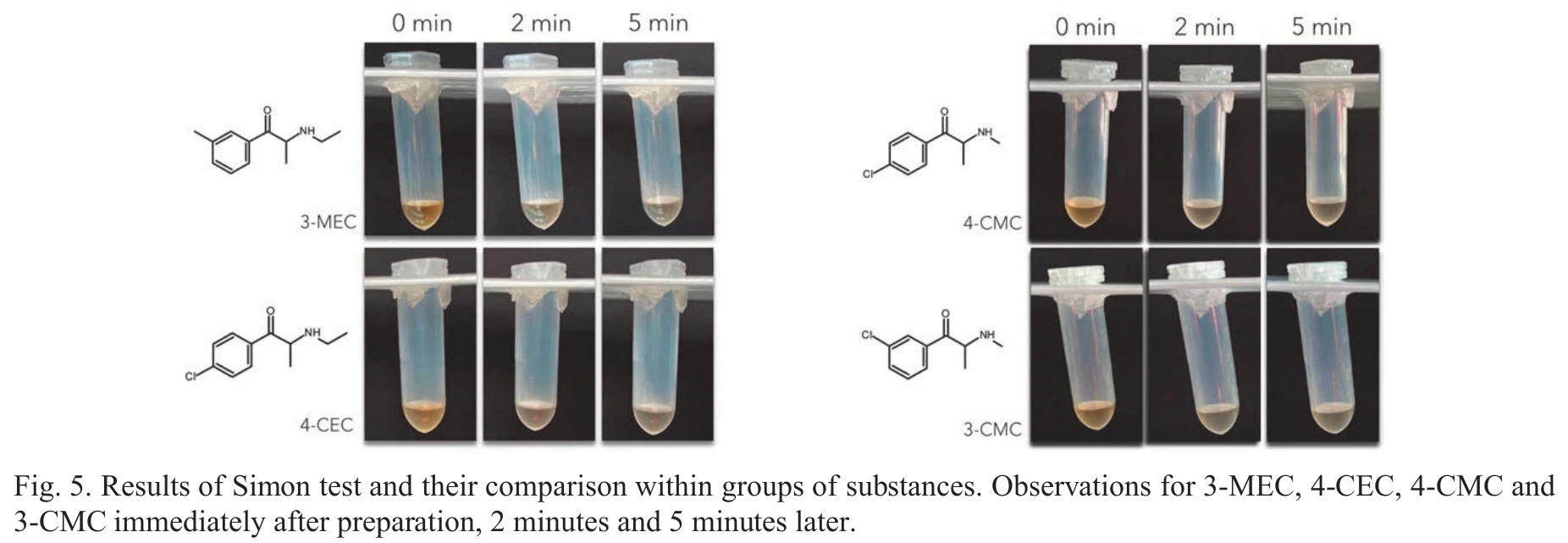
The paper shows examples of samples that did not produce the expected blue response. Figure 5 compares different examples of negative and inconclusive samples. Co-author Kaja Tusiewicz, MSc, in correspondence did add that faster color development was observed with less-concentrated CMC.
Prof. Paweł Szpot reiterated in person that Simon’s reagent is unreliable with CMC.
Simon’s reagent does not react reliably with CMC.
— Prof. Paweł Szpot, Wrocław, 29 October 2026;
That however does not explain the failed reaction. Whether Simon’s is reliable or unreliable with CMC cannot be established from a study limited to one procedure without controlled comparisons of the relevant variables.
Nonetheless, Tusiewicz et al. did report several blue reactions, including with 4-CMC. [1] Those positive reactions are consistent with, for example, those demonstrated by SIN’s 2018 video of a 4-CMC sample from the published Energy Control study by Grifell, Ventura, Carbón and colleagues. [7] This and multiple other similar samples from that same Spanish study were identified using GC/MS, with no impurities reported. They also still give the same positive reactions today, as confirmed by a partner laboratory.
Five questions to investigate before calling a result random
- Sample size: was the loading suitable for 4-CMC’s visible response, rather than borrowed from a non-cathinone secondary amine?
- Sample type: does dry material behave differently from the methanolic preparation?
- Mixing: does vortexing help, weaken the visible color, or simply change its distribution?
- Residual acids: what final pH and reagent proportions does the sample require?
- Trace components and solution age: was the material chemically unchanged when the color test was performed?
1. Sample size: establish the working range
The well-established forensic analytical chemistry references recommend more material than the low end of the procedure used by Tusiewicz et al.:
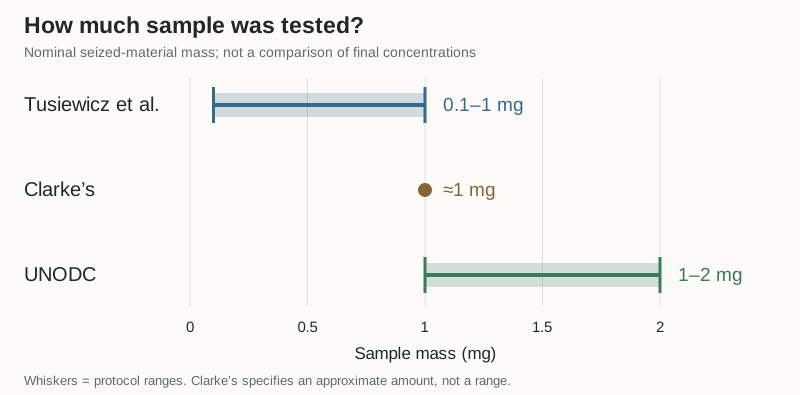
- Tusiewicz et al.: 0.1–1 mg per reaction. They dissolved 10–100 mg in 5 mL methanol, then tested a 50 µL aliquot. [1]
- Clarke’s Analysis of Drugs and Poisons (reference handbook): about 1 mg, generally as solid material or a dried extract. [2]
- UNODC’s manual on amphetamine-type stimulants (2006, pp.18–19): 1–2 mg powder, or one to two drops of liquid. [3]
How much sample was tested?
The lowest loading used by Tusiewicz et al. was ten to twenty times below those powder recommendations; its highest matched Clarke’s and UNODC’s lower end. The preparation also retained methanol, adding liquid volume that could further dilute the reaction mixture and weaken the visible color.
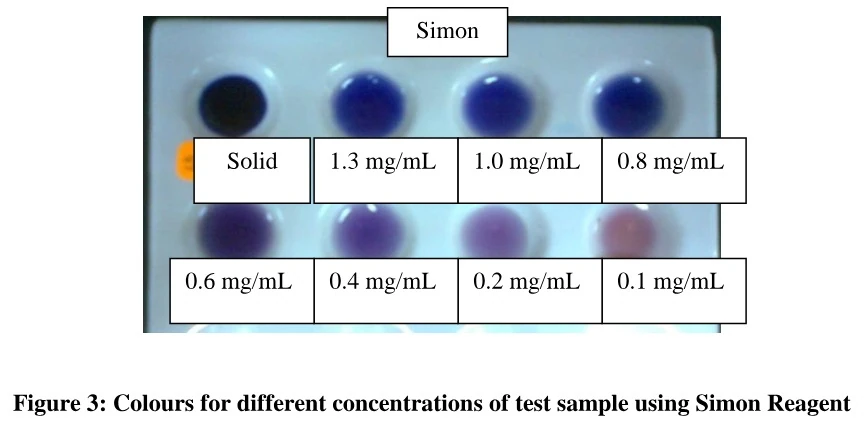
Methamphetamine: color across a concentration series
The photograph illustrates Simon’s visible working range with a non-cathinone secondary amine, methamphetamine: solutions at 0.8–0.1 mg/mL gave progressively weaker color as concentration fell, while solid material gave stronger color. [4]
Our repeated observations indicate weaker blue Simon’s reactions with 4-CMC than with comparable amounts of methamphetamine or MDMA. UNODC likewise describes a weaker methcathinone response. [3] The working range therefore needs checking for 4-CMC itself.
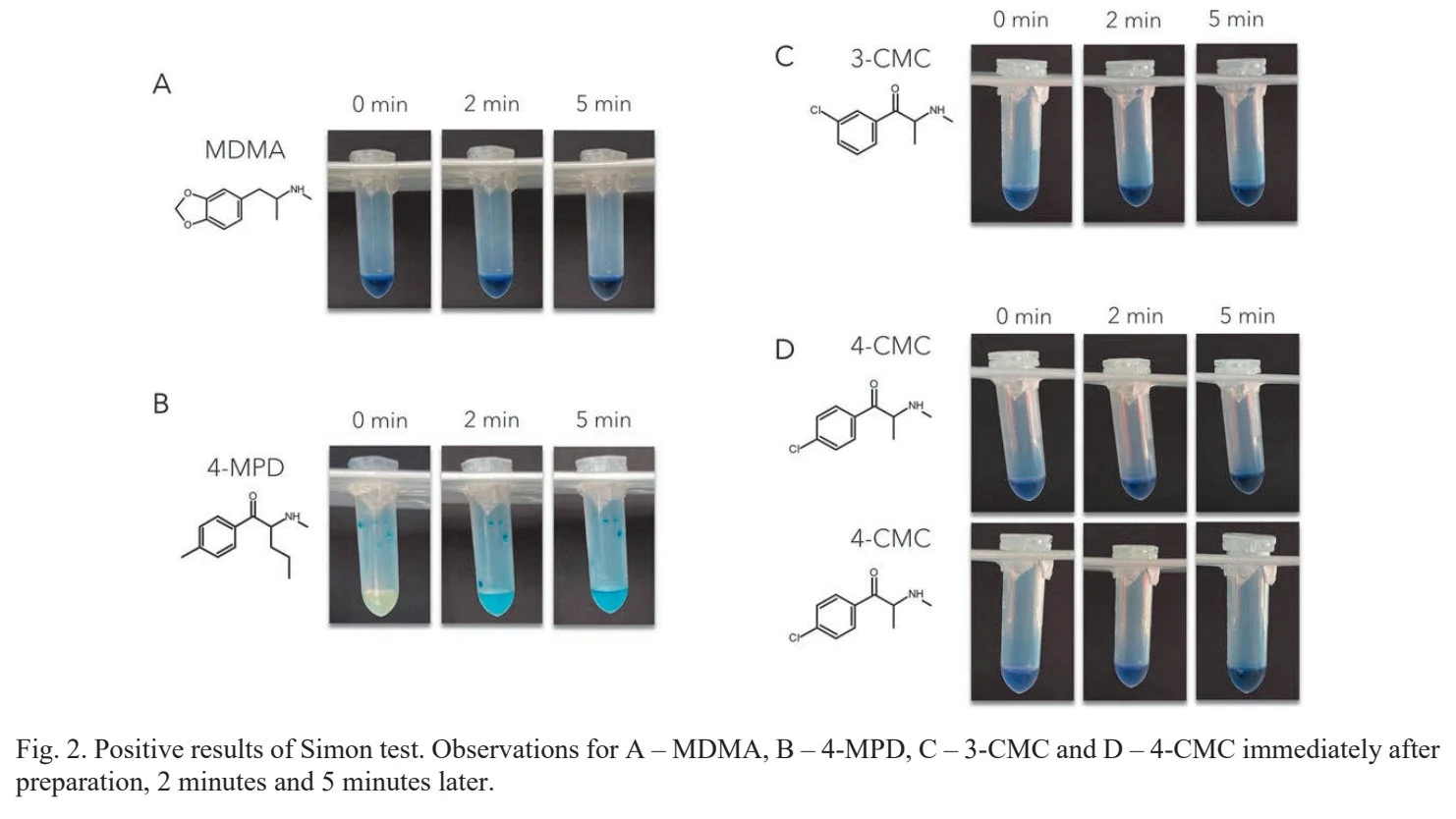
Different substances, different visible intensity
Figure 2 from Tusiewicz et al. also illustrates differences in visible color between substances, including MDMA and CMC. This is consistent with UNODC’s methcathinone reference response, as well as our repeated observations of weaker CMC reactions.
2. Sample type: dry versus dissolved
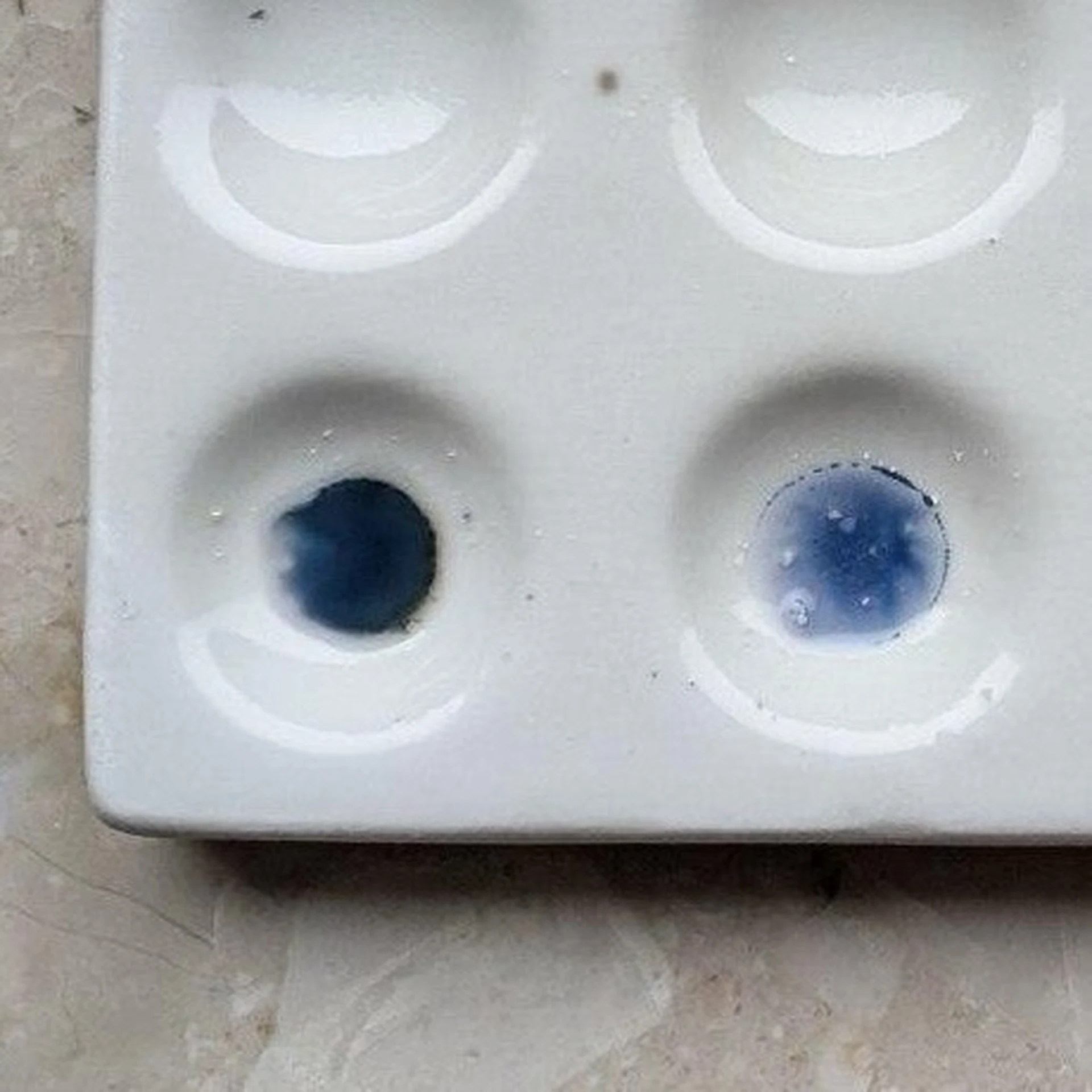
A matched comparison of dry material, methanolic solution and dried residue would help isolate preparation effects; the study did not report one. In our dry-sample tests below, visibly larger portions gave similar blue intensity with the same reagent quantity.
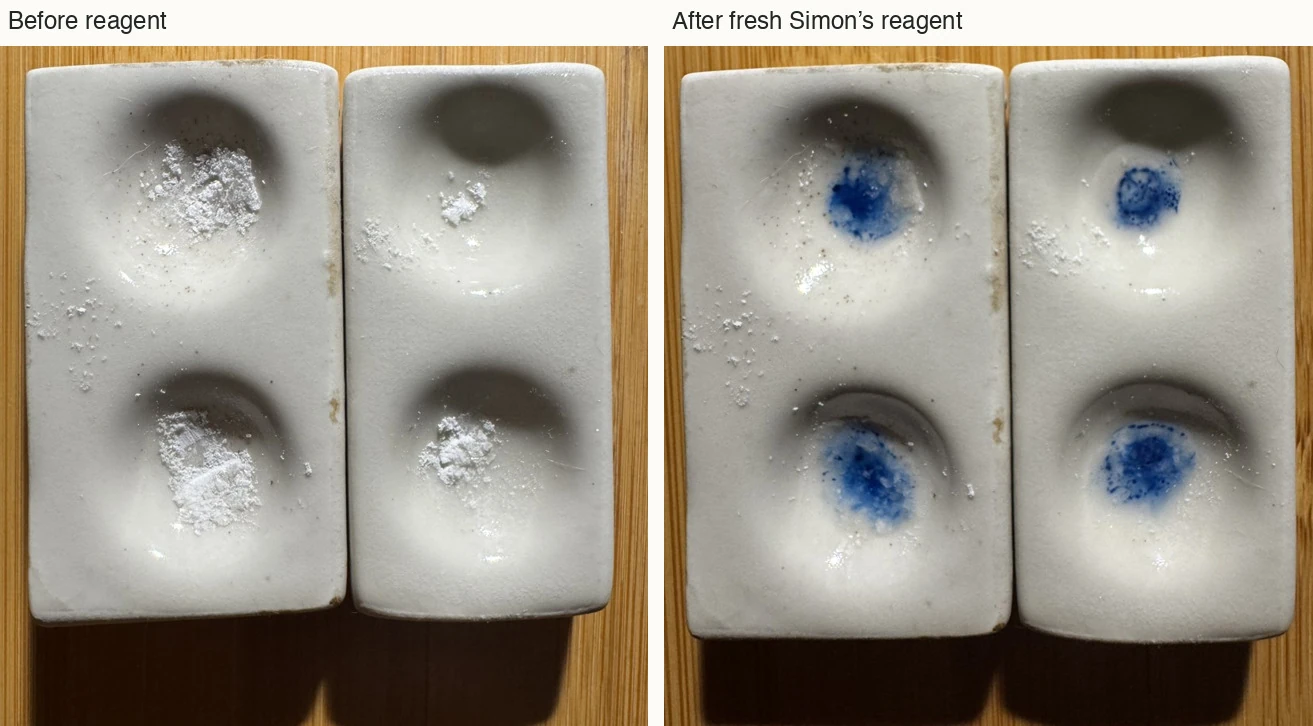
More sample, similar color intensity
These visible dry portions are substantially larger than the 0.1–1 mg delivered by the study’s solution aliquots, although they were not weighed. All four gave blue with fresh Simon’s reagent, and increasing the dry portion further made little difference to color intensity. This is consistent with a response that strengthens only up to a point, while excessive dilution can make the color difficult to see.
3. Mixing: is vortexing always helpful?
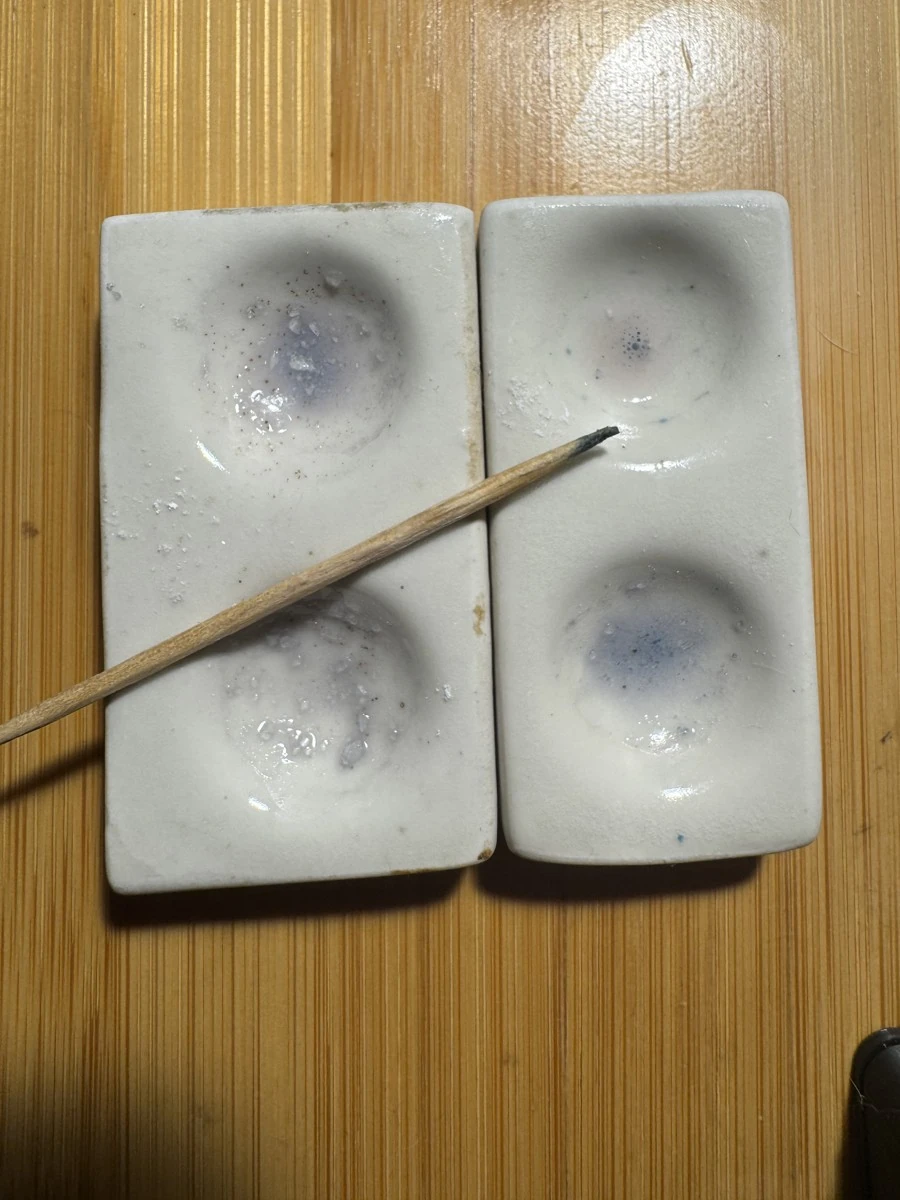
The blue 4-CMC reactions from the preceding sample-size comparison became faint after stirring. The photographs raise a question: how much does the timing of mixing affect the visible response?
- Stirring versus vortexing, for the same duration.
- Mixing immediately versus after a defined delay following reagent addition.
- Reading the color at fixed times, before and after mixing.
These comparisons would help separate mixing from color development over time. Reagent proportions can then be tested separately, keeping track of final volume and pH.
4. Residual acids: check pH and reagent ratios
Guy Jones, chemist at Reagent Tests UK and The Loop, suggested residual acidity as an explanation for an inconclusive result with the two-part Zimmermann reagent:
“My expectation would be something like: presence of acid is neutralising the potassium hydroxide, therefore preventing the reaction.”
— Guy Jones, chemist, Technical Lead at Reagent Tests UK and Senior Scientist with The Loop
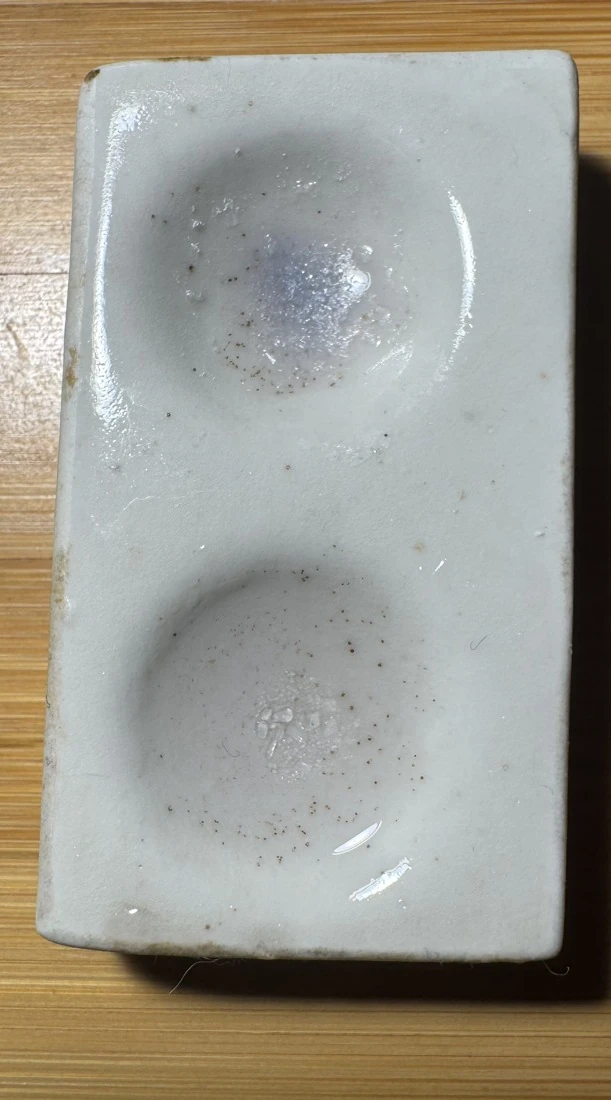
More part B can also mean more dilution
Simon’s uses carbonate rather than potassium hydroxide, but the same question applies: does the sample leave enough alkalinity for the reaction? Whether pH was controlled was one of several procedural questions Tusiewicz et al. did not address; my follow-up question remained unanswered.
We tried approximately five drops of B above and ten below. The extra B produced less blue, not a stronger response. Tusiewicz et al. likewise used twice as much carbonate solution (part B, 100 µL) as nitroprusside/acetaldehyde mixture (part A, 50 µL), a 2:1 volume ratio. [1]
Extra B changes both alkaline capacity and dilution. This trial separates neither effect: the useful next experiment would measure final pH while controlling volume.
5. Trace components: impact of rapid decay
Dissolved cathinones such as CMC can degrade rapidly, depending on solvent, pH and temperature. [6] Tusiewicz et al. stored their methanolic sample solutions at 4°C, but did not report how much cathinone remained when the color tests were performed. Without the elapsed storage time and a stability assessment, the concentration calculated from the original preparation may differ from the concentration actually tested.
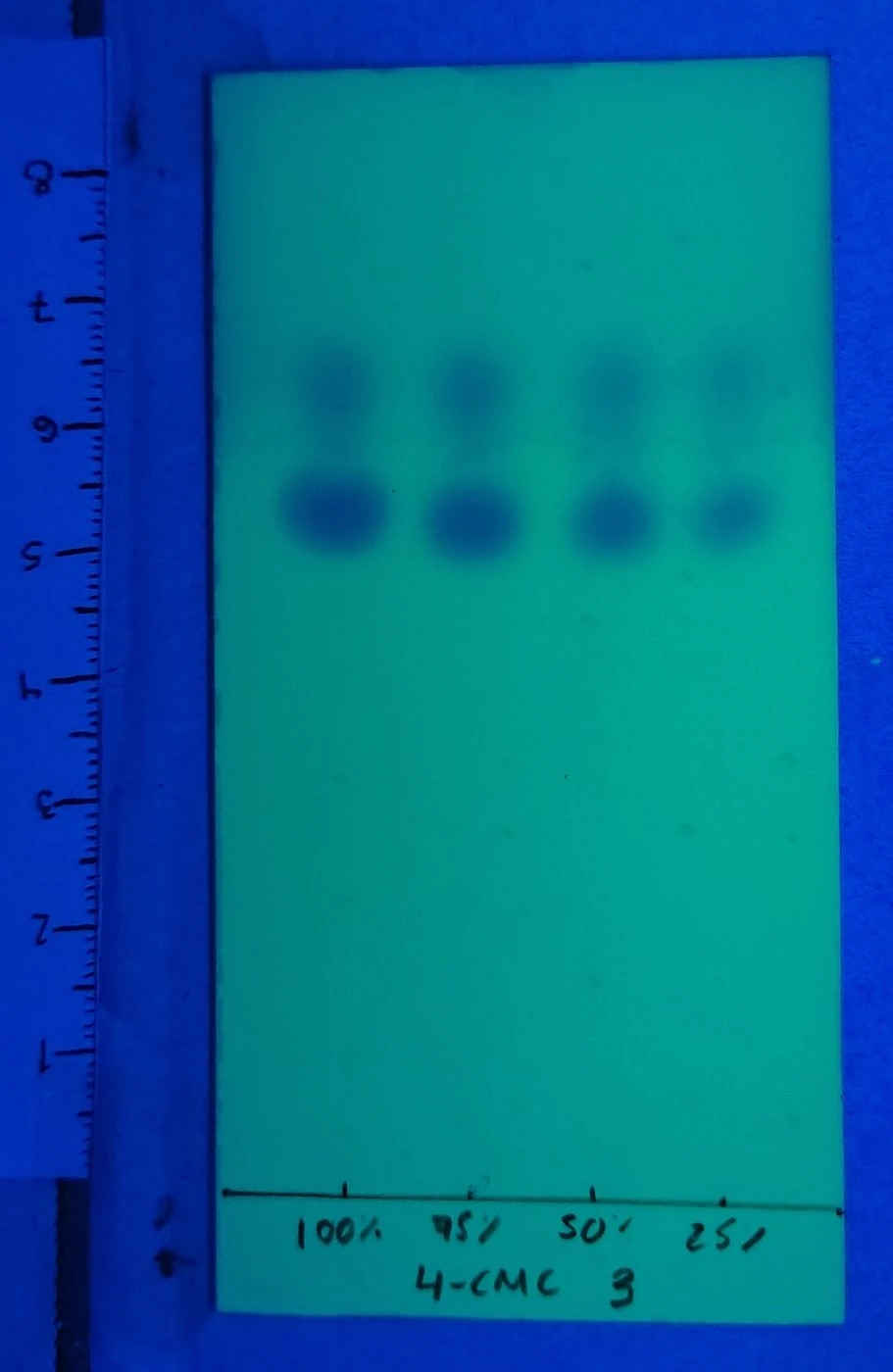
Experimental evidence of CMC degradation
Nectar Spectra Labs, a drug checking laboratory with extensive experience testing novel psychoactive compounds, reported a relevant observation:
Samples assessed as pure by NMR and HPLC showed secondary TLC spots after several hours in solution.
— Nectar Spectra Labs; paraphrased.
The identities of these secondary TLC spots in the 4-CMC sample remain unconfirmed, but are explored further below.
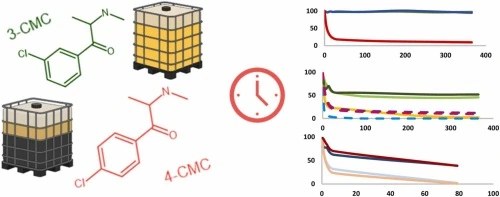
Published evidence of CMC decomposition
Masier et al. investigated CMC stability during synthesis and storage. [6]
- The study documented rapid degradation of 4-CMC and 3-CMC, especially under alkaline conditions. The degradation products were not identified; stability also depended on solvent, concentration and temperature. [6]
- Earlier research cited in the study identified two 4-MMC degradation pathways at pH 12:
4-MMC → MPPD → MBA → DMBA
;4-MMC → N-Ac-4-MMC
. These concern 4-MMC; the corresponding CMC products remain unidentified. [8]
Summary: all analytical methods deserve scientific rigor
Simon’s reagent is an established presumptive test, finding it to behave “randomly” warrants following up. The reference procedures, published concentration studies and experiments presented here support using it appropriately, not dismissing it because one preparation produced frequent failures.
- “Random” is not a chemical explanation. The study demonstrated failures under its chosen procedure. Before extending that conclusion to Simon’s test generally, the plausible causes identified here deserve experimental investigation.
- 4-CMC typically does give a positive Simon’s reaction. Our archival recording and recent tests show blue, although often weaker than with familiar reference substances. Frequent negatives therefore can likely be explained.
- A negative result warrants trying a different preparation. Compare dry and dissolved portions of the same sample, vary loading, and check mixing, reading time and pH—one variable at a time. Repeating one procedure cannot tell us which of these explains the failure.
- The sample can change after it is dissolved. Nectar’s additional TLC spots and the published CMC stability research show why the time between preparation and testing matters. Compare freshly prepared and stored solutions rather than assuming refrigeration preserves the original composition.
In conclusion, the practical lesson is to check the conditions before declaring the reaction “random”. Established analytical methods deserve appropriate use and scientific due diligence. Tusiewicz and Szpot declined my appeals to correct the errors discussed here.
References
[1] Kaja Tusiewicz, Olga Wachełko, Marcin Zawadzki and Paweł Szpot. Limitations of Simon test in new psychoactive substances analysis. Problems of Forensic Sciences 126–127 (2021), 153–166. https://doi.org/10.4467/12307483PFS.20.009.15449. Sample preparation and reaction procedure: printed p.154.
[2] Moffat, Osselton and Widdop, eds. Clarke’s Analysis of Drugs and Poisons, 3rd edition (2004), pp.279–280 and 295. General color-test preparation and Simon procedure.
[3] UNODC. Recommended Methods for the Identification and Analysis of Amphetamine, Methamphetamine and their Ring-substituted Analogues in Seized Materials (2006), pp.18–20 and Annex II. https://www.unodc.org/pdf/scientific/stnar34.pdf.
[4] Tang Yuan Pin et al. Presumptive testing of amphetamine-type stimulants via color tests. ASEAN Journal on Science and Technology for Development 27(1) (2010), 66–75; concentration comparison pp.73–74. https://web.archive.org/web/https://www.thaiscience.info/journals/Article/ASTD/10630603.pdf.
[5] Author’s records identify “4 CMC (Guede)” as analyzed by Energy Control using GC/MS. No impurities were reported, as confirmed by the author. A current quantitative purity result is not established.
[6] Masier et al. Stability of 3-chloromethcathinone and 4-chloromethcathinone during synthesis and storage. Forensic Science International 389 (2026), 113145. https://doi.org/10.1016/j.forsciint.2026.113145.
[7] Grifell et al. Patterns of use and toxicity of new para-halogenated substituted cathinones: 4-CMC, 4-CEC and 4-BMC. Human Psychopharmacology 32 (2017), e2621. https://doi.org/10.1002/hup.2621. Energy Control samples collected June 2014–October 2016; GC/MS method in §2.2. Link to the video sample supplied by the author, not established by a sample identifier in the publication.
[8] K. Tsujikawa, T. Mikuma, K. Kuwayama, H. Miyaguchi, T. Kanamori, Y. T. Iwata and H. Inoue. Degradation pathways of 4-methylmethcathinone in alkaline solution and stability of methcathinone analogs in various pH solutions. Forensic Science International 220 (2012), 103–110. https://doi.org/10.1016/j.forsciint.2012.02.005.
Additional primary material: author’s archival video and recent reagent photographs; Nectar Spectra Labs’ TLC photographs and correspondence; correspondence with Kaja Tusiewicz on the methodological errors in “Limitations of Simon test in new psychoactive substances analysis” (coauthors: Dr Olga Wachełko, Prof. Marcin Zawadzki and Prof. Paweł Szpot). Nectar’s displayed statement is a labeled paraphrase. Photographs do not independently quantify purity or establish reaction mechanisms.