


What is Tuci (Tusi, Tucibi, Tusibi)?
Tuci, also known as tusi, tucibi, tusibi or pink cocaine, is usually a mixture of other substances rather than the 2C-B its name comes from, and it rarely contains cocaine at all. The cocktail originated in Colombia around 2020 and has since spread worldwide. What goes into it varies from batch to batch, which is the whole problem: one name covers very different powders.
How to test Tuci?
Tusi vs 2C-B
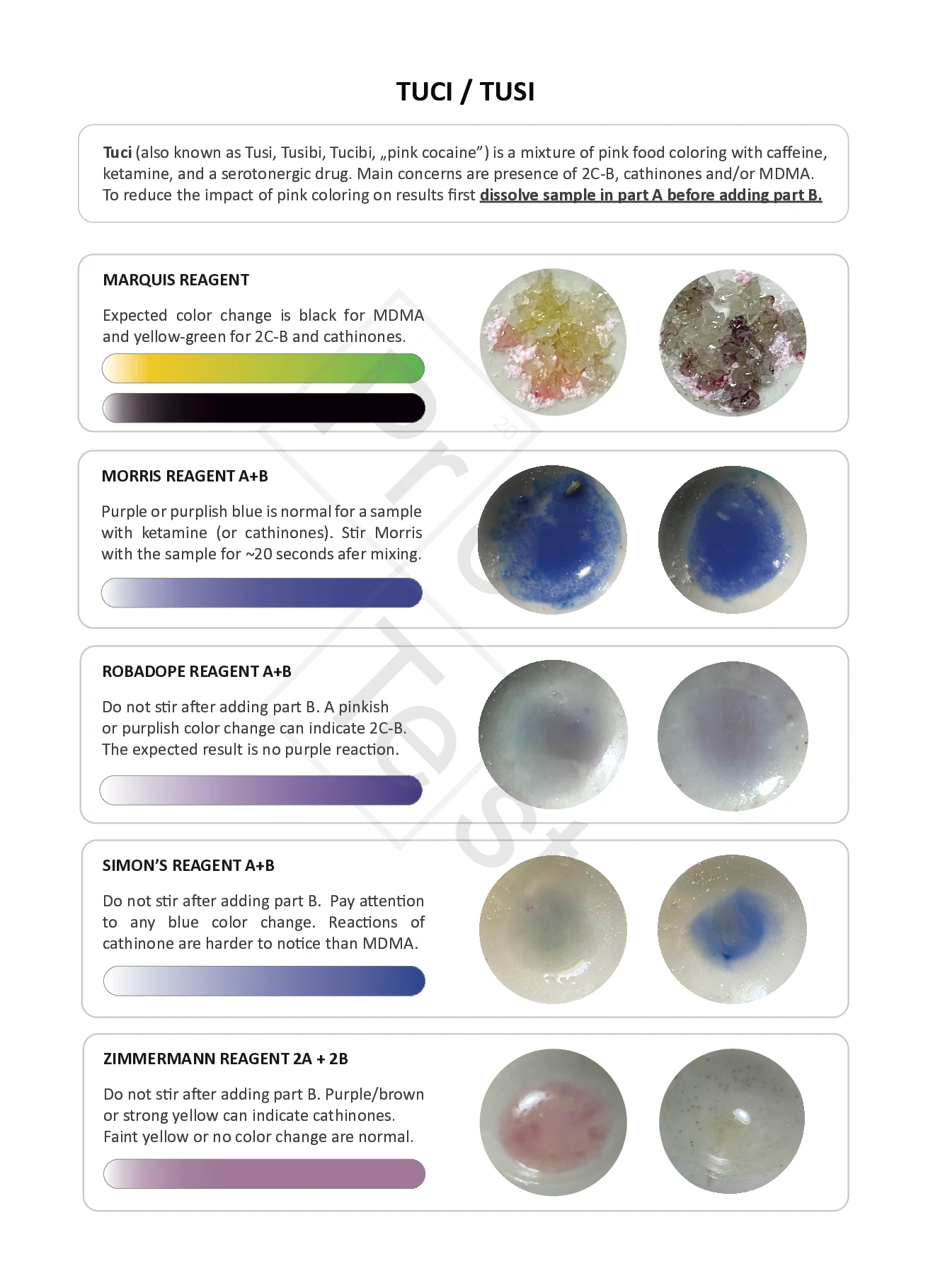
- Marquis indicates presence of MDMA, 2C-B and meth/amphetamine, among other compounds.
- Morris helps confirm presence of ketamine and cathinones, even in a mixture.
- Robadope can confirm primary amines such as 2C-B, amphetamine, MDA, PMA or taurine.
- Simon’s can confirm secondary amines, such as MDMA, methamphetamine, PMMA, cathinones.
- Zimmermann can rule out presence of most cathinones, especially MMC and PVP derivatives.
2C-B test kit chart
Is Tuci the same as 2C-B?
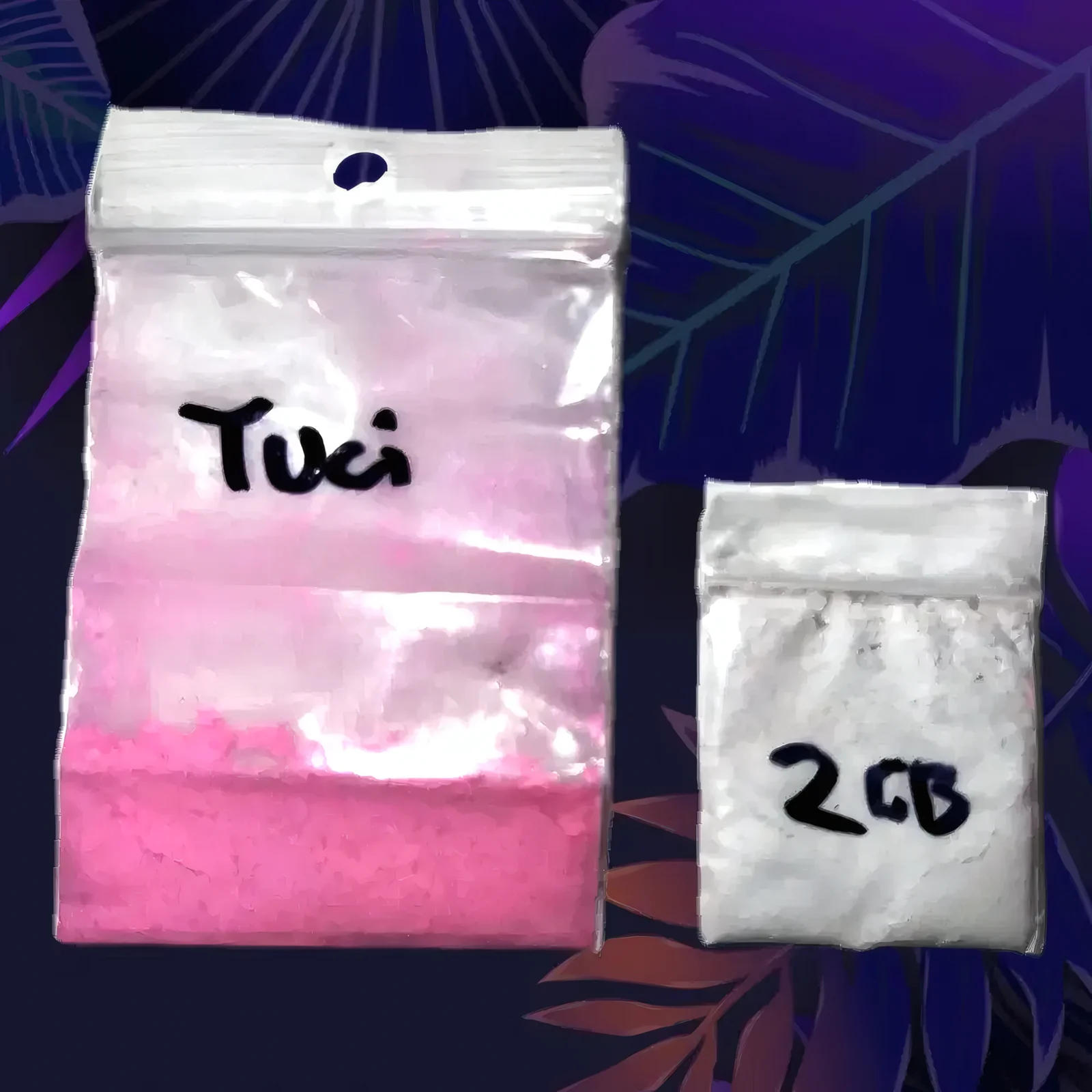
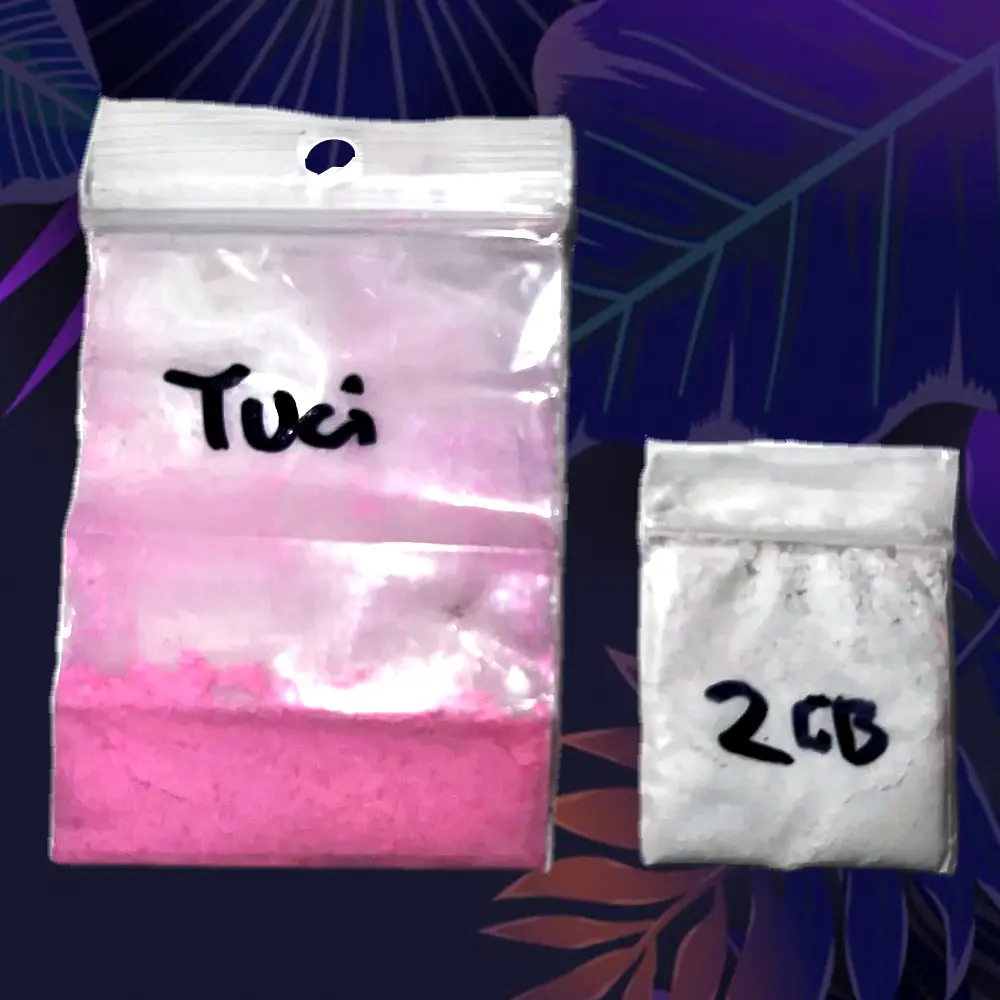
Usually not. The name comes from the Spanish pronunciation of 2C-B, but most pink powder sold as tuci is ketamine, MDMA and caffeine. 2C-B does turn up in some samples, typically at a few percent alongside the rest, so a test is the only way to tell which one you are holding.
Does “pink cocaine” contain cocaine?
Almost never. Despite the name, cocaine is one of the least common things found in pink powder. The colour is dye, not an ingredient.
As shown by numerous drug checking laboratories (to name a few sources: energycontrol.org, drugsdata.org) the most common ingredients of Tuci are:
- MDMA
- Ketamine
- Caffeine
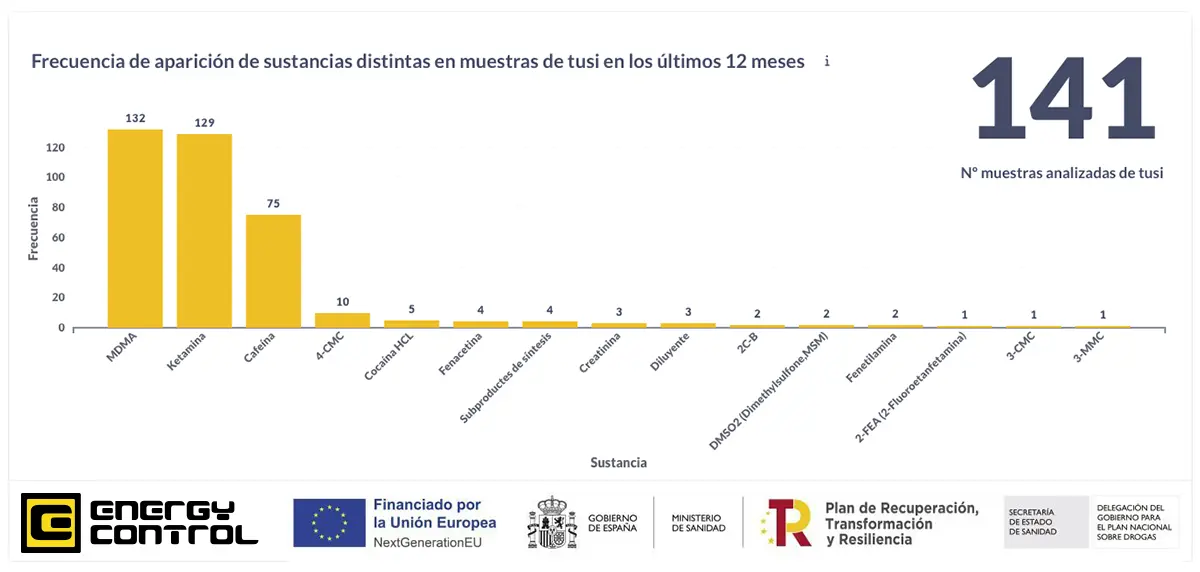
Tusi is a random mixture of cheap drugs, with effects that hardly make sense for the following reasons:
- MDMA, is a strong serotonergic stimulant with main effects ranging from 4 to 6 hours. Mephedrone and derivative too, with added more intense dopamine oriented effects. Stimulants increase heart rate and blood pressure.
- Ketamine is a dissociative downer (depresant drug), with main effects lasting around 1 hour. Unlike most other depresants, it is known to slightly elevate blood pressure and heart rate. Mixing downers with stimulants reduces the expected psychoactive effects of each, while increasing the physical constraints.
- Caffeine is a weak stimulant, which does not add anything to psychoactive effects, but rather further increases heart rate and blood pressure.
In summary, mixing these drugs, especially in unknown ratios, is certain to increase unpleasant physical effects, while not contributing anything really desirable to the psychoactive effects. Especially redosing mixture of substances with significanly different lenght of effects can lead to a bad and dangerous experience.
Tuci can contain literally anything, even though the active components of the dubious pink powder are usually expected to be MDMA, ketamine and caffeine.
One of the common variants is, unsurprisingly, to further substitute components for even cheaper alternatives, usually a cathinone instead of MDMA. Either a mephedrone analog, such as 3-CMC, or a pentylone analog, like Eutylone or Cyputylone.
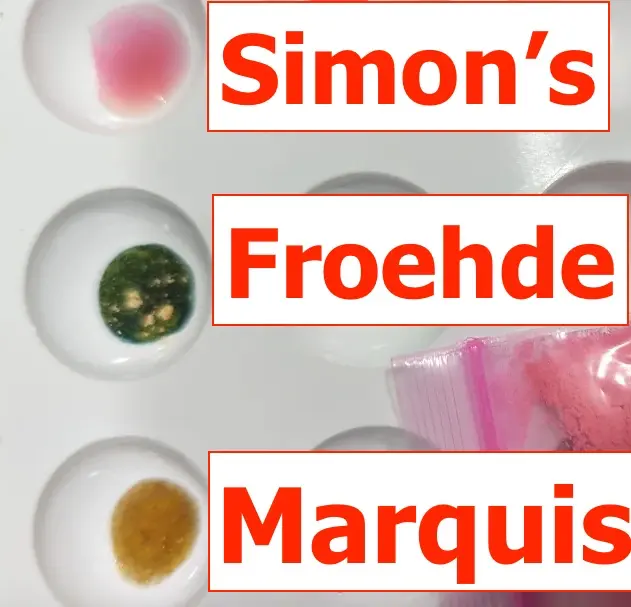
Reagent results indicating cyputylone in Tuci
Is reagent testing Tuci reliable?
2026 update: Yes! It can be harder than testing pure powders, but we have identified the correct tools and established a protocol for best results.
Below we show several examples from drugsdata.org lab analysis service website.
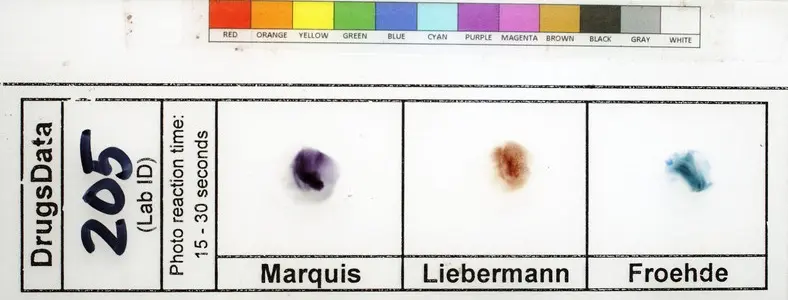
Tuci with ketamine and MDMA mixed in 1:1 ratio
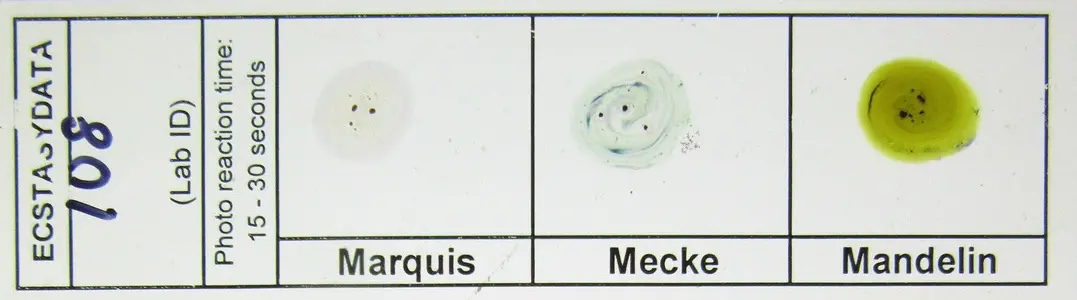
Tuci with ketamine and MDMA mixed in 6:1 ratio
Is Tuci safe?
Not in any way you can rely on. Tuci is a mixture, and the mixture changes: usually ketamine and MDMA with caffeine, sometimes a cathinone in place of the MDMA. Those have very different durations, so a powder that feels weak at the wrong moment invites a redose, and that is where most of the trouble with this one starts.
The risk is not the colour, it is not knowing the ratio. If you are going to take it, a reagent kit names what is in there and a TLC testing card shows how much of each, which is the difference between guessing and choosing.
Tuci test kit
The best test kit for Tuci (Tusi, Tucibi, Tusibi) is PRO Test’s Tuci Reagent Test Kit which includes reagents Marquis, Morris, Robadope, Simon’s and Zimmermann. It can reliably confirm presence of ketamine, 2C-B, MDMA and help rule out most common cuts such as cathinones, meth/amphetamine and many other. To check for all possible cuts pair reagent tests with a TLC Purity Test Kit.
Recommended Tuci test kits:
No test result can tell you a substance is safe. No substance is 100% safe.This article is published for harm reduction purposes. It does not encourage the use of psychoactive substances and does not replace medical advice.