


How to read a reagent colour chart
For years the question was which colour chart to trust, and every answer was a compromise: someone else's reagents, someone else's substances, someone else's idea of what was worth printing. That question has mostly retired.
A colour chart is a comparison tool, not a lookup table. It shows what a known-pure substance did with that reagent under reasonable conditions, and your job is to decide whether what happened in your well is the same reaction, not whether it is the same pixel. People who expect an exact match get stuck; people who read for the reaction and its speed get an answer.
Build the chart you need, then send it
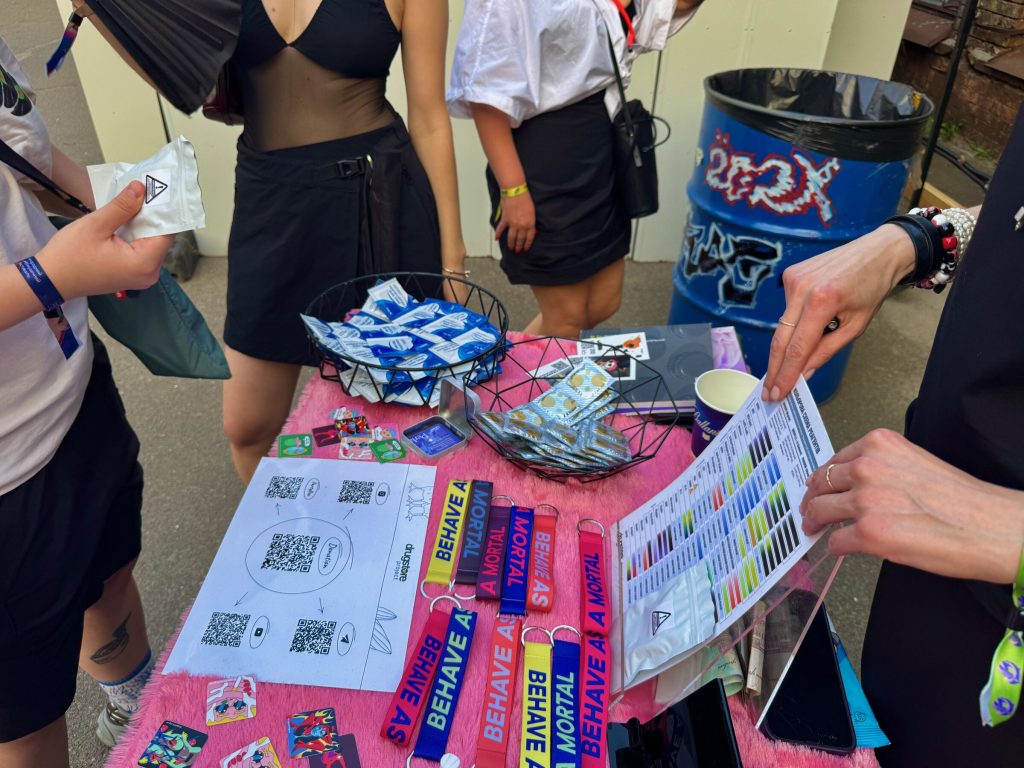
DrugsPRO, our free app, runs in a browser and offline without an account. Its analysis view puts fifteen reagents across the top and the substances down the side, and you decide which of each you want to see. Filter by class, search by substance, or search by the color you actually got. Only the width of your screen limits how many reagent columns you compare at once.
The comparison you build lives in the address bar, so a link carries the exact view you were looking at rather than a description of it.
A shared comparison, 3-MeO-PCP against 3-MeO-PCE
Photographs have moved the printed chart into second place. The app holds a database of crowd sourced reaction photos, expected and unexpected side by side, and the instruction booklets that ship with the kits are built from photographs rather than printed color blocks. A photograph of the same reaction on the same reagent settles more than any printed approximation of a color.
Reaction photo database · Instruction booklets and how-to videos
Four things that change the colour you see
Sample size is the biggest one: too much sample saturates the well and everything goes dark, which is the most common reason a result looks wrong. Time matters, because most reactions develop over seconds to minutes and then degrade as the reagent meets air and light, so the reading is the one inside the window in the instructions. Light matters, so judge in daylight against white rather than under a club light. And the carrier matters, because blotter paper, gel tabs, binders and colouring all contribute their own tint.
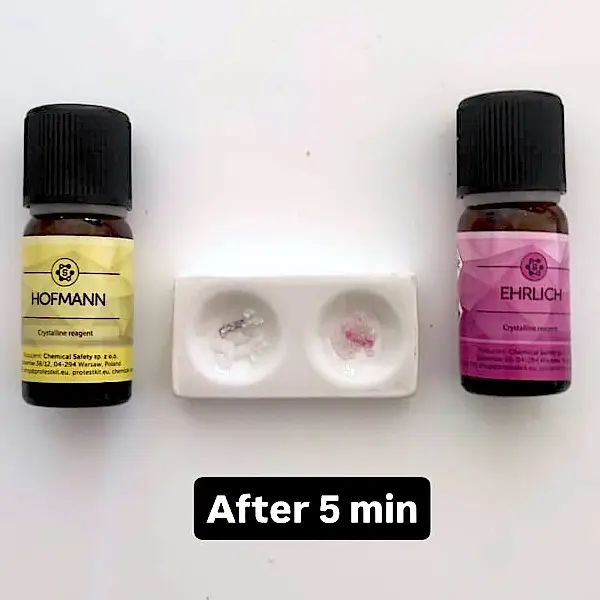
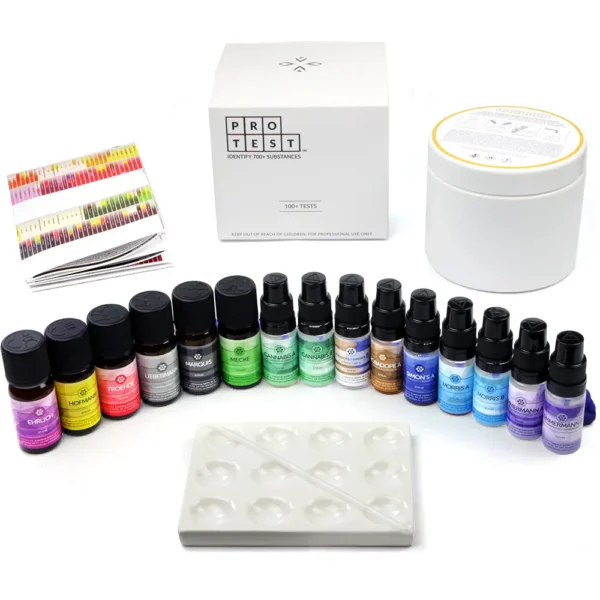
All four are technique rather than chemistry, which means they cost nothing to fix: a smaller sample, a timer, daylight and a white background. The kits ship with the colour chart these readings are compared against.
Read the progression, not the endpoint
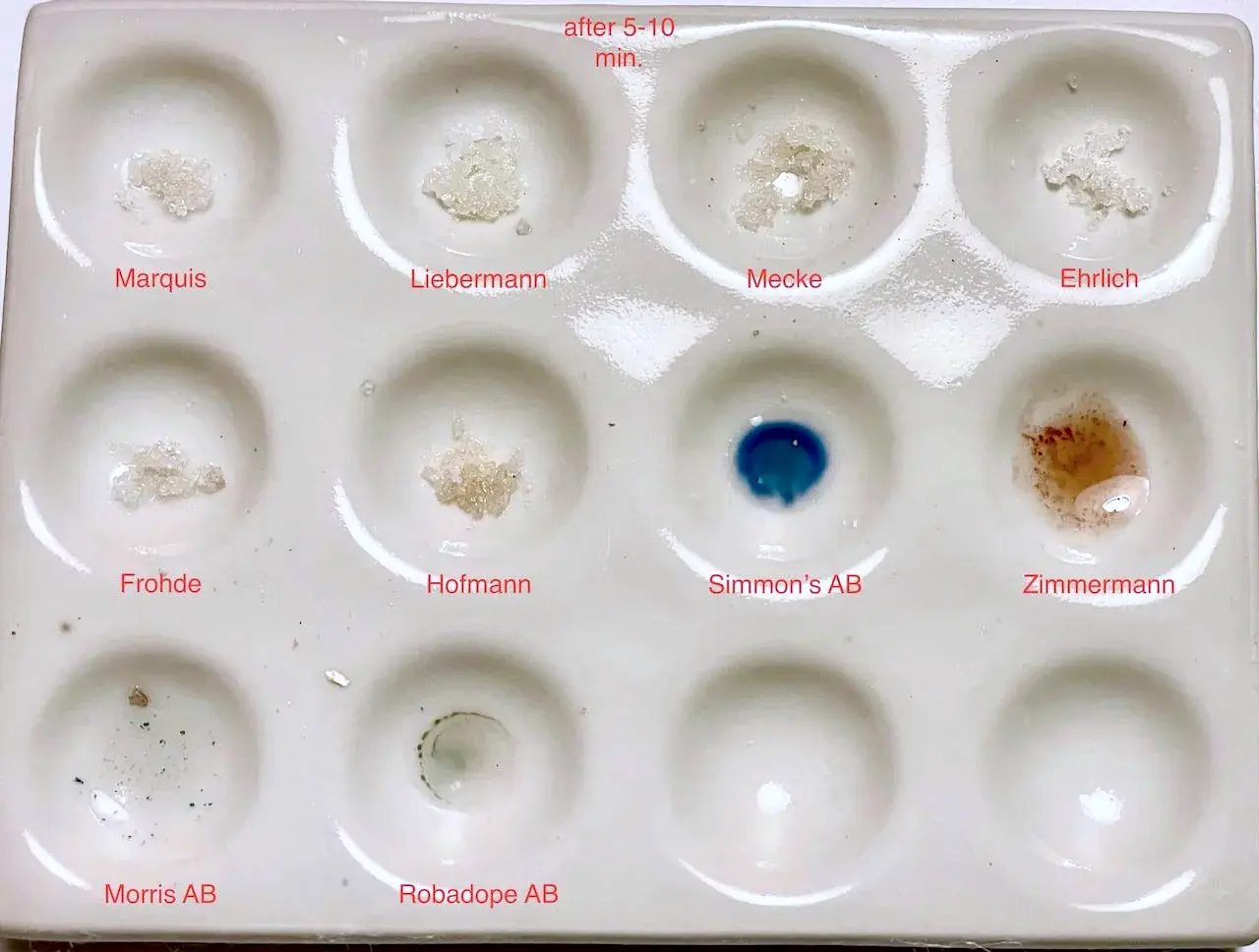
Many reactions move through a sequence, and the sequence carries more information than any single frame of it. Marquis with MDMA goes yellow, then purple, then black; with 2C-B it goes yellow, then green, then blue. If you look only at the final colour you lose the part that distinguishes them, so watch the well rather than checking it once, and photograph it as it develops.
Judge the colour where the reagent has the most contact with the sample rather than at the thinning edge, because the edge is always weaker and always misleading.
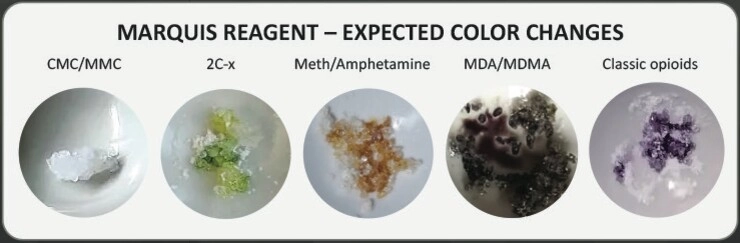
Marquis instructions · Mecke instructions · Ehrlich instructions
What a chart can never tell you
How much. Colour intensity is not a purity scale, a strong reaction does not mean a strong sample, and a weak one does not mean a weak sample, because concentration, sample size and timing all push intensity around independently of content. Charts also assume a single substance, so a mixture gives you the loudest compound rather than an average, and the answer to both problems is the same: a testing card.
What a TLC test does · 800+ substances in the app · Is Mecke reagent reliable
Reagent colour chart: how to read your result: common questions
My colour does not match the chart exactly.
Read the reaction and its speed rather than matching a shade. That is what the chart is for, and it is how experienced users read one.
The whole well went black.
Usually too much sample. Use a scraping, and read the edge of the reaction rather than the middle.
Does a stronger colour mean stronger drugs?
No. Intensity is not a purity measure, and no chart can be read as one. Purity needs a TLC testing card against a calibrated reference.
How long should I watch?
As long as the instructions for that reagent say, and no longer. Reactions degrade with air and light.
Where can I look up a substance?
The app carries colour results for over 800 substances, offline and without an account.
No test result can tell you a substance is safe. No substance is 100% safe.This article is published for harm reduction purposes. It does not encourage the use of psychoactive substances and does not replace medical advice.