


What is in cannabis and CBD products?
Most of what goes wrong with cannabis and CBD products is something added rather than something missing. CBD flower and extracts get sprayed with a synthetic cannabinoid, a full agonist at the receptor where THC is only partial, so a product that is accurately labelled as CBD can still carry one.
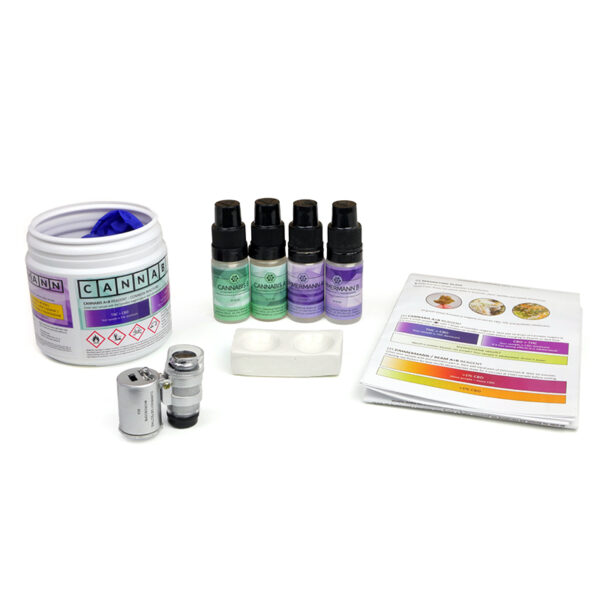
The 4-AP reagent answers the question that matters first: whether the sample holds a real cannabinoid at all. THC and CBD react with it and the synthetics do not, so plant material that gives no colour is itself the finding. Across 187 lab-tested samples, 78% contained a second compound, mostly other cannabinoids rather than adulterants: CBD in 90, delta-8-THC in 38, CBN in 52 and CBG in 41, with the synthetic MDMB-PINACA in 11.
The table below counts what the labs found, by compound.
| Detected | Samples |
|---|---|
| CBD | 90 |
| CBN | 52 |
| CBG | 41 |
| Delta-8-THC | 38 |
| Unknown | 16 |
| MDMB-PINACA | 11 |
The row that is not a cannabinoid
MDMB-PINACA in 11 samples is a synthetic cannabinoid, a full agonist at the CB1 receptor where THC is only partial, and it is the reason to test a product you bought legally as well as one you did not. We looked at that market separately, including samples where an accurately labelled CBD flower carried a synthetic sprayed on top.
Which synthetic cannabinoids are on the market · What is THC
Delta-8, HHC and the semi-legal ones
Delta-8-THC, HHC, THCP and the rest are cannabinoids and they do react with the 4-AP reagent, unlike the synthetics, so the reagent will not separate them from delta-9-THC for you. What separates them is a testing card: TLC shows each cannabinoid as its own spot at its own height, which is how a sample sold as high-THC flower turns out to be mostly CBD and CBN, or how delta-8 shows up in a product sold as delta-9.
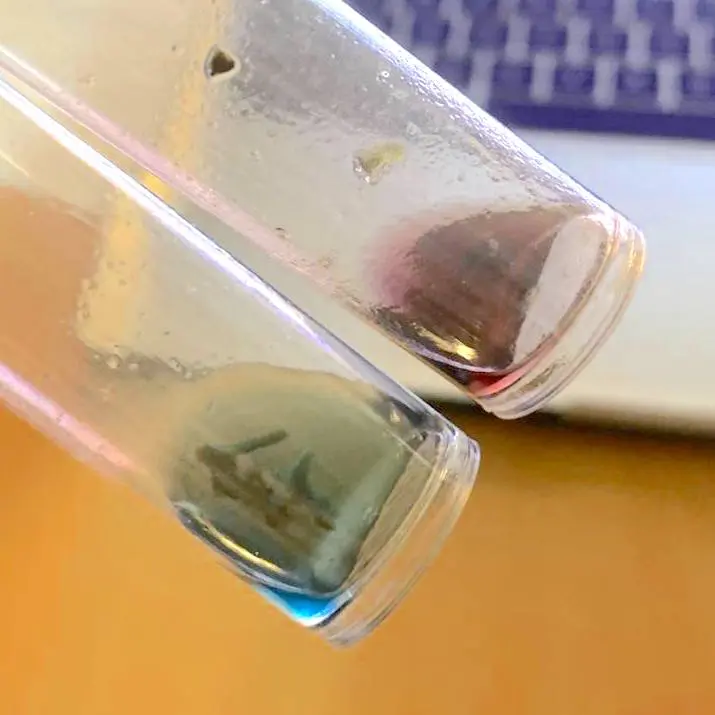
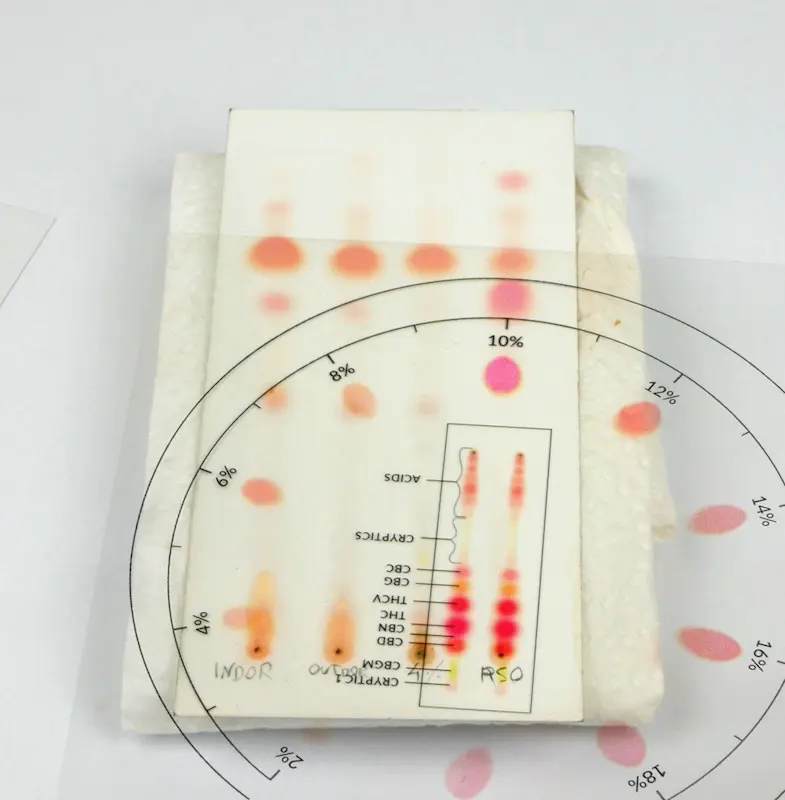
How to test CBD flowers, hash and oils
Which test answers which question
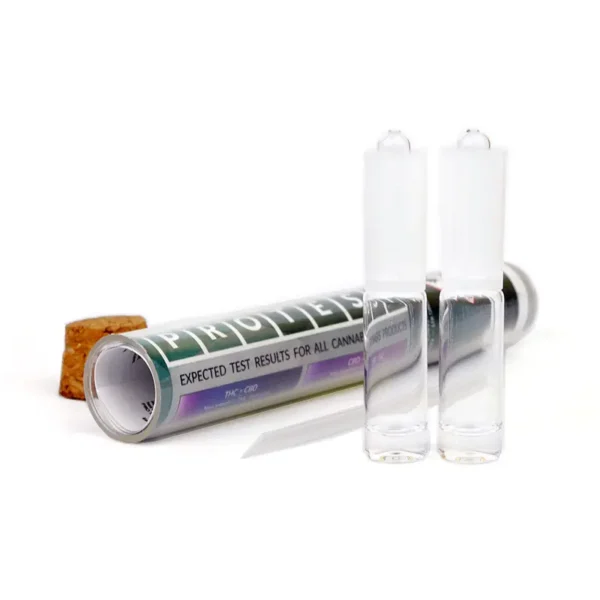
The reagent answers whether a cannabinoid is present at all, which is the synthetic question. The testing card answers which cannabinoids and how much, which is the quantity and the delta-8 question. For flower, hash, oil or vape liquid the sample preparation differs but the testing card is the same.
How a TLC test works · How to check THC level · How to test THC and CBD · Delta-8, HHC and the semi-legal cannabinoids
What is in cannabis and CBD products: common questions
Does the 4-AP reagent measure THC content?
No. It indicates that a cannabinoid is present. Content needs a TLC testing card against a reference.
Will it tell delta-8 from delta-9?
No. Both are cannabinoids and both react. A testing card separates them.
Why is CBN in so many samples?
CBN forms as THC degrades, so a high CBN reading generally indicates age or poor storage.
Can I test vape liquid?
Yes, on a dried drop. The synthetic cannabinoid samples with nicotine in them came from vapes.
No test result can tell you a substance is safe. No substance is 100% safe.This article is published for harm reduction purposes. It does not encourage the use of psychoactive substances and does not replace medical advice.